The Personal Website of Mark W. Dawson

Containing His
Articles, Observations, Thoughts, Meanderings,
and some would say Wisdom (and some would say not).
Apocalypse - Or the Ways that Humanity Will Come to an End
- Introduction
- Natural Apocalyptic Events
- Man-Made Apocalyptic Events
- Final Thoughts
- Further Readings
- Disclaimer
Introduction
First, the bad news. The Earth as we know it is coming to an end. But all things come to an end. Life is born, then dies. Geological ages come and go, and they change the nature of life on Earth. And the Earth, through solar evolution, will come to an end. When the Sun exhausts its nuclear fuel, it will go nova and burn the Earth to a cinder. During the course of solar evolution, many Natural Apocalyptic Events also occur.
Natural Apocalyptic Events happen randomly and unpredictably. Many of them have destroyed life on Earth as it was known at the time they occurred. But new life sprang up, as life is resilient and adaptable to circumstances and environmental changes. This article will discuss these Natural Apocalyptic Events and their impacts on human civilization if and when they may occur in the future.
In our modern technological and global economy world, Man-Made Apocalyptic Events are now possible. These man-made Apocalyptic Events may not end humanity, but they could put an end to modern civilization and, therefore, should be considered within the scope of this article.
Natural Apocalyptic Events
Natural Apocalyptic Events are likely to occur in the future; some are unlikely, and some may never occur (but still be possible). Some will occur within a near-term time frame (within one hundred years), some will occur in a long-term time frame (one hundred to one thousand years), some may occur after thousands of years from now, and some may never occur (but still be possible). Examining these Natural Apocalyptic Events will allow us to judge the likelihood and time frames for these Natural Apocalyptic Events, and their impacts on human civilization. The following are the Natural Apocalyptic Events that may occur.
Earthly Events
Earthly Events are driven by the natural forces of our planet. Many of these Earthly Events are the result of Plate Tectonics and the Internal structure of Earth. Plate Tectonics is the scientific theory that Earth's lithosphere comprises a number of large tectonic plates, which have been slowly moving since 3–4 billion years ago. The model builds on the concept of continental drift, an idea developed during the first decades of the 20th century. Plate tectonics came to be accepted by geoscientists after seafloor spreading was validated in the mid- to late 1960s. The processes that result in plates and that shape Earth's crust are called tectonics.
The internal structure of Earth is the layers of the planet Earth, excluding its atmosphere and hydrosphere. The structure consists of an outer silicate solid crust, a highly viscous asthenosphere, a solid mantle, a liquid outer core whose flow generates the Earth's magnetic field, and a solid inner core.
Scientific understanding of the internal structure of Earth is based on observations of topography and bathymetry, observations of rock in outcrop, samples brought to the surface from greater depths by volcanoes or volcanic activity, analysis of the seismic waves that pass through Earth, measurements of the gravitational and magnetic fields of Earth, and experiments with crystalline solids at pressures and temperatures characteristic of Earth's deep interior.
These Earthly events that could result in Natural Apocalyptic Events are as follows.
Supervolcano Eruption
A Supervolcano is a large volcano that has had an eruption of magnitude 8, which is the largest value on the Volcanic Explosivity Index (VEI). This means the volume of deposits for that eruption is greater than 1,000 cubic kilometers (240 cubic miles). Supervolcanoes occur when magma in the mantle rises into the crust but is unable to break through it, and pressure builds in a large and growing magma pool until the crust is unable to contain the pressure. This can occur at hotspots (for example, Yellowstone Caldera) or at subduction zones (for example, Toba). Another setting for the eruption of very large amounts of volcanic material is in large igneous provinces, which can cover huge areas with lava and volcanic ash, causing long-lasting climate change (such as the triggering of a small ice age), which can threaten species with extinction. The Oruanui eruption of New Zealand's Taupo Volcano (about 26,500 years ago) was the world's most recent super eruption at a VEI-8 eruption. To learn more about Supervolcanoes, I would suggest that you review the National Geographic YouTube video on this subject.
A Supervolcano eruption has both continental and global impacts that could be devastating. A mega-colossal Supervolcano eruption could occur in about 20 or so Supervolcanoes, but most of them are dormant. However, a few are active, and the most active one is on the North American continent. This is the Yellowstone Supervolcano below the Yellowstone National Park. I will be utilizing the Yellowstone Supervolcano as an example of the Apocalyptic effects of a Supervolcano eruption.
If the Yellowstone Supervolcano erupted at near its full force (and minor eruptions could occur without a major impact), it would cause regional devastation and global wallops. The region between the Rocky Mountains and the Mississippi River would be covered in volcanic ash from about an foot or more to an inch. Protoplasmic flow around the Supervolcano eruption would cause total destruction for several dozen (or more) miles away from the center. All motorized transportation between the Rocky Mountains and the Mississippi River would stop as the ash would clog the engines. You may have to wait several days, weeks, or months for the ash to clear for motorized transportation to resume. Perhaps millions of people would die from breathing in this ash. All the crops in this area of ash would be destroyed. As this area is the breadbasket of the United States, there is the potential for mass starvation outside the devastated area. The water supplies across the North American continent would be polluted with this ash. All sorts of electrical, electronic, or mechanical systems may fail on the North American continent due to this ash (even those areas beyond the Rocky Mountains and the Mississippi River). The economy of the United States, Canada, and Mexico would probably collapse, leading to widespread panic, and perhaps deadly riots and mass murders to obtain food and water supplies.
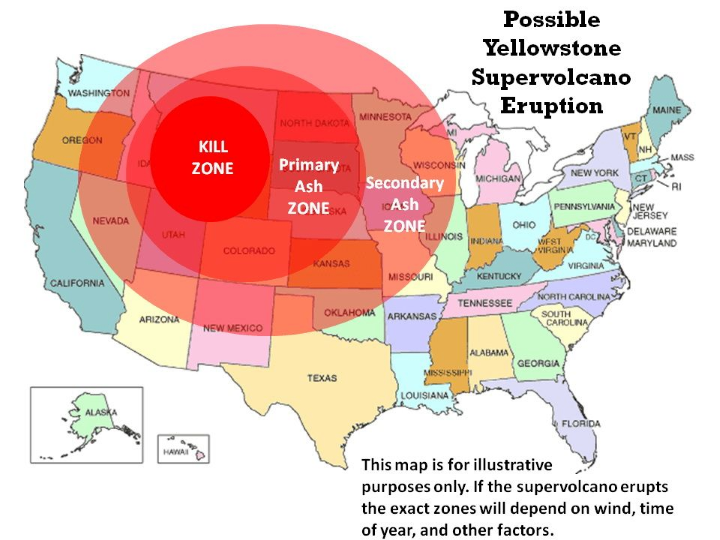
The global impacts would be from the ash and debris that would be ejected into the upper atmosphere. This ash and debris would spread across the entire globe, resulting in a ‘Nuclear Winter’. Less solar radiation would be able to penetrate to the surface of the Earth, which would result in global cooling. It would also negatively impact food production across the globe, which could lead to mass starvation and its impacts. The ecology, plant and animal life on the earth and in the air, and probably underwater due to ash settlement in streams, rivers, lakes, seas, and oceans, would have major impacts but may recover over several years or decades as the ash settles down. The Earth would certainly be different after this Supervolcano eruption, but would probably recover after a century or so. Human civilization would certainly be different, as it would be realigned because of the global impacts. But humanity should survive.
What are the possibilities of this happening? We know it will eventually happen, but we cannot predict when it will happen. There is not enough scientific knowledge about the internal processes of a Supervolcano to be able to predict when a Supervolcano will erupt. The best guesstimates of knowledgeable scientists are that it will be several millennia before a Supervolcano erupts. But they could be wrong, and a Supervolcano eruption may occur much sooner than they guesstimate.
This is an Apocalyptic event that you just have to cross your fingers and hope it won’t happen for several millennia. When it does happen, you will just have to deal with the consequences, as there is not much you can do to alleviate the impact.
The most likely sources of a Supervolcano eruption are: Yellowstone Caldera, Wyoming; Lake Toba, Indonesia; Taupo, New Zealand; Campi Flegrei, Italy; Long Valley Caldera, California; Valles Caldera, New Mexico; and Aira Caldera, Japan.
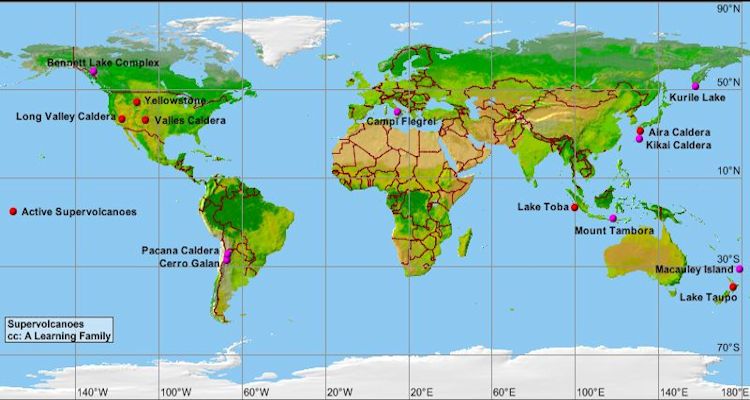
As can be seen from this map, a Supervolcano eruption could occur in any part of the world, but is less likely in Africa or Antarctica (although there is some evidence of a Supervolcano in Antarctica).
Submarine Volcanoes and Oceanic Eruptions
Submarine volcanoes are underwater vents or fissures in the Earth's surface from which magma can erupt. Many submarine volcanoes are located near areas of tectonic plate formation, known as mid-ocean ridges. The volcanoes at mid-ocean ridges alone are estimated to account for 75% of the magma output on Earth.[1] Although most submarine volcanoes are located in the depths of seas and oceans, some also exist in shallow water, and these can discharge material into the atmosphere during an eruption. The total number of submarine volcanoes is estimated to be over one million (most are now extinct) of which some 75,000 rise more than 1 kilometre (0.62 miles) above the seabed. Only 119 submarine volcanoes in Earth's oceans and seas are known to have erupted during the last 11,700 years.
These eruptions can be explosive or effusive, depending on the pressure and composition of the magma, and they are responsible for about 70% of all volcanic activity on Earth. Underwater eruptions can create new landforms, influence ocean currents, and support unique marine ecosystems. They also play a role in the global climate by releasing large volumes of steam, gases, and particulates into the atmosphere. Understanding these eruptions is crucial for predicting their effects on both marine life and human activities.
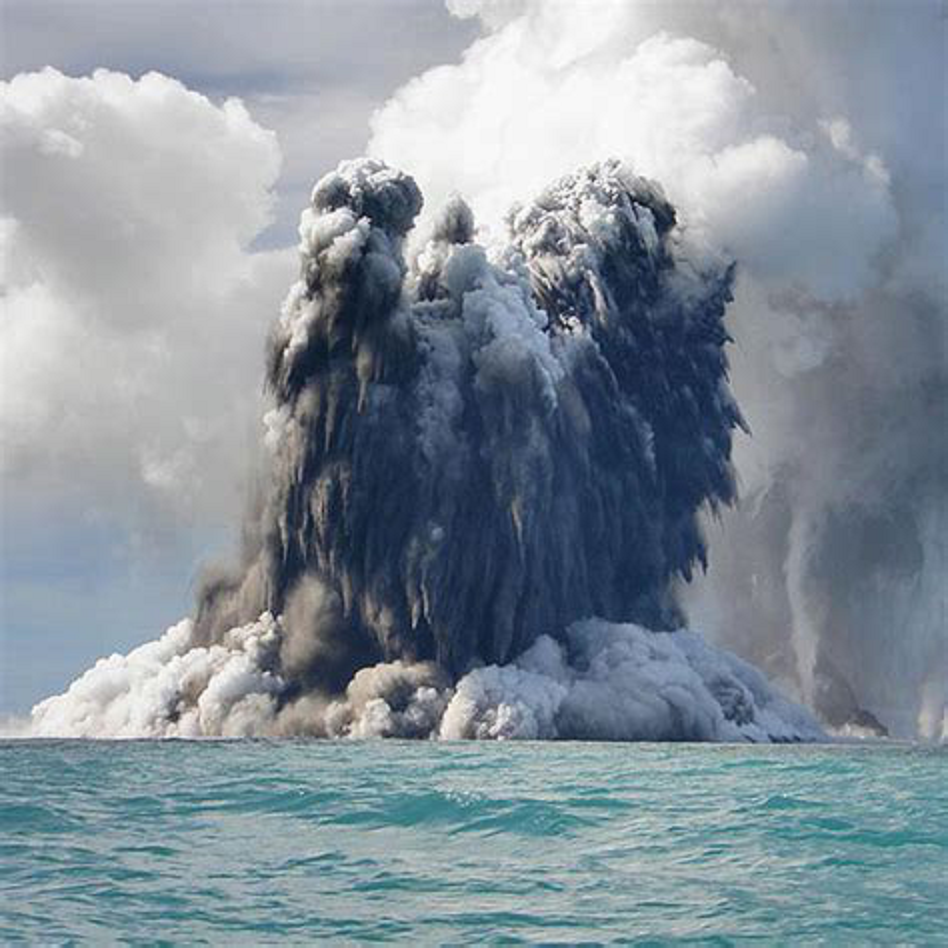
A video of several stupendous submarine volcanoes can be viewed here.
Oceanic Eruptions occur when Methane clathrates (molecules made of water and methane) sometimes break from the continental shelves, producing a methane eruption called a clathrate gun. The "gun" shoots immense amounts of the greenhouse gas methane into the atmosphere, causing Global Heating. Such events are linked to the end-Permian extinction and Paleocene-Eocene Thermal Maximum.
Megatsunamis
A megatsunami is an extremely large wave created by a substantial and sudden displacement of material into a body of water. Megatsunamis have different features from ordinary tsunamis. Ordinary tsunamis are caused by underwater tectonic activity (movement of the earth's plates) and therefore occur along plate boundaries and as a result of earthquakes and the subsequent rise or fall in the sea floor that displaces a volume of water. Ordinary tsunamis exhibit shallow waves in the deep waters of the open ocean that increase dramatically in height upon approaching land to a maximum runup height of around 30 metres (100 ft) in the cases of the most powerful earthquakes. By contrast, megatsunamis occur when a large amount of material suddenly falls into water or anywhere near water (such as via a landslide, meteor impact, or volcanic eruption). They can have extremely large initial wave heights in the hundreds of metres, far beyond the height of any ordinary tsunami. These giant wave heights occur because the water is "splashed" upwards and outwards by the displacement.
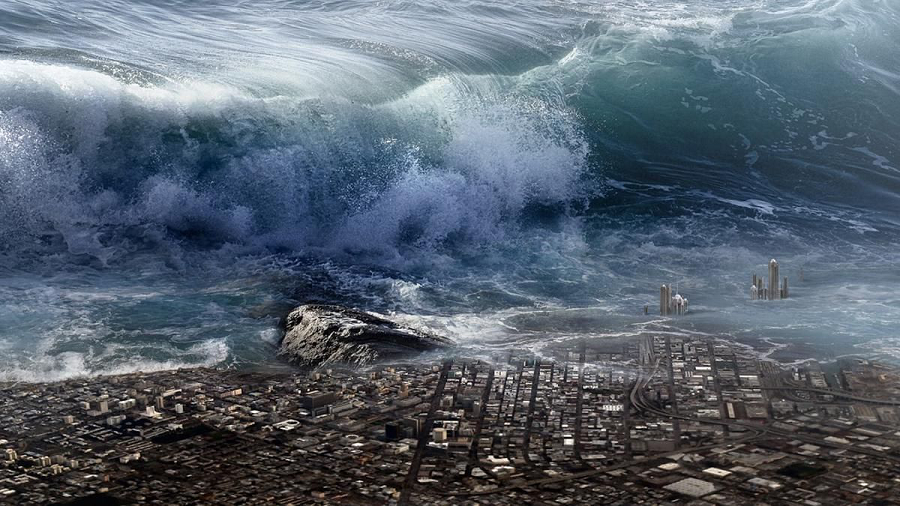
Examples of modern megatsunamis include the one associated with the 1883 eruption of Krakatoa (volcanic eruption), the 1958 Lituya Bay earthquake and megatsunami (a landslide which resulted in wave runup up to an elevation of 524.6 metres (1,721 ft), and the 1963 Vajont Dam landslide (caused by human activity destabilizing the sides of the valley). Prehistoric examples include the Storegga Slide (landslide), and the Chicxulub, Chesapeake Bay, and Eltanin meteor impacts.
Massive Earthquakes can cause megatsunamis, which, when they strike land, cause massive damage. If these megatsunamis strike where there are human habitations and/or industrial activities, these megatsunamis could kill hundreds of thousands of people and do extensive damage to worldwide economic interdependencies. For example, if a Megasunami struck Tokyo, Japan, it could wipe out most of the city and kill most of its 14 million inhabitants, as well as affect the economy of the entire world. A rare video of a Japan Tsunami can be viewed here, and an AI Generated video of a Megatsunami destroying a city can be viewed here.
Geomagnetic Reversal
A Geomagnetic Reversal is a change in a planet's magnetic field such that the positions of magnetic north and magnetic south are interchanged (not to be confused with geographic north and geographic south). The Earth's field has alternated between periods of normal polarity, in which the predominant direction of the field was the same as the present direction, and reverse polarity, in which it was the opposite. These periods are called chrons.
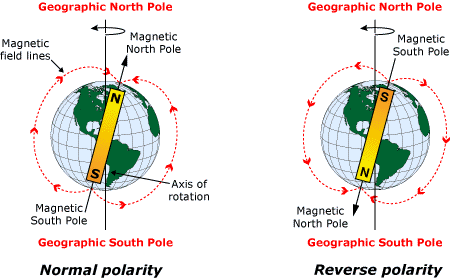
The time spans of chrons are randomly distributed, with most being between 0.1 and 1 million years, with an average of 450,000 years. Most reversals are estimated to take between 1,000 and 10,000 years. The latest one, the Brunhes-Matuyama reversal, occurred 780,000 years ago, and may have happened very quickly, within a human lifetime.
A brief complete reversal, known as the Laschamp event, occurred only 41,000 years ago during the last glacial period. That reversal lasted only about 440 years, with the actual change of polarity lasting around 250 years. During this change, the strength of the magnetic field weakened to 5% of its present strength. Brief disruptions that do not result in reversal are called geomagnetic excursions.
A geomagnetic reversal in the time of magnetic compass navigation would have a serious, but not an Apocalyptic impact. With the advent of Global Positioning Satellites (GPS) as the main form of navigation, a geomagnetic reversal would have a negligible impact on navigation. Its main impact is on the Earth’s magnetic field to deflect Coronal Mass Ejections. A geomagnetic reversal and a major CME occurring during the same time may result in a larger and more widespread major CME impact than during normal geomagnetic times. There is also the possibility that more Gamma Rays from outer space could strike the Earth, which may have some (minor) impact on weather and climate. This increase in Gamma Rays may also cause an increase in certain types of cancers in human or animal life and may initiate more than normal, but probably not significant, genetic mutations in life.
When it will occur, and how long it will occur are unknown. As I believe that this is not a major concern, and it can be coped with, I do not consider geomagnetic reversal an Apocalyptic event.
Global Climate Change
Climate Change is a change in the statistical distribution of weather patterns that lasts for an extended period of time (i.e., decades to millions of years). Climate change may refer to a change in average weather conditions, or in the time variation of weather within the context of longer-term average conditions. Climate change is caused by factors such as biotic processes, variations in solar radiation received by Earth, plate tectonics, and volcanic eruptions. Certain human activities have been identified as primary causes of ongoing climate change, often referred to as global warming. There is no general agreement in scientific, media, or policy documents as to the precise term to be used to refer to anthropogenic forced change; either "global warming" or "climate change" may be used.
Scientists actively work to understand past and future climate by using observations and theoretical models. A climate record extending deep into the Earth's past has been assembled, and continues to be built up, based on geological evidence from borehole temperature profiles, cores removed from deep accumulations of ice, floral and faunal records, glacial and periglacial processes, stable-isotope and other analyses of sediment layers, and records of past sea levels. More recent data are provided by the instrumental record. General circulation models, based on the physical sciences, are often used in theoretical approaches to match past climate data, make future projections, and link causes and effects in climate change.
The following charts are a result of these observations and theoretical models, which illustrate the major fluctuations of climate temperatures throughout the different geological ages:
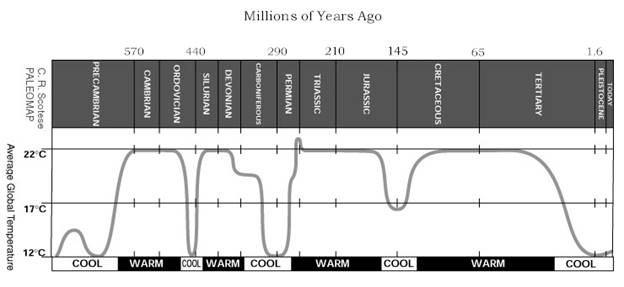
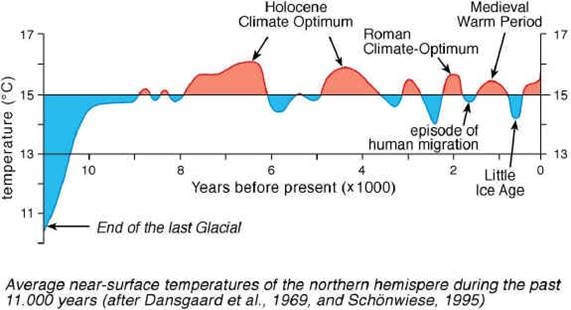
Factors that can shape climate are called climate forcings or "forcing mechanisms". These can be either "internal" or "external". Internal forcing mechanisms are natural processes within the climate system itself (e.g., the thermohaline circulation). External forcing mechanisms can be either anthropogenic - caused by humans - (e.g., increased emissions of greenhouse gases and dust) or natural (e.g., changes in solar output, the earth's orbit, volcanic eruptions).
Physical evidence to observe climate change includes a range of parameters. Global records of surface temperature are available beginning from the mid-late 19th century. For earlier periods, most of the evidence is indirect, and climatic changes are inferred from changes in proxies, indicators that reflect climate, such as vegetation, ice cores, dendrochronology, sea level change, and glacial geology. Other physical evidence includes arctic sea ice decline, cloud cover and precipitation, vegetation, animals, and historical and archaeological evidence.
Astronomical Events
Astronomical events, events outside of the Earth-Moon system, could also have an Apocalyptic effect. In all of these possibilities, except for an asteroid impact, there is nothing we can do about them, so we will just have to deal with them when they occur. Some of the more plausible scenarios are:
Coronal Mass Ejection
A Coronal Mass Ejection (CME) is a significant release of plasma and magnetic field from the solar corona. They often follow solar flares and are normally present during a solar prominence eruption. The plasma is released into the solar wind and can be observed in coronagraph imagery by both Earth-based and space-based telescopes. To learn more about Coronal Mass Ejections, I would suggest that you review the Encyclopedia Britannica YouTube video on this subject.
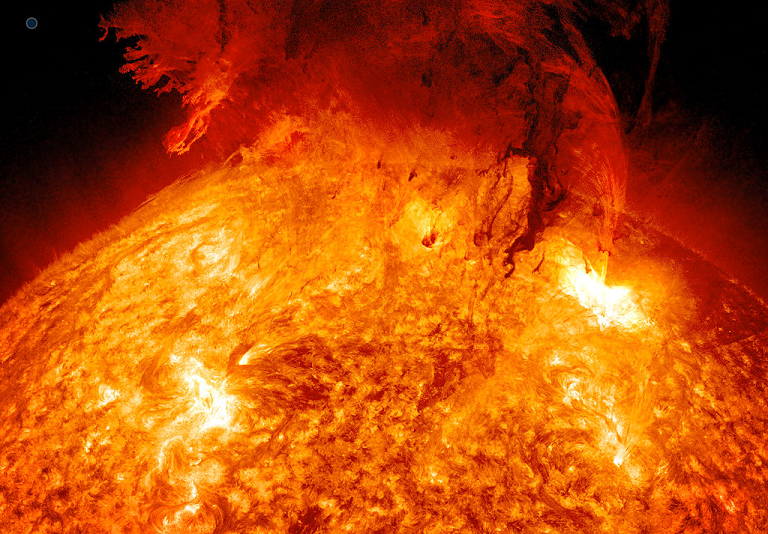
Massive Coronal Mass Ejection on June 7, 2011
Coronal mass ejections are often associated with other forms of solar activity, but a broadly accepted theoretical understanding of these relationships has not been established. CMEs most often originate from active regions on the Sun's surface, such as groupings of sunspots associated with frequent flares. Near solar maxima, the Sun produces about three CMEs every day, whereas near solar minima, there is about one CME every five days.
Coronal mass ejections release large quantities of matter and electromagnetic radiation into space above the Sun's surface, either near the corona (sometimes called a solar prominence), or farther into the planetary system, or beyond (interplanetary CME). The ejected material is a magnetized plasma consisting primarily of electrons and protons. While solar flares travel very fast (being primarily electromagnetic radiation), CMEs (being primarily matter) travel relatively slower.
CMEs can be categorized into three types: Normal, Major, and Massive. As the space around the Sun is vast, CMEs do not often impact the Earth. Normal CME Earthly impacts occur a few times a year and pose no threat, but they do provide interesting aurora displays. A Major CME Earthly impact occurs several times a decade, which leads to even more spectacular auroras, but could also damage satellites, communications, and power systems. A Massive CME generally occurs once every 500 years, but that does not mean they occur in 500-year intervals. They could bunch close together and then not occur for many centuries. There is no way to predict when the next Massive CME will strike the Earth.
So, what are the chances of a Massive CME striking the Earth? This has happened in the past, but as human civilization was not dependent on electricity or electronics, the impact was negligible. The last Massive CME Earth impact occurred in 1859 (known as the Carrington Event of 1859). A time when the most advanced technology was the telegraph. This event almost destroyed the telegraph system, as many telegraph lines were burned out, and many electrical telegraph receivers/transmitters were fused and destroyed. This telegraph equipment was either repaired or replaced over the next several years and had only a minor impact on human civilization. A YouTube Video of the Carrington Event of 1859 provides more information on this event and the Massive CME's impact.
A Massive CME Earth impact would be an apocalyptic-type event, as our modern technological world is highly dependent on electricity and electronics. The amount of charged particles that would envelop the Earth would be such that it would destroy electric and electronic equipment, even if they were turned off and unplugged. These charged particles would directly feed an electrical charge into electrical and electronic circuits and pathways, and overload them, resulting in a short circuit to the equipment. If a Massive CME struck the Earth, it could mean the end of human civilization. Today, all human civilization is dependent on electricity and electronics. Power lines, electrical generators, and electrical transformers would be burned out unless protected (and most are not protected). Transportation systems would come to a halt as they are dependent on electricity and electronics. Automobiles, trucks, trains, airplanes, and ships would be rendered inert with the loss of their electricity and electronics systems. All communications systems, radio, television, telephone, and cell phones, as well as the Internet, would be destroyed. All water and sewer systems would not function. There would be no electricity for homes, buildings, shopping facilities, hospitals, etc. No way to transport food and drink from the source to the consumer, and food and drink supplies would rapidly be exhausted. Starvation for most of humanity would be the result, and those who didn’t starve would be subject to disease outbreaks, as there would be no way to treat them. This would also cause mass riots and mass murders as the human population fought over food and drink supplies. For many, suicide would be preferable to dying of starvation or disease. Most of humanity would be wiped out. Indeed, the only humanity to survive would be those close to food and water supplies that could sustain them through the crisis, and they would have to resort to manual efforts to hunt and fish, grow food, and provide for water. All urban and suburban locations would be massively impacted, and most rural areas would be severely impacted. It would take centuries if not millennia for human civilization to recover. An interesting article on Massive CMEs is “What Would Happen if a Massive Solar Storm Hit the Earth?”, or my own fictional story about this type of event. A Massive CME Earth impact is truly an Apocalyptic event.
What can be done to prevent or minimize the impacts of a Massive CME strike? Almost nothing, and what little that can be done to minimize the impacts comes at a very great cost. Electricity and electronics can be enclosed in a Faraday Cage to prevent harm, but it is not feasible to enclose all electrical and electronic equipment in a Faraday Cage. In addition, critical spare parts would have to be stored in a Faraday cage for replacement purposes after a Massive CME strikes the Earth. And, as technology is constantly changing, these spare parts would have to be replaced with newer spare parts. The cost of enclosing even the most critical electricity and electronics systems in a Faraday cage would be in the billions of dollars, and the cost to construct Faraday cages for the storage of spare parts, and the costs of the spare parts, could be in trillions of dollars. Consequently, nothing can be done for the protection of a Massive CME Earth impact, but Faraday Cages can be utilized for protection against a Major CME strike on Earth. Some of this Faraday cage protection is occurring in critical Government and Military facilities, but I am unaware of this happening outside of those facilities, even though it is possible and desirable to do so.
Of all the Apocalyptic events in this article, a Massive CME Earth impact event is the one I am most worried about. I am worried because this will happen, and probably within the next century, and maybe even tomorrow. As there is nothing that we can do to prevent this, and not much we can do to alleviate the impacts, this is the most likely end of human civilization as we know it due to our dependence on stable and durable electrical supplies.
Asteroid Impact
An Asteroid Impact event is a collision between astronomical objects, causing measurable effects. Impact events have physical consequences and have been found to regularly occur in planetary systems, though the most frequent involve asteroids, comets, or meteoroids and have minimal impact. When large objects impact terrestrial planets like the Earth, there can be significant physical and biospheric consequences, though atmospheres mitigate many surface impacts through atmospheric entry. Impact craters and structures are dominant landforms on many of the Solar System's solid objects and present the strongest empirical evidence for their frequency and scale.
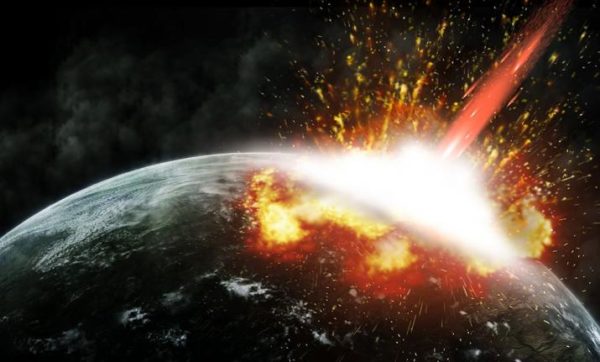
Impact events appear to have played a significant role in the evolution of the Solar System since its formation. Major impact events have significantly shaped Earth's history, have been implicated in the formation of the Earth-Moon system, the evolutionary history of life, the origin of water on Earth, and several mass extinctions. Notable impact events include the Chicxulub impact, 66 million years ago, believed to be the cause of the Cretaceous Paleogene (dinosaur) extinction event.
Throughout recorded history, hundreds of Earth impacts (and exploding bolides) have been reported, with some occurrences causing deaths, injuries, property damage, or other significant localised consequences. One of the best-known recorded impacts in modern times was the Tunguska event, which occurred in Siberia, Russia, in 1908. The 2013 Chelyabinsk meteor event is the only known such incident in modern times to result in a large number of injuries, excluding the 1490 Ch'ing-yang event in China. The Chelyabinsk meteor is the largest recorded object to have encountered the Earth since the Tunguska event. The asteroid impact that caused the Mistastin crater generated temperatures exceeding 2,370 °C, the highest known to have occurred on the surface of the Earth.
The Comet Shoemaker-Levy 9 impact on Jupiter provided the first direct observation of an extraterrestrial collision of Solar System objects, when the comet broke apart in July 1992 and collided with Jupiter in July 1994. An extrasolar impact was observed in 2013, when a massive terrestrial planet impact was detected around the star ID8 in the star cluster NGC 2547 by NASA's Spitzer space telescope and confirmed by ground observations.
The hazards of an asteroid impact are dependent on the size of the asteroid, as the following diagram illustrates.
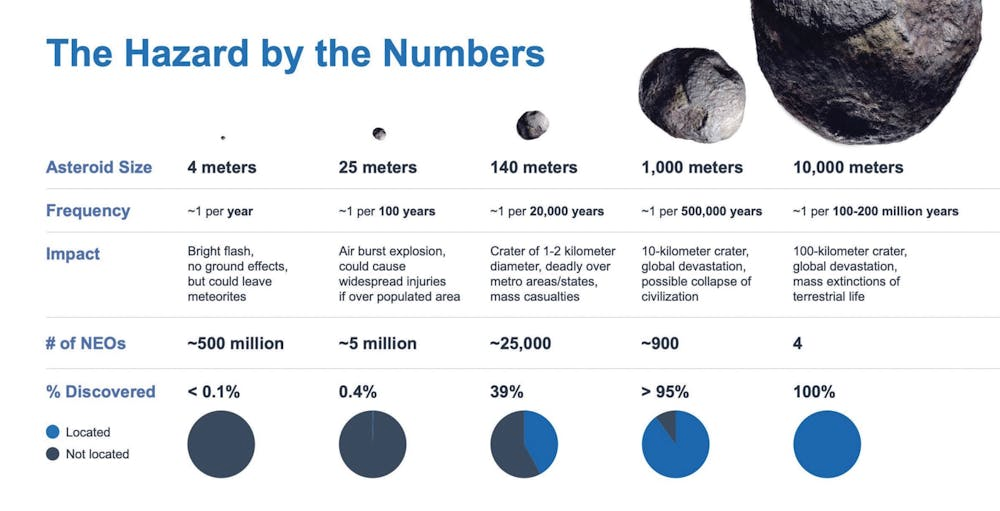
NEO – Near Earth Objects
In April 2018, the B612 Foundation reported, "It's a 100 per cent certain we'll be hit [by a devastating asteroid], but we're not 100 per cent sure when." In June 2018, the U.S. National Science and Technology Council warned that America is unprepared for an asteroid impact event and has developed and released the "National Near-Earth Object Preparedness Strategy Action Plan" to better prepare for this event.
We will be struck by an asteroid of sufficient mass to destroy life on Earth as we know it. It has happened throughout the history of the Earth, and it will happen in the future of Earth. We will also be struck by an asteroid that may not destroy life on Earth, but will cause considerable damage and death. The only question is when this will happen, and when it will happen is not possible to answer. NASA has a program to detect possible asteroid impactors and their trajectories to determine if they will impact the Earth, but we haven’t detected all of the possible asteroid impactors, and a new one may be discovered that could impact us in the near future. It is also possible that an asteroid impactor can go undetected. After all, they are very small and dim, and there is a lot of space to search.
As to the possibility of deflecting an asteroid impactor, the answer is ‘not at the moment’. Perhaps soon, if we discover the proper solution to achieve this goal and fund the development of an asteroid deflector, it may be possible. Several candidate technologies have been proposed to deflect an asteroid, and they all have their pluses and minuses. We may need to develop more than one asteroid deflector device to ensure success. It will probably be very expensive and time-consuming to develop an asteroid deflector(s). But it would be much more expensive if we were struck by an asteroid, and it would take considerably more time to repair the damage of an asteroid impact. It should be noted that the further out an asteroid impactor is detected, the greater the chance we have of deflecting the asteroid. If the asteroid impactor is detected near the Earth, it may not be possible to deflect it.
Solar Changes
The Sun is the star at the center of the Solar System. It is a nearly perfect sphere of hot plasma, with internal convective motion that generates a magnetic field via a dynamo process. It is by far the most important source of energy for life on Earth. Its diameter is about 1.39 million kilometers, i.e., 109 times that of Earth, and its mass is about 330,000 times that of Earth, accounting for about 99.86% of the total mass of the Solar System. About three-quarters of the Sun's mass consists of hydrogen (~73%); the rest is mostly helium (~25%), with much smaller quantities of heavier elements, including oxygen, carbon, neon, and iron.
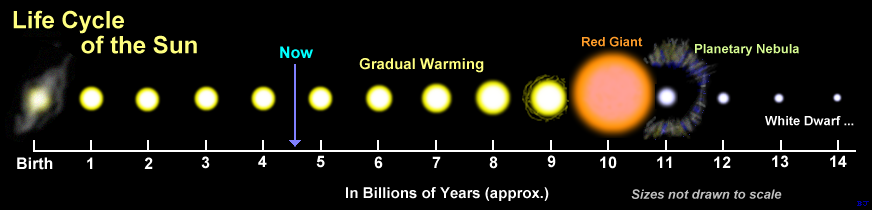
The Sun is a G-type main-sequence star (G2V) based on its spectral class. As such, it is informally and not completely accurately referred to as a yellow dwarf (its light is closer to white than yellow). It formed approximately 4.6 billion years ago from the gravitational collapse of matter within a region of a large molecular cloud. Most of this matter gathered in the center, whereas the rest flattened into an orbiting disk that became the Solar System. The central mass became so hot and dense that it eventually initiated nuclear fusion in its core. It is thought that almost all stars form by this process.
The Sun is roughly middle-aged; it has not changed dramatically for more than four billion years, and will remain fairly stable for more than another five billion years, as the following diagram illustrates:
When the Earth was first formed, it was molten and volcanic. It cooled and simply became hot. It cooled even further, and then warmed, and at times in our Earth's geological history, the Earth’s climate varied tremendously. At different times, the earth was covered in ice, at other times it had a tropical environment and was covered with lush vegetation and animal life, and the climate has been in all states in between. These changes are known as Geological Ages. The energy from geothermal activity and the Sun have been the major drivers in Geological Ages. Today, geothermal activity only plays a minor role in comparison to solar energy in the energy state of the Earth.
A very small increase or decrease in the amount of solar energy reaching the Earth could have an impact on the Earth and human civilization. Indeed, less than 100th of a 1% change in solar energy levels would be enough to impact the Earth. Although the Sun’s energy output is generally stable, it has variations of its energy output. Until recently, it was not possible to measure these small amounts of solar energy variability. Recently, NASA has orbited satellites around the Sun that are attempting to measure this solar energy variability on a small scale. The information obtained so far is insufficient to be utilized to determine the impact on the Earth. But to determine the impact of Solar energy on the Earth, we need to incorporate the variability of solar activity. We also need to have sufficient knowledge and/or data on the internal processes of the Sun. Although we have much more knowledge and data than we did fifty years ago, we need much more to help us understand Solar activity and the internal processes of the Sun.
We, therefore, need to be cognizant that even a small change in solar energy output on an extended timeframe (dozens of years) will have a significant global impact. A small change in the amount of solar energy reaching the Earth could trigger significant changes in the environment (either a warming or a cooling of the Earth), which could lead to drastic impacts on human civilization. These changes have been outlined during the discussions of global cooling and global warming that have occurred over the last fifty years. I suspect that the drastic changes that have been outlined would not occur except in the case where the small change in solar energy output were at the extreme edges of the change. A larger change in solar energy output could have an Apocalyptic impact on human civilization. A 1% increase or decrease in solar energy output would drastically impact the Earth and may lead to the end of human civilization. A decrease of this magnitude could lead to a deep freeze, or an increase of this magnitude could lead to a parched Earth. Either way, it will not be good for human civilization, and there is nothing we can do to change or alleviate the consequences of either a small or large change in solar energy output. We simply have to deal with it if or when it occurs.
Galactic Motion
The Galactic Year, also known as a cosmic year, is the duration of time required for the Sun to orbit once around the center of the Milky Way Galaxy. Estimates of the length of one orbit range from 225 to 250 million terrestrial years. The Solar System is traveling at an average speed of 828,000 km/h (230 km/s) or 514,000 mph (143 mi/s) within its trajectory around the galactic center, a speed at which an object could circumnavigate the Earth's equator in 2 minutes and 54 seconds; that speed corresponds to approximately one 1300th of the speed of light. The galactic year provides a conveniently usable unit for depicting cosmic and geological time periods together. By contrast, a "billion-year" scale does not allow for useful discrimination between geologic events, and a "million-year" scale requires some rather large numbers.
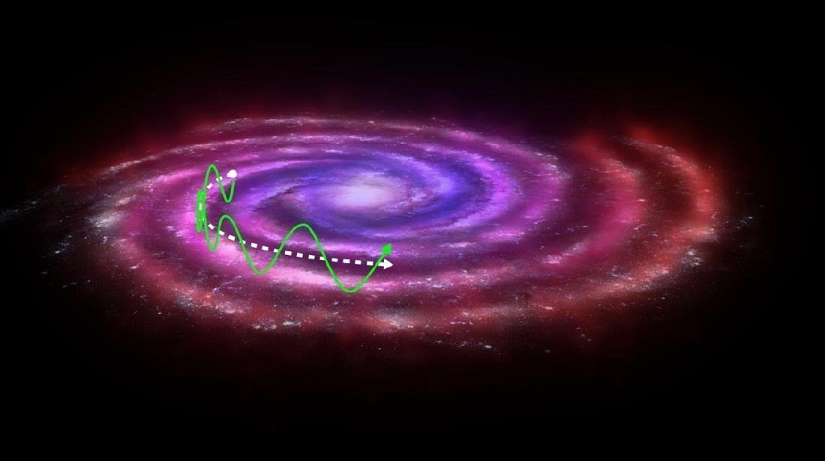
Another astronomical issue is the fact that our Sun revolves around the center of our galaxy. One revolution takes approximately 270 million years, but during that time, the Sun moves through lesser or denser areas of Galactic dust. The Sun also oscillates above and below the galactic plane as it revolves, which may have an impact on the galactic dust density it encounters. The question is, does this dust density have an impact on the amount of solar energy that reaches the Earth? In a denser dust region, we can expect that some of the solar energy is reflected and does not reach the Earth, while in a less dense area, more solar energy would reach the Earth. How much of an impact this has is totally unknown. It may also be totally unknowable, as we have no way of determining the density of the galactic dust around the Sun, nor the density of the dust in the path of the Sun's revolution around the Milky Way Galaxy. It should be noted that the dust density impact of this Solar movement around the galaxy can take tens of thousands, if not hundreds of thousands, or millions of years to have an impact. However, the question is whether we are on a boundary line of lesser or greater dust concentrations, and whether this boundary is an abrupt or gradual change. We know that the Sun is currently moving into a small galactic arm of the Milky Way Galaxy, so we should expect more dusty regions to be encountered.
Supernova
A Supernova is a transient astronomical event that occurs during the last stellar evolutionary stages of a some star's life, whose end is marked by one final, titanic explosion. This causes the sudden appearance of a "new" bright star, before slowly fading from sight over several weeks, months, or years. Supernovae are more energetic and destructive than ordinary stellar Nova. In Latin, nova means "new", referring astronomically to what appears to be a temporary new bright star. Adding the prefix "super-" distinguishes supernovae from ordinary novae, which are far less luminous and less destructive than a supernova.

Only three Milky Way naked-eye supernova events have been observed during the last thousand years, though many have been seen in other galaxies using telescopes. The most recent directly observed Supernova in the Milky Way was Kepler's Supernova in 1604, but two more recent supernova remnants have also been found. Statistical observations of supernovae in other galaxies suggest they occur on average about three times every century in a galaxy, and that any galactic supernova would almost certainly be observable with the naked eye. Due to the wide range of astrophysical consequences of these events, astronomers now deem supernova research, across the fields of stellar and galactic evolution, as an especially important area for investigation.
There are about a dozen stars within 3,000 light-years of Earth that are Supernova progenitor candidates. If one of these stars goes Supernova, it may have an impact on life on Earth. Gamma rays produced by a Supernova are responsible for most of the adverse effects a supernova can have on Earth. Gamma rays induce a chemical reaction in the upper atmosphere, which would deplete the ozone layer enough to expose the surface to harmful solar and other cosmic radiation (mainly ultraviolet). Lower life forms would be particularly affected, but this would have an impact on the food chain and have negative effects on all life. The increase in ultraviolet radiation striking the Earth could also lead to increased health risks to humans and animals.
The chances that one of these Supernova progenitor candidates will go Supernova, and that this Supernova is close enough to the Earth to produce sufficient gamma rays of such intensity to impact the ozone layer are rather small and unlikely, but it could happen. Astronomers are constantly observing the heavens, searching for Supernova progenitor candidates to study them. To date, they have a number of candidates nearby, but there is no indication that they are at the stage where they will become a Supernova. However, Betelgeuse, at a distance of about 724 light-years, or, more accurately, between 613 and 881 light-years, when data uncertainties are included, is exhibiting progenitor supernova activities, and astronomers are keeping a close eye on Betelgeuse.
Micro Black Hole
A Black Hole is a region of spacetime exhibiting such strong gravitational effects that nothing, not even particles and electromagnetic radiation such as light, can escape from inside it. The theory of general relativity predicts that a sufficiently compact mass can deform spacetime to form a black hole. The boundary of the region from which no escape is possible is called the event horizon. Although the event horizon has an enormous effect on the fate and circumstances of an object crossing it, no locally detectable features appear to be observed. In many ways, a black hole acts like an ideal black body, as it reflects no light. Moreover, quantum field theory in curved spacetime predicts that event horizons emit Hawking radiation, with the same spectrum as a black body of a temperature inversely proportional to its mass. This temperature is on the order of billionths of a kelvin for black holes of stellar mass, making it essentially impossible to observe.
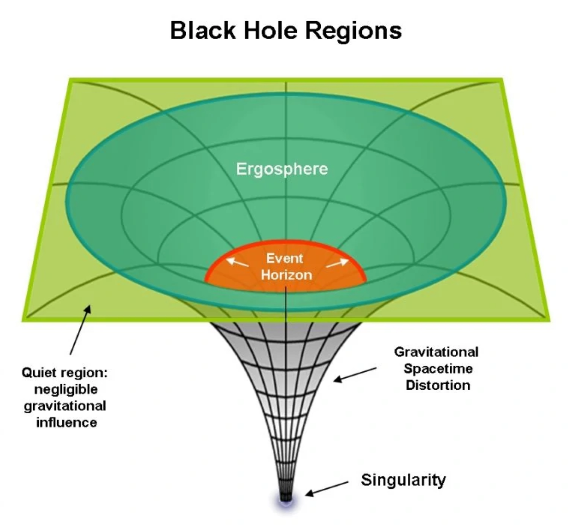
Micro black holes, also called quantum mechanical black holes or mini black holes, are hypothetical tiny black holes in which quantum mechanical effects play an important role. The concept that black holes may exist that are smaller than a stellar mass was introduced in 1971 by Stephen Hawking. To date, there is no proof that they exist. But if they do exist, and if the Sun or Earth should interact with them as they and the Sun or Earth intersect, there could be disastrous consequences. If the Sun were to interact with a Micro black hole, it may change the nuclear processes within the Sun, which could affect the Solar energy output and increase Coronal Mass Ejections, amongst other things, which would be a Natural Apocalyptic Event. If the Earth intersected a Micro black hole, all types of geological processes, and probably geothermal processes, would be impacted. This could reshape the Earth’s core, cause major earthquakes, volcanic eruptions, and other natural disasters. It would be an Apocalyptic event that would destroy human civilization. But as they are theoretical and the odds of the Sun or Earth colliding with one in the vastness of outer space are so minute, there should be nothing to worry about.
Aliens
Extraterrestrial life, also called alien life (or, if it is a sentient or relatively complex individual, an "extraterrestrial" or "alien"), is life that occurs outside of Earth and that probably did not originate from Earth. These hypothetical life forms may range from simple prokaryotes to beings with civilizations far more advanced than humanity. The Drake equation speculates about the existence of intelligent life elsewhere in the universe. The science of extraterrestrial life in all its forms is known as exobiology.
Since the mid-20th century, there has been an ongoing search for signs of extraterrestrial life. This encompasses a search for current and historic extraterrestrial life, and a narrower search for extraterrestrial intelligent life. Depending on the category of search, methods range from the analysis of telescope and specimen data to the use of radio antennas to detect communication signals from intelligent extraterrestrial civilizations.
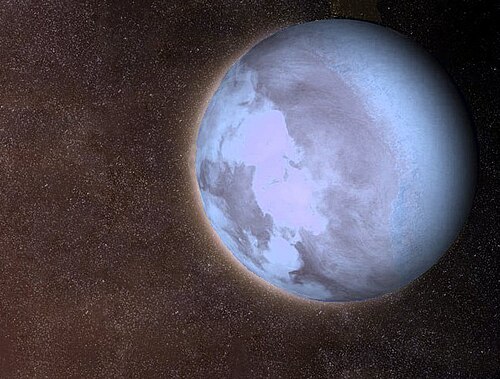
Artist's impression of Gliese 581
c.
The first terrestrial extrasolar planet discovered within its
star's habitable zone.
However, no such extraterrestrial intelligent life has been detected, and possibly because it does not exist. My science articles, Evolution to Intelligent Life and Intelligent Life in the Universe, examine what it would take for intelligent life to evolve on a planet, and the possibility of this occurring on other planets.
The concept of extraterrestrial life, and particularly extraterrestrial intelligence, has had a major cultural impact, chiefly in works of science fiction. Over the years, science fiction communicated scientific ideas, imagined a wide range of possibilities, and influenced public interest in and perspectives of extraterrestrial life. One shared space is the debate over the wisdom of attempting communication with extraterrestrial intelligence. Some encourage aggressive methods to try for contact with intelligent extraterrestrial life. Others, citing the tendency of technologically advanced human societies to enslave or wipe out less advanced societies, argue that it may be dangerous to actively call attention to Earth.
We should be careful of wanting to meet extraterrestrial civilizations. Human history has many sad examples of when a more advanced society meets a less advanced society. It has often been the case that the less advanced society suffers tremendously, if not being obliterated. And we could be the less advanced society in an alien contact scenario.
Man-Made Apocalyptic Events
The preceding Natural Apocalyptic Events have natural causes that are not predictable nor controllable by humankind. With the development of a global economy and our current technological era, it is now possible to have Man-Made Apocalyptic Events that are the result of human activities. While these Man-Made Apocalyptic Events may not end humanity, they are likely to end human civilization as we know it. These Man-Made Apocalyptic Events are in our control if we should so choose to control them. Doing nothing about these Man-Made Apocalyptic Events is to allow them to occur and severely impact human civilization. These man-made activities that could result in Apocalyptic Events are as follows.
Technological
We live in a modern technological era, in which technological advances are impactful, and the efforts that are undertaken to maintain and advance our technological world can lead to Man-Made Apocalyptic Events. We must, therefore, consider and be proactive in preventing these events. Some of the most serious of these possible technological Man-Made Apocalyptic Events are as follows.
Single Points of Failure
There are several Single Points of Failure in our modern world, which, if they are destroyed or severely damaged, could lead to Apocalyptic events. A single point of failure is a part of a system that would stop the entire system from working if it were to fail. The term ‘single point of failure’ implies that there is no backup or redundant option that would enable the system to continue to function without it. SPOFs are undesirable in any system with a goal of high availability or reliability, be it a business practice, software application, or other industrial system. The concept of a single point of failure has most often been applied to the fields of engineering, computers, and networking, but it also applies to other fields, such as product supply chain and transportation infrastructure. The following examples are not comprehensive as to all the possibilities of single points of failure, but they are illuminative of some of the major single points of failure in our modern world.
The mining of rare earth minerals that are a key component of much modern electronic equipment. The rare earth mining process involves extracting ores that contain rare earth elements, which are then crushed and subjected to various separation techniques, such as magnetic and electrostatic separation, to isolate the desired metals. This process can produce significant amounts of toxic waste and requires careful management to minimize environmental impact. If these mining operations were destroyed, damaged, or halted, it would not be possible to manufacture many pieces of electronic equipment. We need to develop multiple rare earth mining operations for these rare earth minerals over several continents where those rare earth minerals are located.
There are certain major pieces of electrical generation equipment that are critical to the electricity infrastructure of the world. We must ensure that this major electrical generation equipment, and its spare parts, have multiple manufacturers located across several different continents in the event of a disruption to the manufacturing or supply of this equipment.
We also need to have sufficient spare parts for major electrical and electronic equipment. In the event of a natural or man-made disaster, having sufficient spare parts would reduce the recovery time of a disaster. However, many spare parts for major electrical and electronic equipment are very expensive, and they would have to be stored in such a manner as not to be impacted by natural or man-made disasters. This storage capability could be very expensive.
The energy infrastructure of America is also susceptible to single points of failure, as I have written in my article on “The Electrical Bulk Power Grid”. The ability to reliably transmit bulk electrical power across North America is critical to our economy and society. Reliable electricity service is essential to the nation’s health, welfare, and security. In 2000, the National Academy of Engineering named the modern transmission system as one of the greatest inventions of the 20th century. Powering America’s homes, factories, and gadgets, reliable electricity is a staple for modern comfort and the production of valuable goods and services. Yet, as interwoven as the electric grid is into our daily lives, few understand how electricity is delivered to the consumer and the policies that influence this process. Despite the grid’s functioning exceptionally well, many concerns exist about grid vulnerabilities, whether from equipment and power line failures, natural causes, or from terrorists trying to disrupt the power grid.
Finally, the manufacture of modern technological components has been clustering into regional areas in the world. We need to ensure that in the event of a natural or man-made disaster, there are several regional areas for the manufacture of these technology components, and that they are located on several different continents.
There are several choke points in the global transportation system that, if these points were destroyed or restricted by natural or man-made forces, could severely cripple the distribution of supplies of critical products for an economy to function properly. The economic collapse that would result from this failure could lead to societal chaos with unforeseen consequences. Food, fuel, and medicines are the big three areas of concern, but they are not the only areas of concern that could have severe impacts if the transportation system is not functioning properly.
The problems of accomplishing this are political and economic. There is political resistance to doing this, as those countries where they are currently located wish to keep these industries under their control for national economic and political leverage purposes. The economic problem is that the labor pool where these things currently occur is cheaper, and therefore, the cost of manufacturing is less. Creating manufacturing in other areas of the world results in higher costs and makes the product less competitive economically. There are also economic costs of spare parts and the storage of spare parts. Who would be responsible for bearing the burden of these costs? Is it the responsibility of the government or business to ensure that enough spare parts are available in the event of a natural or man-made disaster?
In America, these problems should be addressed by expanding mining and manufacturing of critical products and upgrading systems susceptible to single points of failure, to ensure that any impacts of failure are ameliorated. These problems must be resolved as it is necessary to do this to ensure that, in the event of either a natural or man-made disaster, we have the capability to recover. If not, we may end up having an Apocalyptic event or civilization being knocked back for thousands of years.
Human Climate Change
I believe in climate change. I believe the climate has changed in the past, the climate is currently changing, and the climate will change in the future. This is a meteorological and geological scientific fact, as I have previously discussed in the section on ‘Global Climate Change’ in this article. The question is whether human activity is causing the current climate change, as illustrated in the following charts:
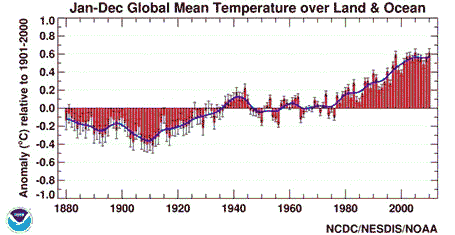

However, it is important that your perspective on human climate change be extended beyond the last 100 or so years, to the last 1000 years, when human activities potentially impacting the climate began to significantly rise:
Human climate change may be true, or it may not be true, depending upon your interpretation of scientific facts and beliefs.
If you had read my observation on "On the Nature of Scientific Inquiry", you know that I have a scientific orientation to my thinking, and in this article, I apply that scientific thinking to many of the issues and concerns of climate change. To understand Climate Change computer models, you need to know something about the Issues, Concerns, and Limitations of Computer Modeling, as I have outlined in another article, “Computer Modeling”. I have also written another article, “Climate Change”, which discusses this issue in detail, with the final thoughts being as follows.
In any Climate Change model or predictions, the first thing that should be discussed is the following questions:
- Have the effects of the Natural Cycle of Global Climate Change been accounted for and extracted from your Climate Model to determine the impact of possible human contribution to climate change?
- Has your Climate Model been shown to be reasonably accurate for the 2000 years prior to the industrial revolution (i.e., before possible human contributions to climate change)?
- Has the computer models’ software code been independently verified, in an open manner, to assure the veracity of the computer model (i.e., have your algorithms, constants, variables, Boolean algebra, interrelations, and feedback loops been demonstrated to be within scientific methods and computer modeling reasonability)?
- Have all the raw data, the data mining techniques, and the data massaging techniques been revealed and independently verified to ensure that the correct data is being utilized for the computer model?
- Have the sciences of Chaos, Complexity, and Networks been accounted for in your predictions?
The real question is - is that increase outside the normal range of what you should expect given the short time frame (100 years) in which you are measuring? And is human activity the cause of this change? The answer to that question is that it is not known with any certainty. What concerns human climate change proponents has been a steady increase within the normal parameters of the century of meteorological activity, and the possibility that this increase will continue, and we will have to deal with the serious effects on the Earth's climate.
The proponents of climate change often use statistical analysis and computer modeling to show that this is going to happen. It should be remembered that statistical analysis and computer modeling are tools of science and not actual science. In my article "On the Nature of Scientific Inquiry", you know that observation and experimentation, along with predictability and falsifiability, are at the core of science. Both the proponents and opponents of human activity causing climate change are constantly debating the predictability and falsifiability of the observations and experiments regarding climate change. There is also the debate on the veracity of a Climate Model due to the Systemic Problems I have discussed in the section Computer Modeling Issues, Concerns & Limitations of my article on Climate Change.
I, however, would like to comment on the predictability and falsifiability of the proponents of human-caused climate change. I know of no computer model for climate change that has a high level of predictability, especially when you consider the entire history of the world. Even for the last 10,000 years, their predictability has been very low. All you have to do is go back 20 or 30 years and review the predictions they made for what today's climate would be. Even predictions made just 10 years ago have not been borne out by the facts of today's climate. As to their falsifiability, it seems whenever new observations or experiments do not fit within their model, they often adjust the model to fit the new observations or experiments. Constantly revising your model is a scientific exercise that should be done, but it is also an indication that your model is incomplete, incorrect, or insufficiently comprehensive to be correct or scientific. Also, the constant readjustment of data and algorithms should be very carefully scrutinized. As always, be sure to allow for GIGO – Garbage In Garbage Out as well as the impacts of Data Mining, Data Massaging, and Data Quality in your Climate Change computer model.
Therefore, I am skeptical of the claims that human activity is causing major climate change. I do believe that human activity can cause minor local climate change. I am, however, concerned that it is possible that human activity could have a major impact on Climate Change. I believe that much more scientific research, both pro and con, must be done before we make large-scale changes to our economy in the hopes that it will prevent possible major climate change caused by human activity. I also believe that technologically reasonable and economically feasible efforts should be implemented to reduce pollutants into our climate as a matter of good social policy.
Robotics
A Robot is a machine, especially one programmable by a computer, capable of carrying out a complex series of actions automatically. Robots can be guided by an external control device, or the control may be embedded within. Robots may be constructed to take on human form, but most robots are machines designed to perform a task with no regard to how they look.
Robots can be autonomous or semi-autonomous and range from humanoids such as Honda's Advanced Step in Innovative Mobility (ASIMO) and TOSY's TOSY Ping Pong Playing Robot (TOPIO) to industrial robots, medical operating robots, patient assist robots, dog therapy robots, collectively programmed swarm robots, UAV drones such as General Atomics MQ-1 Predator, and even microscopic nano robots. By mimicking a lifelike appearance or automating movements, a robot may convey a sense of intelligence or thought of its own. Autonomous Things are expected to proliferate in the coming decade, with home robotics and the autonomous car as some of the main drivers.
The branch of technology that deals with the design, construction, operation, and application of robots, as well as computer systems for their control, sensory feedback, and information processing, is Robotics. These robotic technologies deal with automated machines that can take the place of humans in dangerous environments or manufacturing processes, or resemble humans in appearance, behavior, or cognition, and assist in human chores. Many of today's robots are inspired by nature, contributing to the field of bio-inspired robotics. These robots have also created a newer branch of robotics: Soft robotics. Soft robotics is a subfield of robotics that concerns the design, control, and fabrication of robots composed of compliant materials, instead of rigid links. In contrast to rigid-bodied robots built from metals, ceramics, and hard plastics, the compliance of soft robots can improve their safety when working in close contact with humans.
The problem with robots is not that they could take over the world and replace humans, but they will displace millions, if not billions, of manual or less skilled workers. Workers who do not have the education, training, and skills to find higher-level jobs. Some of these workers, and perhaps many of these workers, may not have the intelligence capabilities to be educated and trained for higher-level skill jobs. What are you going to do with these workers who cannot find jobs or be retrained for higher-level jobs? This may constitute a large number of people, tens of millions, and perhaps hundreds of millions of people. And what would be the cost to provide retraining for these displaced people? How would you feed, clothe, and house these people if they cannot find jobs or be retrained for higher-level jobs? Would it be necessary to implement population control on these people to reduce their numbers? And more importantly, how would these people react to all these measures? Would there be rioting in the streets, the overthrow of governments that do not meet their needs, or other harsh measures or reactions? I have no answers to these questions, but I do know they need to be answered. If they are not answered, we may see human civilization collapse as a result of not answering these questions. This could result in a man-made Apocalyptic event.
Artificial Intelligence
Artificial intelligence (AI), sometimes called machine intelligence, is intelligence demonstrated by machines, in contrast to the natural intelligence displayed by humans and other animals. In computer science, AI research is defined as the study of "intelligent agents": any device that perceives its environment and takes actions that maximize its chance of successfully achieving its goals. Colloquially, the term "artificial intelligence" is applied when a machine mimics "cognitive" functions that humans associate with other human minds, such as "learning" and "problem solving". Some have even questioned whether true Artificial Intelligence is possible or desirable, as I have examined in my article on “Is Artificial Intelligence Possible?” and my collected Chirps on "Artificial Intelligence"
The scope of AI is disputed: as machines become increasingly capable, tasks considered as requiring "intelligence" are often removed from the definition, a phenomenon known as the AI effect, leading to the quip, "AI is whatever hasn't been done yet." For instance, optical character recognition is frequently excluded from "artificial intelligence", having become a routine technology. Capabilities generally classified as AI as of 2017 include successfully understanding human speech, competing at the highest level in strategic game systems (such as chess and Go), autonomous cars, intelligent routing in content delivery networks, and military simulations.
In the twenty-first century, AI techniques experienced a resurgence following concurrent advances in the theoretical understanding of the underpinnings of AI, computer power, and the large and dispersed amounts of data that can be processed. AI techniques have also become an essential part of scientific research and the technology industry, helping to solve many challenging problems in many scientific and technological fields.
The present goal of Artificial intelligence is to become smarter and to assist mankind in making intelligent decisions. But should Artificial intelligence make intelligent decisions on its own? For lower-order decisions, this may be acceptable, but for higher-order intelligent decisions, you also need a human consciousness to ensure you are making a proper decision.
A technological singularity, often simply called the singularity, is a hypothetical event in which technological growth accelerates beyond human control, producing unpredictable changes in human civilization. According to the most popular version of the singularity hypothesis, I. J. Good's intelligence explosion model of 1965, an upgradable intelligent agent could eventually enter a positive feedback loop of successive self-improvement cycles; more intelligent generations would appear more and more rapidly, causing a rapid increase in intelligence that culminates in a powerful superintelligence, far surpassing human intelligence. Such a development could result in a Man-Made Apocalyptic Event of human civilization being replaced by an Artificial Intelligence civilization. And most concerning would be if AI were to be integrated into Robotics.
So, is the development of Artificial intelligence an Apocalyptic event? Not if we let it become one. We need to restrict Artificial Intelligence from making high-order decisions without human intervention, but we should utilize Artificial Intelligence to make high-order decision recommendations. We also need to be careful about which lower-order decisions to allow Artificial Intelligence to make and which lower-order decisions should be reviewed by a human. If we don’t do this, then an Artificial intelligence decision could lead to an Apocalyptic event. If we do this, then Artificial intelligence can be a great tool for mankind to assist them in making better human decisions.
Government and Economics
Why do I think it is necessary to discuss Government and Economics in an article on Apocalyptic events? I do so because the government and/or economy that people live under can have an Apocalyptic impact within a nation, which could spread to their neighboring countries, then to the region, and then globally. A great example of this was World War I and World War II. Problems within a single country spread to neighboring countries, then to the European continent, and then across the world. Millions of lives were lost, and severe economic damage was done to the people of Europe. But I am not here to discuss history. Rather, I wish to point out what I perceive as the major Apocalyptic problems of government and economics of the future.
Theocratic Oligarchies and Theocracies
Theocratic Oligarchies and Theocracies are usually run by religious fanatics who care not one wit for what is best for their peoples and care even less for other countries' peoples or what happens to the world. They often support or at least tolerate terrorism in their region (but not in their own country, except as a safe haven for terrorism) and terrorism across the world. Given what I believe are the Apocalyptic impacts of Terrorism, I must equate Theocratic Oligarchies and Theocracies with Terrorism as Apocalyptic events. For the people living under Theocratic Oligarchies and Theocracies, their economic life is often very difficult. This, and religious oppression that often occurs in Theocratic Oligarchies and Theocracies, often leads to economic failure and a violent revolution. An economic failure or a violent revolution that can impact neighboring countries, become regional, and may have a global impact.
Socialism (Democratic or Otherwise)
Democratic Socialism, wealth redistribution, income inequality, tax the rich, Occupy Wall Street, free education, free healthcare, etc., are all the same principle “socialism”; or, as one of our greatest Presidents has said;
"You work and toil and earn bread, and I'll eat it." No matter in what shape it comes, whether from the mouth of a king who seeks to bestride the people of his own nation and live by the fruit of their labor, or from one race of men as an apology for enslaving another race, it is the same tyrannical principle. - Abraham Lincoln
Implementing these items requires that you take from one class of people (those who work and toil) and give to another class of people (those who do not work and toil). And it is accomplished through Government intervention (coercion through threats of fines and/or imprisonment or worse). The government decides what and how much to take, and what and how much to give. This is not the same as taxes, as taxes are levied to support the necessary functions of the government for the good of all, not for the good of some. Therefore, with Socialism, the government is the master of all the citizens, and the citizens are the serfs of the government.
Socialism, Communism, Nazism, and Fascism are the different forms of Socialism that have been tried in the 20th century. And in all of them, the economy has failed to the detriment of their populations. Not only did the economy fail, but hundreds of millions died with the imposition and infliction of Socialism.
It is also true that Socialism never works in the long run. There is simply not enough earned by those who work and toil to support those who do not work and toil. It stifles the incentive to work and toil and encourages non-work and non-toil. The incentive to invent, innovate, and expand a business decreases as the government takes more of the fruits of your sweat and toil. The economy will stagnate, falter, and then collapse the longer Socialism is in place. This is readily apparent in Europe in the last half of the 20th century and the first part of the 21st century, as many European nations’ economies are faltering and collapsing due to the weight of Socialism. The end results of Socialism can be seen in South and Central America, as economies have collapsed, and the citizens are impoverished and destitute. Venezuela and Argentina are excellent examples of the terrible results of Socialism, while Argentina serves as a good example when Socialism is overturned.
Socialism also requires that the government decides what is best for its citizens (and we all know how good bureaucrats are at deciding what’s best for us), as well as central planning by the government on economic decisions (which has also never worked throughout history). To implement Socialism also requires that the government restrict the freedoms and liberties of its citizens, as well as violate the human rights of its people.
Safety nets to help the most impoverished and destitute of our citizens may be acceptable, but this should only impact a small percentage of our citizens (a low single-digit percentage of the population). To expand the safety net to a large percentage of the population is to implement Socialism in a slippery slope manner, and it must be avoided at all costs.
So, when you hear someone advocating any form of Socialism, they are advocating for the serfdom of its people, economic collapse, and massive deaths. Socialism should always be resisted in all places, as it will lead to Apocalyptic events as the economy fails and the people stage a revolution to overthrow the socialist government.
Therefore, Socialism often leads to man-made Apocalyptic events for the people under Socialism that could spread regionally or globally.
Democracies
Democracy is the worst form of government ever invented by man, except for all the others. These words uttered by Winston Churchill are cautionary to remind us that in all societies there are good and bad elements. What is important is that a society should have much more good than bad. And in Winston Churchill's opinions (and mine), a democracy does much more good than it does bad. In a democracy, the citizens are often trying to make their society better and eliminate as much of the bad as possible. Whereas in other forms of government, this is often not the case. We should remember this and try to make sure that whenever we change society, we are changing it for the good and not for the bad, and that we do this carefully so as not to harm the good that is already in our society. In a Democracy, there may be short periods of unrest as its citizens attempt to resolve issues and differences, but rarely does a revolution break out that could have the potential to be an Apocalyptic event. In a Democracy, there is less likelihood of a political or economic man-made Apocalyptic event for the people under a Democracy, and therefore, Democracies are a bulwark against man-made Apocalyptic events. Non-democratic countries are also responsible for many of the wars that have inflicted humankind, and such wars in modern times could lead to War, Nuclear War, or increased Terrorism, which are man-made Apocalyptic events.
Capitalism
Capitalism is the worst economic system ever devised by man, except for all the others. Capitalism's primary thrust is to provide as many goods and services, and in as expedient and economical a manner as possible, while rewarding those who provide the goods and services that other people want. No other economic system except Capitalism has succeeded in bringing the people the goods and services they want, at a price they can afford, or in a timely manner, than Capitalism. It has provided growth and innovation that benefits all. Unbridled Capitalism can do harm, but tightly regulated Capitalism can do more harm. We must reach a balance in Capitalism between protecting the people and expanding Capitalism to promote economic freedom and liberty so as to improve the lot of the people. Doing so will provide job growth and tax revenues, and therefore a better economic climate for all.
Unbridled Capitalism can be oppressive if it evolves into monopolies or near monopolies, but this can be regulated through appropriate laws. However, Capitalism provides the freedom for people to better themselves and to better the lot of all people. Just look at the Information Technology tycoons of the last half of the 20th century and the 21st century. Almost all of them started from modest or poor means, and by utilizing their intelligence and hard work, and through capitalist means, they have built large companies that provided wealth to themselves and others, jobs and economic opportunities to their employees and suppliers, and provided products and services that vastly improved the quality of life for all who utilize their products and services.
Capitalistic economies also feed the world. Capitalistic farming provides an overabundance of food supplies that are often shipped to parts of the world that suffer from undersupply. Most of those undersupplied countries have an economic system that is not capitalist, and as statisticians would say, this is a causality, not a correlation. Without Capitalism, many people in the world would die of starvation. Capitalism is also responsible for inventing prescription drug treatments, medical technology, and medical techniques that save many lives and increase the quality of life. Capitalism was also responsible for changing society from a manually intensive, back-breaking, animal labor agrarian basis to a mechanized and electrical labor-saving industrial basis. It was then responsible for changing society to an electronic and informational basis, which has significantly reduced mental drudgery. All this societal change has provided economic benefits to the people and made life easier and more enjoyable for all. All of this is a result of Capitalism. This is also true for many other products and services as well, especially when it comes to supplying products and services required for basic human needs. Can you point out a single non-capitalistic economic system that has accomplished any improvements in the quality of life? I don’t think so. Therefore, Capitalism is of great benefit to mankind!
Capitalism may have short periods of economic downturn, but it recovers, and in the long term, the economy continues upward. This upward economy gives people hope for the future, and there is less likelihood of its people engaging in War, Nuclear War, or increased Terrorism in the world, which helps avoid man-made Apocalyptic events.
Terrorism
Terrorism is, in the broadest sense, the use of intentionally indiscriminate violence as a means to create terror among masses of people, or fear to achieve a financial, political, religious, or ideological aim. It is used in this regard primarily to refer to violence against peacetime targets or in war against non-combatants. The terms "terrorist" and "terrorism" originated during the French Revolution of the late 18th century but gained mainstream popularity during the U.S. presidency of Ronald Reagan (1981-89) after the 1983 Beirut barracks bombings and again after the 2001 September 11 attacks.
There is no commonly accepted definition of "terrorism". Terrorism is a charged term, with the connotation of something "morally wrong". It is often used, both by governments and non-state groups, to abuse or denounce opposition groups. Broad categories of political organizations have been claimed to have been involved in terrorism to further their objectives, including right-wing and left-wing political organizations, nationalist groups, religious groups, revolutionaries, and ruling governments. Terrorism-related legislation has been adopted in various countries, codifying "terrorism" as a crime. There is no universal agreement as to whether terrorism, in various forms, should be regarded as a war crime. According to the Global Terrorism Database by the University of Maryland, College Park, more than 61,000 incidents of non-state terrorism, resulting in at least 140,000 deaths, have been recorded from 2000 to 2014.
Terrorism has been with us since time immemorial. The Evil person has utilized terrorism to oppress people, and the oppressed people have used terrorism to free themselves. As we have technologically advanced our weaponry and congregated more people into smaller areas, the impact of terrorism has increased. Prior to the 20th-century terrorism, the impact and scope were limited to a few dozen or perhaps hundreds of individuals, and a single or a few structures. Starting in the 20th century, this was no longer so. Terrorism became much more impactful on the people and society it targeted. Thousands of people and hundreds of structures could be impacted by a single terrorist attack. Terrorism was also utilized to bring people to surrender in times of war. Think of the bombings of Coventry, England, and Dresden, Germany, and the firebombing of Tokyo, Japan, as an example of trying to terrorize a war opponent into surrender. But terrorism also began to subside at the end of the 20th century as most people began to realize the moral evil of terrorism, and most times the ineffectiveness of terrorism.
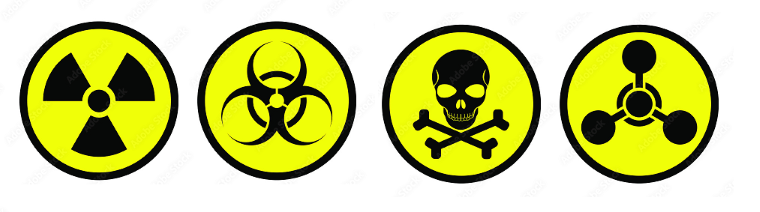
In the latter part of the 20th century, terrorism reared its ugly head. And now with the threat of Nuclear, Biological, and Chemical (NBC) and Weapons of Mass Destruction (WMD) being utilized by terrorists, the threat is not only to large numbers of people or structures, but it is a threat to the stability of governments, economic systems, and the social fabric of very large numbers of people. And the most dangerous, and arguably the only form of Apocalyptic terrorism at the beginning of the 21st century is Radical Islamic Terrorism.
Most terrorism has a local or regional impact. But a regional impact could spill over into a global impact. One of the spillovers is that terrorism often causes mass migration as the civilian population flees to safety. This often stresses the economic resources and creates negative societal impacts on the nations that accept refugees. Political tensions rise in the nations that accept refugees, which can spill over to neighboring nations. Like a slowly spreading cancer, this could eventually affect all nations. But there are other ways that terrorism can have a global impact.
Nuclear Weapons
If a terrorist organization were to obtain nuclear weapons or nuclear material (probably from a rogue state) and target a Nuclear Weapon at a major metropolitan or industrial center, not only would hundreds of thousands of people die, but it would also have a significant economic impact that could spread globally. If the nuclear detonation was mistaken or disguised as an aggressive attack by an adversary, it could cascade into a massive nuclear war.
The other nuclear threat from terrorism is the possibility of obtaining refined nuclear material and utilizing it in a terrorist attack. For instance, a single atom of plutonium would kill any living organism into which it entered via radiation poisoning. It is not possible to cure this type of poisoning, and it is always fatal. If a terrorist organization obtained a vial of plutonium (which would contain billions of plutonium atoms) and introduced it into the water or food supply, or simply released it airborne over a metropolitan or agricultural area, tens or hundreds of thousands could die, and there would be a massive economic impact. It is not possible to effectively clean up all the plutonium, so its effects would remain in the polluted area for thousands of years, making the area so polluted that it would be uninhabitable, and not even travelable, as traveling through the impacted areas could spread the nuclear material. There are several other radioactive elements that could be utilized in this scenario, but they require a larger, but not much larger, quantity to be as effective.
Biological Weapons
If a terrorist organization were to obtain a Biological Weapon, they could introduce it anywhere in the world, and it could then become an epidemic, which could easily morph into an endemic or pandemic given global transportation in our modern world. Biological warfare or terrorism, also known as germ warfare or terrorism, is the use of biological toxins or infectious agents such as bacteria, viruses, insects, and fungi with the intent to kill, harm, or incapacitate humans, animals, or plants as an act of war or terrorism. Biological weapons (often termed "bio-weapons", "biological threat agents", or "bio-agents") are living organisms or replicating entities (i.e., viruses, which are not universally considered "alive"). Entomological (insect) warfare is a subtype of biological warfare. Thus, biological weapons could not only target humans, but also the animal and plant life that humans consume, leading to starvation. As to the impacts of biological weapons, I would direct you to the 'Global Pandemic' section of this article, as biological weapons could spread much like a Global Pandemic.
Chemical Weapons
If a terrorist organization were to obtain a Chemical Weapon and release it over a metropolitan area, thousands or tens of thousands of people could die or become incapacitated, and there would be a large economic impact on the survivors and regions that were attacked. A chemical weapon (CW) is a specialized munition that uses chemicals formulated to inflict death or harm on humans. According to the Organisation for the Prohibition of Chemical Weapons (OPCW), this can be any chemical compound intended as a weapon, or its precursor that can cause death, injury, temporary incapacitation, or sensory irritation through its chemical action”. The cleanup cost could be in the billions of dollars, and the area so polluted may become uninhabitable.
Technological Attacks
Much of the world relies on technology to operate properly. Electrical Power Systems, Banking & Financial transactions, Business & Commerce Transactions, Stock Markets, etc., are all reliant on technology to function properly. If terrorism were to successfully attack this technology or the underlying Internet infrastructure that supports this technology, it could cause a calamity. It may take days, weeks, or months to recover, and have severe physical, economic, and social consequences.
A terrorist attack on our electrical infrastructure could occur locally, but then cascade regionally or nationally. A terrorist attack on our transportation infrastructure could occur locally, but it could spread regionally and have national repercussions. If multiple simultaneous terrorist attacks on our transportation infrastructure occurred, it would have a national impact. A terrorist attack on the Internet infrastructure would have the most widespread and consequential impact, and it may be the easiest to accomplish. It could originate from anywhere in the world and be propagated worldwide very quickly. This Internet infrastructure attack could be so devastating that the world’s economy could collapse.
Any one of these terrorist attacks has the possibility of cascading into an Apocalyptic event, and through us back into the pre-industrial age. Therefore, it is important that terrorism be eliminated and not allowed to rear its ugly head ever again.
Miscellaneous
Three highly avoidable Man-Made Apocalyptic Events can be avoided if we have the fortitude to address and resolve these events. These are problems that require all the countries of the world to cooperate with each other to be successfully addressed, and if one country fails to cooperate, it can result in a Man-Made Apocalyptic Event.
Nuclear War
One of the Apocalyptic events could be of our own making—Nuclear War. Nuclear warfare (sometimes atomic warfare or thermonuclear warfare) is a military conflict in which nuclear weaponry is used to inflict damage on the enemy. Nuclear weapons are weapons of mass destruction; in contrast to conventional warfare, nuclear warfare can produce destruction in a much shorter time and can have long-lasting radiological warfare result. A major nuclear exchange would have long-term effects, primarily from the fallout released, and could also lead to a "Nuclear Winter" that could last for decades after the initial attack.
If the world broke out into a massive nuclear war, not only would a horrifying number of people die in the blasts and resulting radiation, but it could trigger an Apocalyptic nuclear winter event that could kill billions of the survivors. Massive nuclear weapons explosions could generate so much dust, debris, and smoke in the upper atmosphere of the Earth that sunlight could be blocked for months, if not years or decades. The Earth would go cold as the long winter basically kills much vegetation, which would result in the starvation death of many of the Nuclear War survivors. Some claimed that the result would be that almost every human on Earth could starve to death. Other analysts, however, dismiss the nuclear winter hypothesis and calculate that even with nuclear weapon stockpiles at Cold War highs, although there would be billions of casualties, billions more rural people would nevertheless survive. However, radiation poisoning of the atmosphere and water supply could also result in the deaths of many more of the survivors.
It seems unlikely that we will have a Massive Nuclear War, as most of the nations that possess nuclear weapons recognize the terrible impact of a Nuclear War. However, several rogue nations have or will have nuclear weapons that they may use. This could trigger other nations to utilize their nuclear weapons against a rogue nation that utilized its nuclear weapons, or as a proactive threat elimination, which could then cascade into a massive nuclear war. No nation seems likely to give up its nuclear weapons if other nations possess them, especially if the other nation is an adversary. A total ban on nuclear weapons seems unlikely, but it may be possible (although unlikely) to force the rogue nations to give up their nuclear weapons. All nations should band together to force a rogue nation to give up its nuclear weapons to avert an apocalyptic nuclear war.
Global Pandemic
A Pandemic is an epidemic of infectious disease that has spread across a large region, for instance, multiple continents, or even worldwide. A widespread endemic disease that is stable in terms of how many people are getting sick from it is not a pandemic. Further, flu pandemics generally exclude recurrences of seasonal flu. Throughout history, there have been a number of pandemics, such as smallpox and tuberculosis. One of the most devastating pandemics was the Black Death, which killed over 75 million people in 1350. The most recent pandemics include the HIV pandemic as well as the 1918 and 2009 H1N1 pandemics.
There is some confusion as to the different types of worldwide infectious diseases that can occur: Endemic, Epidemic, or Pandemic. Endemic—native to or confined to a certain region, Epidemic—a widespread outbreak of an infectious disease, and Pandemic—an epidemic that is geographically widespread; occurring throughout a region or even throughout the world, as the following diagram illustrates.

With the advent of worldwide travel and tourism, the possibility of a viral or bacterial global pandemic has increased as well. Where once an epidemic would flare up locally or regionally and then die out, it may now be carried across the Earth via travel and tourism. Therefore, the World Health Organization (WHO), the U.S. Center for Disease Control (CDC), along with other governments' health agencies keep a close watch on viral or bacterial outbreaks worldwide. They try to cure and control them before they become pandemics or global pandemics. But it is possible that a viral or bacterial infection will go unnoticed (especially in third-world countries) and may become a regional or global pandemic.
There is also the concern that a new strain of virus or bacteria may evolve that cannot be treated with currently available methods. This can be seen in certain new bacteria that are resistant to antibiotics (superbugs). If these new strains of viruses or bacteria do appear, it may not be possible to cure or contain them. In which case, we would have a regional or a global pandemic.
Millions or tens of millions could potentially be sickened or die in a regional or global pandemic. The economic cost of containment, treatment, or interment of the dead could be very significant. The labor force would be impacted, and productivity could significantly decrease, potentially negatively affecting the availability of food, water, and other basic consumer needs. Many businesses may not be able to operate due to this reduced labor force. Social upheaval would most likely occur in those regions most affected.
I do not believe, however, that this would be an Apocalyptic event. It would surely have severe impacts that must be dealt with, but they will be dealt with by the Governments and the people of the world. It would certainly stymie human civilization, but we would eventually recover.
Over-Population
Human Overpopulation (or population overshoot) occurs when the ecological footprint of a human population in a specific geographical location exceeds the carrying capacity of the place occupied by that group. Overpopulation can further be viewed, in a long-term perspective, as existing if a population cannot be maintained given the rapid depletion of non-renewable resources or given the degradation of the capacity of the environment to support the population. Changes in lifestyle could reverse the overpopulated status without a large population reduction. The term human overpopulation refers to the relationship between the entire human population and its environment: the Earth, or to smaller geographical areas such as countries.
Overpopulation can result from an increase in births, a decline in mortality rates, an increase in immigration, or an unsustainable biome and depletion of resources. It is possible for very sparsely populated areas to be overpopulated if the area has a meager or non-existent capability to sustain life (e.g., a desert). Advocates of population moderation cite issues like quality of life, carrying capacity, and risk of starvation as a basis to argue for population decline. Scientists suggest that the human impact on the environment as a result of overpopulation, profligate consumption, and proliferation of technology has pushed the planet into a new geological epoch known as the Anthropocene. The Anthropocene is a proposed geological epoch that highlights the significant impact of human activities on Earth's climate and ecosystems, particularly since the mid-20th century. Although it has not been formally recognized as an epoch by geologists, the term is widely used to discuss the profound changes humans have made to the planet.
Most of the Apocalyptic scenarios on overpopulation have focused on food, water, shelter, and resources needed to sustain a growing population. While this is a possibility, mankind has shown a resilience in meeting the needs of a growing population. In the past 50 years, our science, technology, and agriculture techniques have met the challenge of meeting the needs of a growing population. This is not to infer that we will continue to meet this challenge in the near future, but that it seems that this is less of an Apocalyptic event than it was deemed in the past.
My main concern about overpopulation is with the rise of Robots and Artificial intelligence, as previously discussed in this article. With this rise, the need for manual and lower-skilled labor is (significantly) reduced. As previously noted in the ‘Robots’ section of this article, there are many questions that need to be answered as to how to deal with a large population of unemployed or unemployable workers. Unless these questions are answered and answered in a humane manner, we could have an Apocalyptic event as a result of overpopulation.
Final Thoughts
There are many ways for an Apocalyptic event to end human civilization. Some will definitely occur, some will likely occur, and some are unlikely to occur. Some are likely to occur in the near term, some in the far term, and some not at all. The question is the probability of an Apocalyptic event, and how we prioritize these Apocalyptic events, and how to alleviate these Apocalyptic events when they occur. As for Man-Made Apocalyptic events, there is the question of how to eliminate them and the costs of doing so.
Now is the time for me to put up or shut up, in which I will probably put my foot in my mouth. By this, I mean giving my opinion as to what we should do. So here goes.
As for Natural Apocalyptic Events, a massive Coronal Mass Ejection striking the Earth is the most probable Natural Apocalyptic event in the near term. And it will be Apocalyptic (see my fictional story on Report to the Committee on the Impacts and Consequences of the Massive Coronal Mass Ejection that Struck the Earth on April 15th, 2025, for a possible scenario of this event). We, therefore, need to start planning for it and doing what we can to protect and recover from this event. Sufficient protection of key infrastructures and technology, and sufficient spare parts, are the key to recovering from a massive CME. But let us not kid ourselves. Many people will die, civilization will struggle to survive, and it may be decades or a century or two to fully recover. If we don’t do this, then civilization will be set back thousands of years. A natural Global Pandemic may occur, but with modern science and medicine (and perhaps with the assistance of AI), it may be possible to alleviate the impacts of this event. An asteroid impact will occur, but probably not in the near term. We need to continue to be aggressive in identifying possible asteroid impactors, and we need to be more aggressive in developing the capability to deflect an asteroid impactor. This may take several decades to accomplish, but I believe that we have these decades and possibly more to alleviate this Apocalyptic event. As for the other Natural Apocalyptic events, there is nothing that humankind can do to avert these Apocalyptic events, and little that we can do to recover from these Apocalyptic events.
As to Man-Made Apocalyptic Events, there is much that we can do to avert or alleviate the impacts of these events. The time, effort, and costs to do so may be prohibitive, but the will to do so must be emphasized by responsible leadership, by both political leaders and other leaders knowledgeable and experienced in these arenas.
As to technological events, Single Points of Failure must be eliminated to ensure a recovery in the event of a natural or man-made disaster. Human Climate Change needs to be very carefully monitored, and better and provable science needs to occur. If the better and provable science demonstrates a significant human impact on climate change, then Human Climate Change needs to be aggressively addressed. Robots and Artificial Intelligence developments must be carefully considered for their impacts, and this consideration must not only be made by those responsible for the development. Anything developed by humankind that has the potential for an Apocalyptic event needs to be overseen by unbiased parties that can render a dispassionate opinion as to the advisability of pursuing this development. In Technological Apocalyptic events, let us not foolishly rush into an attempt to fix a problem before we are sure that we know the extent of the problem, and if it is fixable, along with the time, effort, and money needed to fix the problem. But let us be vigilant for present and future Technological Apocalyptic events.
Governments and economies should operate for the betterment of their populace, and with respect for the Natural Rights of the people. Accordingly, Theocratic Oligarchies and Theocracies should end, Socialism must also be ended and not allowed to be reborn, and Democracies and a healthy Capitalist system must be encouraged.
As the ancient Roman Statesman Cato the Elder had often said, “Carthage Must Be Destroyed’ so ‘Terrorism Must Be Destroyed’. It must be destroyed as it can inflict terrible damage, and it is possible to destroy terrorism. Destroyed not only literally but figuratively. ‘Terrorism Must Be Destroyed’ is not only physical destruction but also political destruction as well. Terrorism against not only your enemy but also against your own people must never be allowed to exist. Any organization or country that practices terrorism should be destroyed. I know that this will be terribly difficult, but it needs to be a goal for humanity to avoid this Man-Made Apocalyptic Event.
Nuclear war must never be allowed to happen, and all efforts to avoid Nuclear war must be undertaken. Rogue states must never be allowed to possess nuclear weapons or nuclear material, and a way must be found to accomplish this goal. Overpopulation should be avoided and its impacts alleviated, or the civil unrest in overpopulated territories may turn into a war with Apocalyptic event impacts.
Further Readings
For additional readings on science topics, I would recommend you review my Further Readings on my science articles web page.
Disclaimer
Please note that my Science Articles disclaimer applies to this article, as it does to all of my science articles. These science articles are for the purposes of general scientific information that is understandable to a layperson, so that they can grasp the concepts of the topic being discussed. As such, they are neither as accurate nor as thorough as academics, scientists, engineers, and science writers strive to achieve. My hope is that these science articles will be informative and interesting, and that they will pique the reader's interest in exploring these topics in further detail via the hyperlinks that I have embedded into these articles.