The Personal Website of Mark W. Dawson

Containing His Articles, Observations, Thoughts, Meanderings,
and some would say Wisdom (and some would say not).
Christianity Overview
Overview of Christianity
Christianity is an Abrahamic monotheistic religion centered on the life and teachings of Jesus Christ, who believe in the resurrection of Jesus and the teachings of the Bible in the New Testament. It originated in the 1st century CE in Judaea, within the Roman Empire, and has grown into the world's largest religion, with approximately 2.3 billion adherents, known as Christians. Christians believe in monotheism, the divinity of Jesus Christ, and the primacy of the New Testament of the Bible.
Christianity began as a Jewish sect and gradually separated from Judaism, particularly through the efforts of early leaders like Paul the Apostle. The Edict of Milan in 313 AD, issued by Emperor Constantine, legalized Christianity in the Roman Empire, leading to its rapid spread across Europe and beyond.
Christianity's Core Beliefs
- Monotheism: Christians believe in one God, who exists in three persons: the Father, the Son (Jesus Christ), and the Holy Spirit.
- Jesus Christ: Central to Christianity is the belief that Jesus is the Son of God, who was crucified, died, and resurrected to offer salvation to humanity.
- The Bible: The sacred text of Christianity, consisting of the New Testament, which contains the teachings of Jesus and the history of the early church, and supplemented by the Old Testament.
Christian Foundational Beliefs
Christians believe that the Old Testament is the foundation of Christianity, but the New Testament is more important. They also honor Abraham, Moses, and other Old Testament prophets, recognizing the wisdom found in the Old Testament. Christians also believe that Jesus was a practicing Jew who aimed to redefine what it meant to be a faithful Jew by trying to lead the Jewish people back to a God of the heart and mind, rather than one focused only on rituals and practices without understanding God’s words and intentions for His people.
The Trinity
The Trinity is a Christian doctrine concerning the nature of God, which defines one God existing in three coeternal, consubstantial divine persons: God the Father, God the Son (Jesus Christ), and God the Holy Spirit, three distinct persons (hypostases) sharing one essence/substance/nature (homoousion).
Resurrection
In Christianity, resurrection refers to the belief that Jesus Christ rose from the dead on the third day after his crucifixion. This event is central to Christian faith, symbolizing victory over sin and death.
Key Events Surrounding the Resurrection
- Crucifixion: Jesus was crucified and died, a sacrifice for humanity's sins.
- Burial: He was buried in a tomb, which was sealed.
- Resurrection: On the third day, women disciples found the tomb empty. An angel announced that Jesus had risen.
- Appearances: Jesus appeared to his disciples and others, affirming his resurrection.
- Ascension: Jesus was taken up to Heaven to sit at the right hand of God.
Significance in Christianity
The resurrection is foundational for Christian beliefs:
- Proof of Divinity: It confirms Jesus as the Son of God.
- Hope of Eternal Life: Christians believe that through Jesus' resurrection, all believers will also be resurrected and granted eternal life.
- Foundation of Faith: The resurrection is seen as the central mystery of Christianity, underpinning the faith and teachings of the church.
Theological Implications
- Bodily Resurrection: Most Christians believe in a physical resurrection, where Jesus was restored to life in a transformed body.
- Eschatological Belief: The resurrection is linked to the belief in the final judgment, where all will be resurrected and judged by God.
The celebration of this event is commemorated during Easter, also known as Resurrection Sunday, marking the triumph of life over death.
The Second Coming of Christ
The Second Coming of Christ is a central belief in Christianity, where Jesus is expected to return to Earth in a visible and glorious manner to judge the living and the dead, establish His kingdom, and bring about the end of the world as we know it. This event is described in various parts of the Bible, including the Gospels and the Book of Revelation, and is seen as the culmination of God's plan for salvation.
Overview of the Second Coming of Christ
This event is characterized by its visibility and glory, marking the culmination of God's plan for salvation.
Key Aspects of the Second Coming
Nature of the Event
- Visible and Glorious: Jesus will return in a manner that is clear and evident to all.
- Judgment: He will judge the living and the dead, determining their eternal fate.
- Establishment of His Kingdom: The Second Coming will usher in a new era where Christ reigns.
Biblical References
The Second Coming is referenced in several biblical texts, including:
- Gospels: Teachings of Jesus about His return.
- Book of Revelation: Descriptions of the end times and the final judgment.
Significance
- Culmination of Salvation: The Second Coming represents the fulfillment of God's promises to humanity.
- Hope for Believers: It serves as a source of hope and encouragement for Christians, affirming that justice will ultimately prevail.
Different Interpretations
While the core belief in the Second Coming is widely accepted, interpretations can vary among Christian denominations:
|
Denomination |
Viewpoint |
|
Mainstream Christianity |
Jesus will return visibly to judge and establish His kingdom. |
|
Latter-day Saints |
Emphasizes a powerful return and the beginning of the Millennium. |
|
Adventists |
Focus on a literal and personal return, with resurrection of the righteous. |
Conclusion
The Second Coming of Christ is a pivotal doctrine in Christianity, embodying the hope of redemption and the promise of eternal life for believers. It is a moment anticipated by many, representing the ultimate victory of good over evil.
Significant Discourses by Jesus
The Gospel of Matthew contains five significant discourses by Jesus, which are essential teachings that shape Christian doctrine. Each discourse addresses different aspects of faith and community. They are:
|
Chapters |
Discourse Name - Key Themes |
|
5-7 |
Sermon on the Mount - Central tenets of Christian discipleship, including the Beatitudes and the Lord's Prayer. |
|
10 |
Instructions Mission Discourse - for the Twelve Apostles on their mission, emphasizing reliance on God and facing opposition. |
|
13 |
Parabolic Discourse - Parables illustrating the nature of the Kingdom of Heaven. |
|
18 |
Discourse on the Church - Community life, humility, and forgiveness within the church. |
|
23-25 |
Olivet Discourse - Teachings on the end times, judgment, and the conduct of followers in anticipation of Christ's return. |
The Sermon on the Mount
The Sermon on the Mount is a collection of sayings by Jesus of Nazareth, found in chapters 5, 6, and 7 of the Gospel of Matthew, that summarize his moral teachings and gives his Lord's Prayer. It is the first of five discourses in the Gospel and has been one of the most widely quoted sections of the Gospels. Key sections of the sermon are:
The Beatitudes
The Beatitudes are a series of blessings that highlight the values of the Kingdom of Heaven. They are:
- Blessed are the poor in spirit,
for theirs is the kingdom of heaven. - Blessed are they who mourn,
for they will be comforted. - Blessed are the meek,
for they will inherit the land. - Blessed are they who hunger and thirst for righteousness,
for they will be satisfied. - Blessed are the merciful,
for they will be shown mercy. - Blessed are the clean in heart,
for they will see God. - Blessed are the peacemakers,
for they will be called children of God. - Blessed are they who are persecuted for the sake of
righteousness,
for theirs is the kingdom of heaven.
Teachings on Law and Conduct
Jesus emphasizes the importance of fulfilling the law and introduces concepts such as:
- Being the salt and light of the world
- The call to love enemies and pray for persecutors
- The significance of inner purity over mere external compliance with the law
The Lord’s Prayer
Our Father, who art in heaven,
hallowed be thy Name,
thy kingdom come,
thy will be done,
on earth as it is in
heaven.
Give us this day our daily bread.
And forgive us our trespasses,
as we forgive those
who trespass against us.
And lead us not into temptation,
but deliver us from evil.
For thine is the kingdom,
and the power, and the glory,
for ever and ever. Amen.
Conclusion of the Sermon
The Sermon concludes with a call to action, urging listeners to build their lives on the teachings of Jesus, likening it to a wise man building his house on a rock.
This Sermon on the Mount and the Lord’s Prayer is foundational for understanding Christian teachings and ethics.
Christian Life Stages
The Christian life is often described in stages of spiritual growth, typically categorized as childhood, youth, and parenthood. These stages reflect a believer's journey from initial faith and understanding to deeper relationships with God and maturity in their spiritual life.
Baptism
Christian baptism is a rite of initiation that symbolizes a person's faith in Jesus Christ and their acceptance into the Christian community. It typically involves the use of water and can be performed by immersion, pouring, or sprinkling, often in the name of the Father, Son, and Holy Spirit. Usually performed at birth, it is also performed when a person accepts and converts to Christianity at any stage of their life
Confirmation
Christian confirmation is a sacrament or rite of passage in which a baptized person strengthens their relationship with God and affirms the promises made at their baptism. It typically involves a ceremony where the individual receives the Holy Spirit, often through the laying on of hands, and is recognized as a full member of the Christian community.
Marriage
Christian marriage is viewed as a sacred institution ordained by God, with varying interpretations across different denominations. It emphasizes a covenant relationship that reflects God's love and commitment, often involving spiritual and communal aspects beyond just a legal contract.
Death
The Christian Bible teaches that death is not the end but a transition to eternal life with God for those who believe in Jesus Christ. Key verses emphasize that through faith, believers will experience resurrection and everlasting life, as seen in John 11:25-26 and Revelation 21:4, which promise no more death or sorrow in God's presence. Various Christian denominations have different funeral services that highlight the deceased Christian's life and their transition into the afterlife.
Afterlife
In Christianity, the afterlife is a significant aspect of faith, emphasizing the belief in life beyond death. Christians generally believe that after death, individuals will face judgment, and their eternal destiny will be determined.
Christian Afterlife Key Concepts
Heaven
- Definition: Heaven is viewed as the dwelling place of God, where the righteous experience eternal life in His presence.
- Nature: It is described as a place of perfect peace, love, and joy, free from pain and suffering.
- Biblical References: The Book of Revelation mentions a New Jerusalem, symbolizing the ultimate fulfillment of God's promise to His people.
Hell
- Definition: Hell is often seen as a state of separation from God, where those who reject Him face eternal consequences.
- Nature: It is depicted as a place of suffering and despair, often associated with fire and torment.
- Judgment: The concept of hell emphasizes personal accountability for one's actions during life.
Purgatory
- Definition: In Catholicism, purgatory is an intermediate state where souls undergo purification before entering heaven.
- Purpose: It allows for the cleansing of venial sins, enabling souls to achieve the holiness required for heaven.
Afterlife Denominational Variations
Different Christian denominations have unique interpretations of the afterlife:
|
Denomination |
Beliefs on Afterlife |
|
Catholicism |
Heaven, hell, and purgatory; emphasis on sacraments. |
|
Eastern Orthodoxy |
Focus on theosis, or deification, and the transformative journey to God. |
|
Protestantism |
Generally emphasizes faith in Christ for salvation; views on hell vary. |
|
Seventh-day Adventists |
Belief in soul sleep until resurrection, then final judgment. |
Afterlife Conclusion
The Christian afterlife encompasses a range of beliefs about heaven, hell, and purgatory, reflecting the faith's emphasis on eternal life and moral accountability. Each denomination offers distinct perspectives, contributing to the rich tapestry of Christian eschatology.
Christian Worship
Worship by Christians is conducted in a building by a Congregation - A group of people who adhere to a common faith and habitually attend a given church, usually led by a Priest (Catholic & Eastern Orthodox), or Minister/Pastor (Protestant). The buildings have different nomenclatures:
- Cathedral - principal Christian church building of a Catholic and Eastern Orthodox bishop's diocese.
- Church - a place for Christian (both Protestant and Catholic) congregational worship.
These services are most often done on the Sabbath (Sunday), but also on religious holidays as determined by their faith.
Christian Ethics
Christian ethics, also known as moral theology, is a system that defines virtuous and sinful behavior from a Christian perspective. It combines various ethical approaches, including virtue ethics, which emphasizes moral character, and deontological ethics, which focuses on duty. Additionally, it incorporates natural law ethics, based on the belief that humans, created in God's image, can discern moral truths.
Key Principles
Moral Character and Duty
- Moral Character: Christian ethics stresses the importance of developing a virtuous character through obedience to divine commands.
- Duty: It emphasizes fulfilling moral obligations as defined by Scripture, which serves as the ultimate authority for ethical behavior.
Love and Relationships
- Greatest Commandments: The highest ethical duties are to love God and love one's neighbor, guiding all moral decisions.
- Relationship Focus: Christian ethics prioritizes the relationship with God as the foundation for moral behavior, contrasting with many ancient religions that focus on humanity's relationship with nature.
Historical Development
Early Christianity to Modern Ethics
- Early Foundations: Christian ethics originated in early Christianity and evolved through the Middle Ages, influenced by thinkers like Thomas Aquinas.
- Reformation Impact: The Reformation and subsequent movements introduced new perspectives, emphasizing social justice and community-based ethics.
Contemporary Issues
- Modern Challenges: Today, Christian ethics addresses contemporary issues such as bioethics, human sexuality, and environmental concerns, reflecting the changing cultural landscape.
- Diverse Perspectives: Various movements within Christianity, such as liberation theology and feminist theology, have emerged, focusing on social justice and community ethics.
Understanding Christian ethics involves recognizing its biblical foundations, moral character, and the importance of love in ethical decision-making.
Christian Holidays
Christian holidays celebrate significant events in the life of Jesus Christ and various saints, with major observances including Christmas, which commemorates the birth of Jesus, and Easter, which celebrates his resurrection. These holidays often involve special church services, family gatherings, and various cultural traditions.
Major Christian Holidays
Christmas
- Date: December 25.
- Significance: Celebrates the birth of Jesus Christ.
- Observances: Cheerful Church services, gift-giving, and community activities like caroling.
Good Friday
- Date: Varies (Friday before Easter).
- Significance: Observes the crucifixion of Jesus.
- Observances: Solemn Church services.
Easter
- Date: Varies (first Sunday after the first full moon following March 21).
- Significance: Commemorates the resurrection of Jesus Christ.
- Observances: Joyous Church services, family gatherings, and traditions like egg dyeing and hunts.
Other Notable Holidays
Epiphany |
January 6 |
Celebrates the visit of the three wise men to the infant Jesus, and thus Jesus Christ's physical manifestation to the Gentiles. |
Ash Wednesday |
Varies (46 days before Easter) |
Marks the beginning of Lent, a period of fasting and reflection in preparation for Easter. |
Palm Sunday |
Varies (Sunday before Easter) |
Commemorates Jesus' triumphant entry into Jerusalem. |
Feast of the Ascension |
Varies (40 days after Easter |
Commemorates the Christian belief in the bodily Ascension of Jesus into Heaven. |
Pentecost |
Varies (50 days after Easter) |
Celebrates the descent of the Holy Spirit upon the Apostles of Jesus. |
Advent |
Varies (4 weeks before Christmas) |
Advent is the period of four Sundays and weeks leading up to Christmas, marking a time of preparation for the celebration of Jesus's birth and his anticipated return. |
Liturgical Calendar
The Christian liturgical year includes seasons such as Advent (preparation for Christmas) and Lent (preparation for Easter). Each season has its own significance and associated observances. Christian holidays vary widely among different denominations, with some observing additional feasts and saints' days.
New Testament Bible
Christians believe that the Old Testament is the foundation of Christianity, but the New Testament is more important. As such, an understanding of the New Testament is important in understanding Christianity.
The New Testament is divided into several sections, each serving a specific purpose in the Christian faith. It consists of 27 books categorized by their literary genre and content. It begins with the four Gospels (Matthew, Mark, Luke, and John), followed by the Acts of the Apostles, then the letters (or epistles) written by Paul and other apostles, and concludes with the Book of Revelation. This structure reflects a mix of historical accounts and teachings important to early Christianity.
Christianity’s Main Divisions of the New Testament
Gospels
Historical Book
- Book: Acts of the Apostles
- Purpose: Acts details the early church's history and the spread of Christianity after Jesus' ascension.
Epistles (Letters)
- Pauline Epistles: 13 letters attributed to Paul, addressing various churches and individuals. They are not arranged chronologically but by length, from longest to shortest.
- General Epistles: 8 letters written by other apostles (e.g., James, Peter, John). These letters are also organized by length and address broader audiences.
Prophetic Book
- Book: Revelation
- Purpose: This book contains apocalyptic visions and prophecies about the end times and the return of Christ.
This structure helps readers understand the progression of Christian doctrine and the historical context of the early church.
Prophets, Apostles, and Saints in Christianity
Prophets in Christianity
Christian Prophets are individuals recognized in the Bible (both Old and New Testaments) who are believed to be chosen by God to deliver His messages. They played significant roles in both the Old and New Testaments, often calling people to repentance, foretelling future events, and guiding the faithful.
Apostles in the New Testament
The Apostles in the New Testament, particularly the Twelve Apostles, were the primary disciples of Jesus Christ, chosen to spread his teachings and lead the early Christian church. They included notable figures such as Peter, James, John, and Judas Iscariot, with Matthias later replacing Judas after his betrayal of Jesus.
The Twelve Apostles
The Twelve Apostles, also referred to as the Twelve Disciples, were selected by Jesus during his ministry. Their names are listed in the Synoptic Gospels:
- Simon Peter: Leader of the apostles, originally a fisherman
- Andrew: Brother of Peter, also a fisherman
- James (son of Zebedee): One of the first called, part of Jesus' inner circle
- John: Brother of James, known as the "beloved disciple"
- Philip: Brought Nathanael to Jesus
- Bartholomew: Also known as Nathanael
- Matthew: A tax collector, also known as Levi
- Thomas: Known for doubting Jesus' resurrection
- James (son of Alphaeus): Often referred to as James the Less
- Thaddaeus: Also called Judas (son of James)
- Simon the Zealot: Known for his zeal and commitment
- Judas Iscariot: Betrayed Jesus; later replaced by Matthias
Other Notable Apostles
In addition to the Twelve, several other figures are recognized as apostles in the New Testament:
- Matthias: Chosen to replace Judas Iscariot
- Paul: Known as the Apostle to the Gentiles; claimed a direct commission from Jesus
- Barnabas: Accompanied Paul on missionary journeys
- James (the Lord's brother): Leader of the Jerusalem church
- Andronicus and Junia: Mentioned in Romans as notable among the apostles
- Timothy: A companion of Paul, recognized as an apostle
- Epaphroditus: Sent by the Philippians to assist Paul
Significance of the Apostles
The apostles were instrumental in the early church's growth and the spread of Christianity. They were tasked with preaching the gospel, performing miracles, and establishing communities of believers. Their teachings and writings form a significant part of the New Testament, influencing Christian doctrine and practice. Particularly important were Saint Peter and Saint Paul, who spread Christianity into the ancient Greco-Roman world.
Saints in Christianity
In Christianity, Saints are individuals recognized for their exceptional holiness and virtue, often canonized in some Christian denominations. They serve as models of faith for believers, with many having specific feast days and patronages associated with them. Saints play an important role in Christian spirituality, acting as examples of faith, and in some Christian denominations they serve as intercessors to Jesus for believers and are venerated.
Categories of Saints
Saints can be categorized based on various attributes:
- Martyrs: Those who died for their faith.
- Confessors: Individuals who lived holy lives but did not die as martyrs.
- Patron Saints: Saints designated to protect specific groups, professions, or causes.
Christianity Major Branches
Christianity is divided into several major branches:
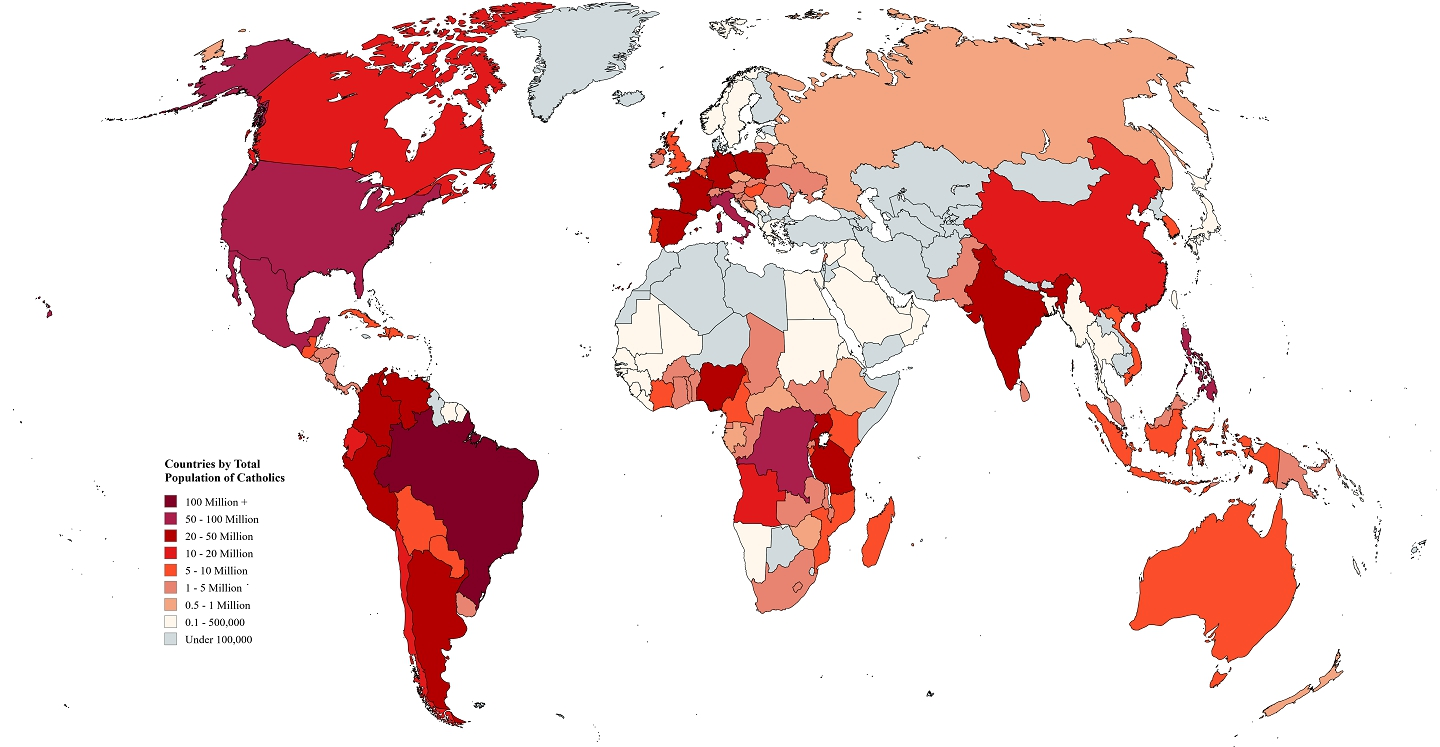
- Catholicism: 1.3 billion adherents
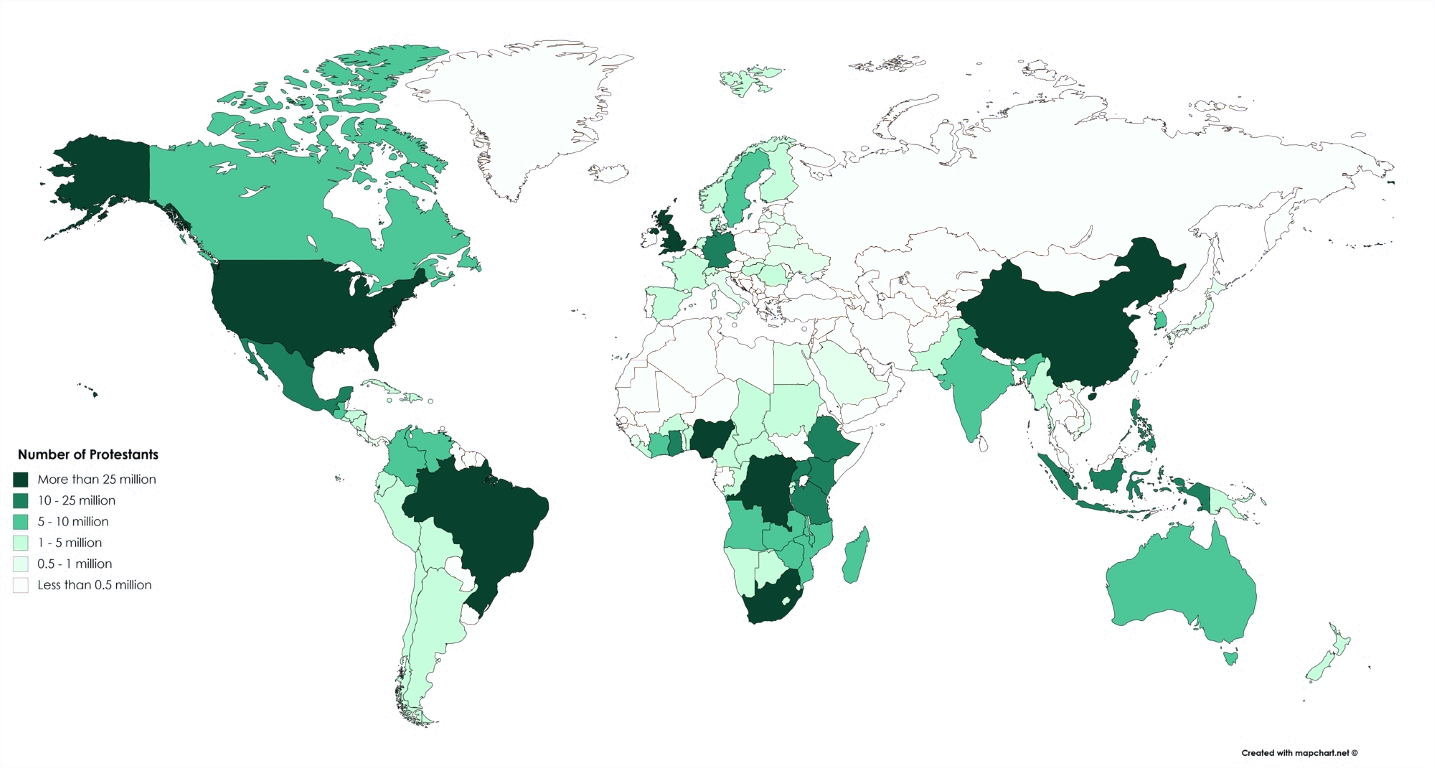
- Protestantism: 800 million adherents
- Eastern Orthodoxy: 300 million adherents
- Oriental Orthodoxy: 60 million adherents
- Restorationism: 35 million adherents
Catholicism
Overview of Catholicism
Catholicism is the largest branch of Christianity, with approximately 1.28 to 1.41 billion members worldwide as of 2026. It is characterized by its beliefs centered on the teachings of Jesus Christ and the authority of the Pope. It emphasizes the importance of sacraments, tradition, and the Church's role in guiding the faithful. It also teaches that it is the same church that Jesus Christ founded.
Core Beliefs
Fundamental Doctrines
- Nicene Creed: Catholics believe in one God, the Father Almighty, and in Jesus Christ as His Son. They affirm the Holy Spirit's role and the importance of the Church.
- Mass: The central act of Catholic worship is the Mass, which includes the Eucharist, believed to be the real presence of Christ in the elements of bread and wine.
- Sacraments: The Catholic Church recognizes seven sacraments, which are essential rites that convey God's grace. These sacraments are categorized into three main groups: Sacraments of Initiation, Sacraments of Healing, and Sacraments of Service. These Seven Sacraments are:
|
Sacrament |
Category |
Description |
|
Baptism |
Initiation |
Cleanses original sin and initiates a person into the Church. |
|
Confirmation |
Initiation |
Strengthens the grace received at Baptism and confirms commitment to the faith. |
|
Eucharist |
Initiation |
The central rite of Catholic worship, where bread and wine become the Body and Blood of Christ. |
|
Penance (Reconciliation) |
Healing |
Offers forgiveness of sins committed after Baptism, restoring communion with God. |
|
Anointing of the Sick |
Healing |
Provides strength and comfort to those who are seriously ill or near death. |
|
Holy Orders |
Service |
Confers the sacrament of apostolic ministry, allowing men to serve as deacons, priests, or bishops. |
|
Matrimony |
Service |
The sacrament of marriage, uniting a man and woman in a lifelong covenant. |
Each sacrament has its own significance and is celebrated through specific rites that reflect the spiritual realities they represent.
Catholic confession
Overview of Catholic Confession
Catholic confession, also known as the sacrament of penance or reconciliation, is a practice where individuals confess their sins to a priest to receive forgiveness and be reconciled with God and the Church. It is a vital practice in the Catholic Church, as it offers forgiveness for sins committed after baptism and reconciles the individual with God and the Church community. It involves an examination of conscience, the confession of sins, and the priest's absolution, emphasizing God's mercy and the importance of repentance.
Purpose of Confession
- Forgiveness: Confession allows individuals to seek forgiveness for their sins.
- Reconciliation: It restores the relationship between the penitent and God, as well as with the Church.
- Spiritual Growth: The sacrament encourages personal reflection and a commitment to avoid sin in the future.
Steps to Confession
Preparation
- Examination of Conscience: Reflect on your actions since your last confession, guided by the Ten Commandments.
- Act of Contrition: Prepare to express sorrow for your sins.
During Confession
- Greeting: Enter the confessional, make the Sign of the Cross, and greet the priest.
- Confession of Sins: State your sins clearly, including both mortal and venial sins.
- Penance: The priest will assign a penance, which may involve prayers or acts of service.
- Act of Contrition: Recite a prayer expressing your sorrow for your sins.
- Absolution: The priest grants forgiveness, acting in the person of Christ.
Frequency of Confession
It is encouraged to go to confession regularly, ideally once a month, to maintain spiritual health and growth. Many parishes offer confession at least once a week.
This sacrament is a profound opportunity for healing and renewal in the Catholic faith.
Authority and Tradition
- Papal Leadership: The Pope, currently Leo XIV, is considered the spiritual leader and is viewed as the successor to Saint Peter.
- Apostolic Succession: Bishops are seen as successors to the apostles, maintaining the Church's teachings through Scripture and sacred tradition.
Catholic Church Hierarchy
The Catholic Church has a structured hierarchy that organizes its leadership and governance. The Vatican serves as the central headquarters, with the Pope holding the highest authority, followed by cardinals, bishops, priests, and deacons. This hierarchy is essential for maintaining order and unity within the Church.
Levels of Hierarchy
|
Level |
Title |
Role |
|
1. |
Pope |
The supreme leader of the Catholic Church, considered God's representative on Earth. |
|
2. |
Cardinals |
Senior church officials who advise the Pope and elect a new Pope during a conclave. |
|
3. |
Bishops |
Leaders of dioceses who provide pastoral governance and oversee local parishes. |
|
4. |
Priests |
Serve in parishes, conducting Mass and administering sacraments. |
|
5. |
Deacons |
Assist bishops and priests in liturgical duties and community service. |
Structure of the Catholic Church
- Parishes: The basic unit of the Church, where local congregations gather for worship.
- Dioceses: Collections of parishes overseen by a bishop.
- Archdioceses: Larger dioceses led by an archbishop, often encompassing multiple dioceses.
Conclusion
The existence of a Roman Catholic hierarchy is attested from the time of the first Epistle of Ignatius to the Philadelphians, an epistle attributed to Ignatius of Antioch, a second-century bishop of Antioch, and addressed to the church in Philadelphia, Asia Minor. It was written during Ignatius' transport from Antioch to his execution in Rome. Since then, this hierarchy has become more formal and ossified. This hierarchical structure helps prevent false teachings and maintains a unified doctrine. It allows for effective governance and ensures that the Church can respond to the needs of its members.
It is also structured along the lines of the historic Jewish hierarchy in its framework and rites, and it has faced criticism for creating a human barrier between the laypeople and God, as well as for its Mass and Rites becoming more important than Jesus's teachings in the minds of its laypeople. Criticism of the Catholic Church has come from both within the Church and from external sources, including other religious groups and secular perspectives. Many Catholics have expressed concerns about the Church's direction, particularly regarding its handling of modern social issues and its response to scandals.
Criticism Of Catholicism
Overview of Criticism of Catholicism
The Catholic Church has faced various Criticism of Catholicism throughout its history, stemming from its beliefs, practices, and actions. These critiques come from both within the Church and from external sources, including other religious groups and secular perspectives.
The Catholic Church has faced criticism for various reasons, including its handling of sexual abuse scandals, its stance on women's ordination, and its historical actions like the Crusades. Additionally, some traditionalists argue that recent ecumenical efforts dilute the Church's teachings on salvation and its unique role in Christianity.
Key Areas of Criticism
Historical Actions
- Crusades: The Church's involvement in the Crusades has been criticized for promoting violence and failing to achieve its intended goals.
- Sexual Abuse Scandals: Numerous cases of sexual abuse by clergy have emerged, leading to significant public outcry and calls for accountability within the Church hierarchy.
Doctrinal Issues
- Ordination of Women: The Catholic Church does not allow women to be ordained as priests, which has drawn criticism for being discriminatory.
- Ecumenism: Some traditionalist Catholics argue that the Church's approach to ecumenism, especially after the Second Vatican Council, undermines its teachings on the uniqueness of Catholicism.
Social and Ethical Concerns
- LGBTQ+ Inclusion: Pope Francis's efforts to make the Church more inclusive for LGBTQ+ individuals have created a rift with conservative factions within the Church.
- Stance on Contraception and Abortion: The Church's teachings on contraception and abortion are often rejected by many Catholics, leading to a disconnect between official doctrine and personal beliefs.
Internal Critiques
- Self-Criticism: Many Catholics express concerns about the Church's direction, particularly regarding its handling of modern social issues and its response to scandals.
- Traditionalist Opposition: Some factions within the Church resist changes brought about by recent popes, viewing them as departures from traditional teachings.
These criticisms reflect a complex relationship between the Catholic Church and its followers, as well as the broader society.
In Conclusion
Catholicism traces its origins to the early Christian community established by Jesus and his apostles. Over centuries, it has faced challenges, including the Great Schism and the Protestant Reformation (which I have written about in my article on ”The Fracturing of Christianity”), which shaped its development and doctrines. The Church continues to play a significant role in global religious and social issues today.
Eastern Orthodoxy
Overview of Eastern Orthodoxy
Eastern Orthodoxy, also known as Eastern Orthodox Christianity or Byzantine Christianity, is one of the three main branches of Christianity, characterized by its continuity with the apostolic church, its liturgy, and its territorial churches. It primarily encompasses communities in the Balkans, the Middle East, and former Soviet countries, with a strong emphasis on tradition and the teachings defined by the first seven ecumenical councils.
Key Beliefs
Core Doctrines
- The Trinity: Eastern Orthodoxy emphasizes the belief in the Holy Trinity, where the Holy Spirit proceeds only from the Father.
- Salvation: Salvation is viewed as a process of theosis, the process of being transformed into the likeness of or union with God.
- Scripture and Tradition: Unlike Protestantism, Eastern Orthodoxy does not adhere to the doctrine of sola scriptura ("by Scripture alone"). It teaches that the Church defines and interprets Scripture.
Major Practices
- Liturgy: The Divine Liturgy is central to worship, featuring ancient chants and rituals.
- Icons: Icons play a significant role in worship, serving as windows to the divine.
Eastern Orthodox Church Hierarchy
The Eastern Orthodox Church is organized into a hierarchical structure that includes various ranks and orders of clergy. This structure is decentralized, with no single leader governing all Orthodox Christians. The Ecumenical Patriarch of Constantinople is considered the "first among equals" among bishops, but there is no single leader with authority over all Eastern Orthodox churches, as they operate independently.
Major Hierarchical Orders of Clergy
|
Rank |
Description |
|
Ecumenical Patriarch |
The highest-ranking bishop, considered "first among equals" among Orthodox bishops. |
|
Patriarch |
Heads of autocephalous (self-governing) churches, overseeing specific regions or nations. |
|
Metropolitan |
Senior bishops who oversee large dioceses or regions within a patriarchate. |
|
Bishop |
Responsible for a diocese, administering sacraments and church governance. |
|
Priest (Presbyter) |
Serves under a bishop, leading local congregations and performing sacraments. |
|
Deacon |
Assists priests and bishops in liturgical services and church functions. |
Minor Hierarchical Orders
- Subdeacon: Assists in liturgical services but does not administer sacraments.
- Reader: Reads scripture during services and may lead prayers.
Governance and Autonomy
The Eastern Orthodox Church consists of up to 17 autocephalous churches, each self-governing and recognized as canonical. These churches maintain their own governance through synods of bishops, preserving the traditions and teachings of the church.
Hierarchy Conclusion
The hierarchy of the Eastern Orthodox Church emphasizes a decentralized structure, with each church operating independently while remaining united in faith and practice. This system allows for a diverse expression of Orthodoxy across different cultures and regions.
Structure of the Church
Eastern Orthodoxy is organized into autocephalous (self-governing) churches, with 17 mainstream autocephalous churches recognized today. Each church is independent but shares a common faith and practices.
Geographic Distribution
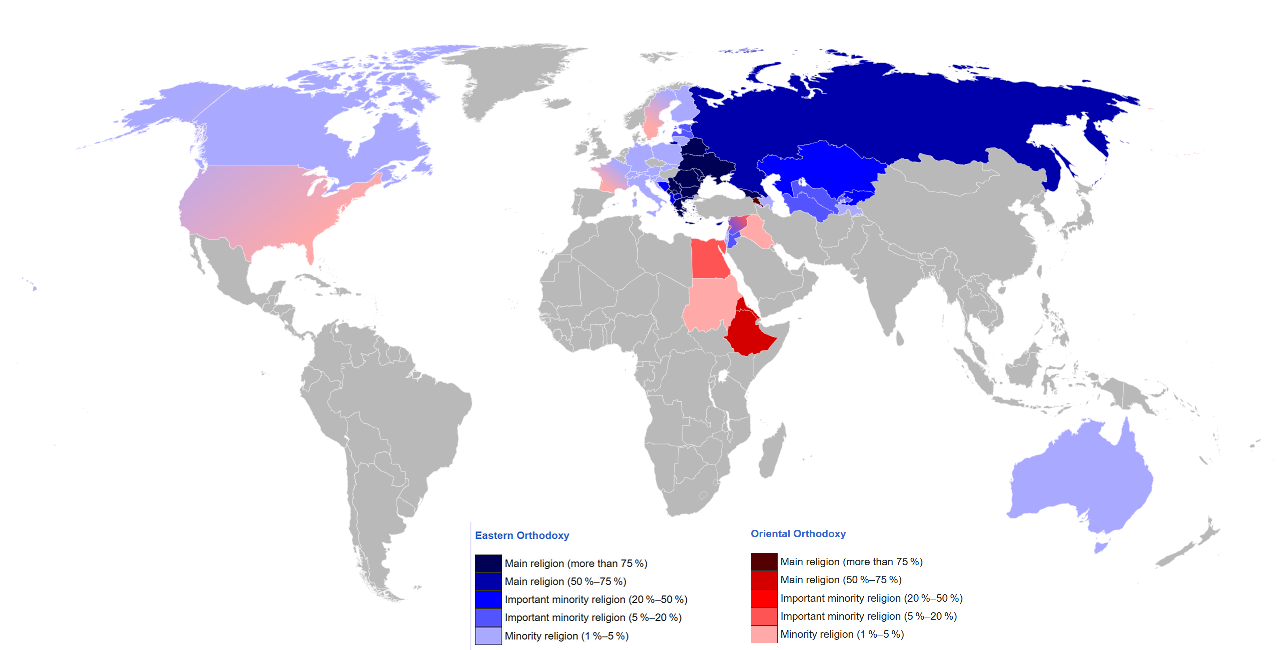
Eastern Orthodoxy is predominantly practiced in:
|
Country |
Percentage of Population |
|
Greece |
98% |
|
Russia |
77% |
|
Romania |
81% |
|
Serbia |
86% |
|
Bulgaria |
86% |
|
Georgia |
83% |
|
Ukraine |
65.4%–77% |
Significant minorities exist in various European countries and former Soviet republics, contributing to their global presence.
Criticism of Eastern Orthodoxy
Overview of Criticism of Eastern Orthodoxy
Criticism of Eastern Orthodoxy often focuses on its views regarding tradition, authority, and the role of sacraments, with some arguing that it diverges from biblical teachings. Additionally, some Protestant perspectives challenge its interpretations and practices, suggesting misunderstandings or misrepresentations of Orthodox beliefs. Eastern Orthodoxy, while rich in tradition and history, faces various criticisms, particularly from Protestant perspectives. These critiques often focus on theological differences, practices, and historical claims.
Key Areas of Criticism
Authority and Tradition
- Critics argue that Eastern Orthodoxy places too much emphasis on tradition and the authority of the Church, potentially overshadowing Scripture.
- The reliance on ecumenical councils for doctrinal definitions is seen as problematic by some, who believe it can lead to deviations from biblical teachings.
Sacraments and Practices
- The Orthodox understanding of sacraments, particularly the Eucharist and the veneration of icons, is often challenged.
- Some Protestants view these practices as unnecessary additions to faith, arguing they detract from a direct relationship with God.
Justification and Salvation
- The Eastern Orthodox view of justification differs from the Protestant emphasis on faith alone. Critics argue that this can lead to a works-based understanding of salvation.
- The concept of "theosis" (becoming one with God) is also scrutinized, with some claiming it blurs the distinction between Creator and creation.
Notable Works Addressing Criticism
Several authors and theologians have engaged with Eastern Orthodoxy critically:
- Michael Hortoncontributed to a book titled Counterpoints: Three Views on Eastern Orthodoxy and Evangelicalism, which presents various perspectives on the topic.
- Daniel Clendenin wrote Eastern Orthodox Christianity: A Western Perspective, providing insights into Orthodox teachings for a Protestant audience.
These works aim to clarify misunderstandings and present a balanced view of Eastern Orthodoxy while addressing common criticisms.
In Conclusiom
The Eastern Orthodox Church traces its history back to Jesus Christ and the Apostles, with its formal establishment occurring after the Great Schism in 1054, which divided it from the Roman Catholic Church. It has since developed its own traditions, theology, and practices while maintaining a continuous apostolic succession. Criticism of the Eastern Orthodox Church often focuses on its teachings regarding salvation, church authority, and the veneration of saints. Critics argue that Eastern Orthodoxy emphasizes salvation through works, places the church above Scripture, and practices the adoration of icons, which some see as contrary to biblical teachings.
Protestantism
Overview of Protestantism
Protestantism is a major branch of Christianity that originated in the early 16th century as part of the Protestant Reformation, which sought to reform the Roman Catholic Church. It emphasizes salvation through faith alone, the authority of the Bible, and the priesthood of all believers, leading to a variety of denominations and beliefs within the movement.
Key Doctrines
Sola fide
Sola fide, meaning "faith alone," is a Protestant Christian doctrine that teaches that sinners are forgiven and declared "not guilty" through faith, without the need for good works or religious deeds. This doctrine is considered a cornerstone of Protestant Christianity, emphasizing that salvation comes solely through faith in Jesus Christ.
Historical Context
This doctrine emerged during the Protestant Reformation in the 16th century, primarily championed by Martin Luther. He argued that justification by faith alone is the central tenet of Christianity, stating that without it, "the church of God cannot subsist one hour." Luther's interpretation emphasized that faith, rather than works, is the means by which believers receive God's grace.
Comparison with Other Beliefs
|
Aspect |
Sola Fide (Protestant) |
Catholicism |
Anabaptist Theology |
|
Justification |
By faith alone |
By faith and works |
Faith that works |
|
Role of Good Works |
Evidence of faith, not a means to salvation |
Necessary for salvation |
Integral to the believer's life |
|
Key Scripture References |
Romans 4:5-6, Galatians 2:16 |
Emphasizes faith formed by love |
Focus on living like Christ |
Importance in Salvation
Sola fide asserts that salvation is a gift from God, received through faith. It emphasizes that no amount of good works can earn salvation, as all humans are inherently sinful and unable to save themselves. This doctrine is foundational for many Protestant denominations and distinguishes their beliefs from those of the Catholic Church, which teaches that both faith and works are essential for salvation.
Sola Scriptura
Sola Scriptura is a Latin phrase meaning "by Scripture alone." It emerged during the Protestant Reformation in the 16th century, and it is a key doctrine in Protestant Christianity, particularly within Lutheran and Reformed traditions. This doctrine asserts that the Bible is the sole infallible source of authority for Christian faith and practice.
Historical Context
Sola Scriptura Reformers like Martin Luther emphasized that Scripture is divinely inspired and without error, contrasting with the Catholic Church's view that tradition and church authority also hold significant weight.
Key Characteristics
|
Characteristic |
Description |
|
Authority |
Scripture is the only infallible authority for faith and practice. |
|
Rejection of Tradition |
It rejects any infallible authority other than the Bible, unlike Catholicism which includes tradition. |
|
Sufficiency |
The Bible is sufficient for guiding believers in all matters of faith and conduct. |
In summary, Sola Scriptura emphasizes the Bible's unique role as the ultimate authority in Christianity, shaping the beliefs and practices of many Protestant denominations.
Alternatives to Sola Scriptura
Some Christian denominations, such as Anglicanism and Methodism, adhere to a view called prima scriptura. This perspective holds that while Scripture is primary, other sources like tradition and reason can also inform faith and practice, but they must align with biblical teachings.
Prima Scriptura
Prima scriptura is a Christian doctrine that asserts canonized scripture holds the primary authority in matters of faith and practice. It suggests that while the Bible is the foremost source of divine revelation, other sources can also provide guidance. These may include:
- The Holy Spirit
- Church traditions
- Reason and common sense
- Personal conscience and experiences
Comparison with Sola Scriptura
Prima scriptura differs from sola scriptura, which means "by scripture alone." In sola scriptura, the Bible is viewed as the only infallible authority, with no other sources holding equal weight. Here’s a comparison of the two:
|
Aspect |
Prima Scriptura |
Sola Scriptura |
|
Authority |
Scripture is primary, but other sources are valid |
Scripture is the sole authority |
|
Role of Tradition |
Tradition and reason can support scripture |
Tradition is subordinate to scripture |
|
Interpretation |
Other sources can aid understanding |
Only scripture is used for interpretation |
Historical Context
The concept of prima scriptura acknowledges that early Christians relied on both scripture and traditions. It allows for a broader understanding of divine revelation, integrating insights from various sources while maintaining the Bible's supremacy. This approach is often embraced by denominations like Anglicanism and Methodism, which emphasize the importance of scripture alongside tradition and reason.
Universal Priesthood of Believers
The Priesthood of All Believers is a Protestant doctrine stating that all baptized Christians share in Christ's priestly status, meaning they have direct access to God and the authority to interpret and apply Scripture without needing a special class of priests. This concept emphasizes that every believer can serve God in their daily lives, making their work and actions a form of ministry.
Key Aspects
- Universal Priesthood: All baptized Christians are considered priests, which emphasizes equality among believers. There is no spiritual hierarchy separating clergy from laity.
- Biblical Foundation: This doctrine is supported by various Scripture passages, including:
- Exodus 19:6: "You shall be to me a kingdom of priests and a holy nation."
- 1 Peter 2:5: "You also, as living stones, are being built up as a spiritual house for a holy priesthood."
- Revelation 1:6: "He has made us a kingdom, priests to his God and Father."
- Spiritual Responsibilities: Believers are called to offer spiritual sacrifices, such as prayer, praise, and acts of service, and to proclaim the gospel to others.
Historical Context
- Reformation Influence: The concept gained prominence during the Protestant Reformation, particularly through Martin Luther, who emphasized that all believers have equal access to God and share in Christ's priesthood.
- Contrast with Other Traditions: In contrast to Catholic and Orthodox traditions, which maintain a distinct ministerial priesthood, the priesthood of all believers in Protestantism emphasizes the role of every individual in the faith community.
This doctrine encourages active participation in the church and affirms the spiritual significance of all vocations.
Protestant Denominations
Protestant denominations are various groups of Christian churches that emerged from the Protestant Reformation, each with distinct beliefs and practices. Major denominations include Lutheranism, Anglicanism, Baptists, Methodists, and Presbyterians, among others, all emphasizing the authority of the Bible and the concept of salvation through faith.
Protestant denominations can be broadly categorized into three main traditions:
|
Tradition |
Description |
|
Evangelical Protestant |
Includes denominations like Baptists and Pentecostals, emphasizing personal faith and evangelism. |
|
Mainline Protestant |
Comprises denominations such as Methodists and Lutherans, focusing on social justice and community. |
|
Historically Black Protestant |
Encompasses churches like the National Baptist Convention, addressing the spiritual needs of African Americans. |
Key Protestant Denominations
- Anglican: Anglicanism is a branch of Christianity that originated from the Church of England during the Protestant Reformation in the 16th century. It combines elements of both Protestantism and Roman Catholicism, emphasizing the authority of Scripture and the importance of traditional worship practices.
- Baptist: Christian Baptists are part of a movement that emphasizes the importance of believers' baptism and the authority of the Bible. They seek to promote truth and expose error in doctrine and practice, often associated with the early Restoration Movement led by figures like Alexander Campbell.
- Lutheran: A Lutheran is a Christian who follows the teachings and beliefs established by Martin Luther during the Protestant Reformation, emphasizing salvation through faith alone, grace alone, and scripture alone. They adhere to the doctrines outlined in the Lutheran Confessions, particularly as summarized in the Book of Concord.
- Methodist: The Methodist Church is a Protestant Christian denomination that originated in the 18th century under the leadership of John Wesley. It emphasizes a methodical approach to faith and practice, focusing on personal holiness and social justice and the transformative power of grace, and is known for its structured worship and community involvement.
- Pentecostal: Pentecostalism is a movement within Christianity that emphasizes a direct personal experience of God through the Holy Spirit, particularly through practices like speaking in tongues and spiritual gifts. It originated in the early 20th century and is known for its energetic worship and belief in the baptism of the Holy Spirit as a key aspect of faith.
- Presbyterian: Presbyterianism is a branch of Protestant Christianity that emphasizes the sovereignty of God, the authority of Scripture, and the necessity of grace through faith in Christ. It is governed by elected elders and is rooted in the teachings of John Calvin and the Reformation of the 16th century.
- Reformed: Reformed Christianity, also called Calvinism, is a major branch of Protestantism that began during the 16th-century Protestant Reformation. In the modern day, it is largely represented by the Continental Reformed, Presbyterian, and Congregational traditions, as well as parts of the Anglican (known as "Episcopal" in some regions), Baptist, and Waldensian traditions, in addition to a minority of persons belonging to the Methodist faith (who are known as Calvinistic Methodists).
- United and Uniting Churches: United and uniting churches are denominations formed from the merger of two or more different Protestant Christian groups, aiming for greater unity in faith and practice. They often reflect a commitment to ecumenism, seeking to overcome historical divisions among various Christian traditions.
Please note that the Presbyterian and Reformed denominations are often considered a single denomination due to their shared history (Presbyterianism in England and Scotland and Reformed in Western Europe), as well as their shared Christian doctrines.
Protestant Organizational Structures
Protestant religions have diverse organizational structures, often characterized by local autonomy and varying governance models. Common forms include congregational governance, where each church is self-governing, and synodical governance, where regional bodies oversee multiple congregations, reflecting the emphasis on individual interpretation of scripture and community decision-making.
- Congregationalist Structure
- Authority: Local congregations have full autonomy.
- Decision-Making: Decisions are made collectively by church members.
- Characteristics: Emphasizes local governance and community involvement.
- Presbyterian Structure
- Authority: Governed by elected elders and ministers.
- Decision-Making: Decisions are made at local, regional, and national levels through assemblies.
- Characteristics: Emphasizes a representative system with a structured hierarchy.
- Episcopal Structure
- Authority: Ruled by bishops.
- Decision-Making: Bishops oversee multiple congregations and make key decisions.
- Characteristics: Combines elements of both Catholic and Protestant traditions, often using traditional liturgical practices while embracing Protestant reforms.
- Non-Denominational Churches Structure
- Authority: Independent congregations without formal ties to a specific denomination.
- Decision-Making: Typically led by a pastor or a small leadership team.
- Characteristics: Focus on personal faith and often align with core Protestant beliefs.
Protestant organizational structures reflect a wide range of governance styles, from highly autonomous congregations to more centralized systems with bishops. Each model serves to support the beliefs and practices of its members while promoting community engagement and spiritual growth.
Protestant Church Hierarchy
Protestant churches generally do not have a strict hierarchy like the Catholic Church; instead, they often emphasize the "priesthood of all believers," meaning that each individual has direct access to God and that all Christians share in the priestly status of Christ, meaning there is no special class of priests who mediate between God and believers. This concept emphasizes that every believer has the right to interpret and apply Scripture, reflecting a shift from the medieval church's hierarchical structure. Leadership structures can vary widely among denominations, with roles such as pastors, elders, and deacons, but many churches operate with a more decentralized approach where local congregations have significant autonomy.
Key Features of Protestant Hierarchy
|
Feature |
Description |
|
Authority Source |
Authority comes from the Bible, not from a central figure like the Pope, as they believe in the Priesthood of all Believers. Some Protestant denominations have a national organization, and some have an international one, which mainly serve doctrinal, organizational, and financial purposes and do not hold significant authority over synods, ministers, pastors, or congregations. |
|
Synod |
A synod is a council of church leaders from multiple churches within a denomination, convened to discuss and resolve issues related to doctrine, administration, or governance within the Christian denomination. Synods are often regional within a country. |
|
Minister or Pastor |
A Christian minister or pastor is a person authorized by a church to perform religious functions such as teaching, leading worship services, and providing spiritual guidance to the community. The role can vary widely depending on the denomination and may include ordained clergy or non-ordained individuals. Some denominations maintain a strong distinction between ordained and lay leaders, while others promote shared leadership. |
|
Congregation |
Many Protestant denominations operate with local congregations having significant autonomy. |
Denominational Structures
Different Protestant denominations have unique governance structures:
- Anglicanism: Combines elements of Catholicism and Protestantism, maintaining bishops and a liturgical tradition.
- Calvinism (Reformed): Typically governed by elected elders (presbyters) and emphasizes a council-based leadership.
- Congregationalism: Each local church is autonomous, making decisions independently without a higher authority.
- Lutheranism: Often has a synodical structure with bishops in some regions, emphasizing liturgical worship.
- Presbyterian: The synod is a level of administration between the local presbytery and the national general assembly.
Hierarchy Conclusion
Protestantism's hierarchy is characterized by a decentralized structure, focusing on local governance and the authority of Scripture. This allows for a diverse range of practices and beliefs within the broader Protestant tradition.
Criticism Of Protestantism
Criticism of Protestantism includes challenges to its foundational principles, such as justification by faith alone (sola fide) and the authority of Scripture (sola scriptura). These critiques often come from the Catholic Church and Eastern Orthodox Church, which argue that Protestantism lacks the fullness of truth and the means of salvation found in their traditions.
Key Areas of Criticism
Foundational Principles
- Sola Fide (Faith Alone): Critics argue that the Protestant belief in justification by faith alone is flawed. While Protestants assert that faith is sufficient for salvation, many Catholic theologians maintain that both faith and good works are necessary.
- Sola Scriptura (Scripture Alone): This principle claims that the Bible is the sole authority for Christian doctrine. Critics argue that this view is unworkable and lacks biblical support, as it does not address the role of tradition and the church in interpreting scripture.
Doctrinal and Practical Issues
- Sacraments: Protestant denominations often differ in their understanding and practice of sacraments, such as baptism and communion, leading to further criticism from both within and outside Protestantism.
- Fragmentation: The multitude of Protestant denominations has led to self-criticism regarding unity and coherence in beliefs. Different groups often challenge each other's interpretations and doctrines.
Historical Context
The Protestant Reformation, initiated by figures like Martin Luther, was marked by significant theological disputes. Critics argue that the schism between Protestants and Catholics was not solely due to Protestant actions but also the Catholic Church's responses and practices at the time. This historical context is essential for understanding ongoing debates about Protestantism's legitimacy and theological foundations.
In Conclusion
The Protestant Reformation was a major theological movement in 16th-century Western Christianity that challenged the authority of the papacy and the Catholic Church hierarchy both religiously and politically. Since this reform was based on opposition to the Catholic Church's hierarchy and doctrines, those involved—whether leaders or laypeople—were reluctant to establish another hierarchy that might replicate what they saw as the errors of the Catholic Church.
Oriental Orthodoxy
Oriental Orthodoxy refers to a branch of Eastern Christianity that includes six autocephalous churches: the Coptic Orthodox Church, the Armenian Apostolic Church, the Syriac Orthodox Church, the Ethiopian Orthodox Tewahedo Church, the Eritrean Orthodox Church, and the Malankara Orthodox Syrian Church. These churches adhere to Miaphysite Christology and recognize only the first three ecumenical councils as valid. For more on Oriental Orthodoxy, I would direct you to the Wikipedia hyperlinked article.
Restorationism
Restorationism, also known as Christian primitivism, is a belief within Christianity that advocates for returning to the practices and beliefs of the early church, as it is thought that these were lost or altered over time. This movement seeks to correct perceived deficiencies in contemporary Christianity by modeling itself after the primitive church. For more on Restorationism, I would direct you to the Wikipedia hyperlinked article.
Sects within Christianity
Sects in Christianity are denominations that rely on sources outside the Bible to define their theology and doctrines, or have unique interpretations of the Bible that set them apart from mainstream Christianity. Some notable sects in Christianity are:
- Jehovah's Witnesses: Known for their distinct beliefs about the nature of God and their refusal to participate in military service or celebrate holidays.
- Latter Day Saints (Mormons): Founded in the 19th century, they believe in additional scriptures like the Book of Mormon.
- Messianic Judaism: Combines Jewish traditions with belief in Jesus as the Messiah, while maintaining a Jewish identity.
- Quakers (Religious Society of Friends): Emphasize direct experience of God and often practice silent worship.
- Seventh-day Adventists: Known for observing Saturday as the Sabbath and emphasizing the imminent Second Coming of Jesus Christ. They also focus on health and education, operating a large network of hospitals and schools worldwide.
Characteristics of Sects
- Leadership Structure: Many sects have different forms of governance, ranging from hierarchical to congregational models.
- Cultural Practices: Sects often incorporate specific rituals, worship styles, and community practices that reflect their beliefs.
Christian sects illustrate the diversity within Christianity, showcasing how historical, cultural, and theological factors contribute to the formation of distinct groups in Christianity.
Overview of Christianity's History
Christianity began with Jesus, a Jewish preacher, who was crucified around CE 30-33. His followers believed he was the incarnation of God and that he rose from the dead. Over the next two millennia, Christianity grew to become the world's largest religion, with over two billion adherents.
Early Christianity (30-33 CE – 3rd Century)
Formation and Spread
- Initial Growth: After Jesus' death, his followers formed a small community in Jerusalem. They initially adhered to Jewish customs and laws.
- Council of Jerusalem (c. 50): This meeting addressed the inclusion of Gentiles in the faith, deciding they should not be required to follow all Jewish laws.
- Missionary Expansion: Key figures like Paul the Apostle played a significant role in spreading Christianity beyond Jewish communities, reaching Gentiles across the Roman Empire.
Challenges and Persecutions
- Roman Persecution: Early Christians faced persecution for their beliefs, particularly under emperors like Nero and Decius. Despite this, the movement continued to grow.
- Cultural Integration: As Christianity spread, it began to incorporate elements of Greek philosophy and culture, leading to a more diverse expression of faith.
Establishment and Legalization (4th Century)
- Edict of Milan (313 CE): Emperor Constantine's Edict of Milan granted religious tolerance to Christians, allowing the faith to flourish openly.
- Council of Nicaea (325 CE): The First Council of Nicaea established foundational Christian doctrines, including the Nicene Creed, which defined the nature of Christ and the Trinity.
- Edict of Thessalonica (380 CE): Christianity became the official religion of the Roman Empire in 380 CE when Theodosius I, Gratian, and Valentinian II issued the Edict of Thessalonica, recognizing Nicene Christianity as the state religion. This edict declared that those who did not follow the religion taught by Pope Damasus I of Rome and Pope Peter of Alexandria were to be called heretics.
Middle Ages to Modern Era
- Wars, Schisms, and Reformations: The Crusades were a series of military campaigns launched by the papacy between 1095 and 1291 against Muslim rulers for the recovery and defense of the Holy Land, encouraged by promises of spiritual reward. Over the centuries, Christianity also saw significant divisions, including the East-West Schism (1054), and the Protestant Reformation (16th century), leading to the emergence of various denominations which led to the Thirty Years' War (1618-1648).
- Global Expansion: Christianity slowly spread to Africa, Asia, and the Americas, adapting to diverse cultures and languages, resulting in a rich tapestry of beliefs and practices. Christianity has, however, experienced significant growth and transformation over the past century, particularly in the Global South, which includes regions like Africa, Asia, and Latin America. By 2050, projections suggest that the global Christian population could reach nearly three billion, with a majority residing in the Global South. This expansion is characterized by demographic shifts, cultural adaptations, and increasing diversity within the faith.
Today, Christianity remains a dynamic and diverse faith, continuing to evolve in response to contemporary issues and cultural contexts.
Christian Demographics
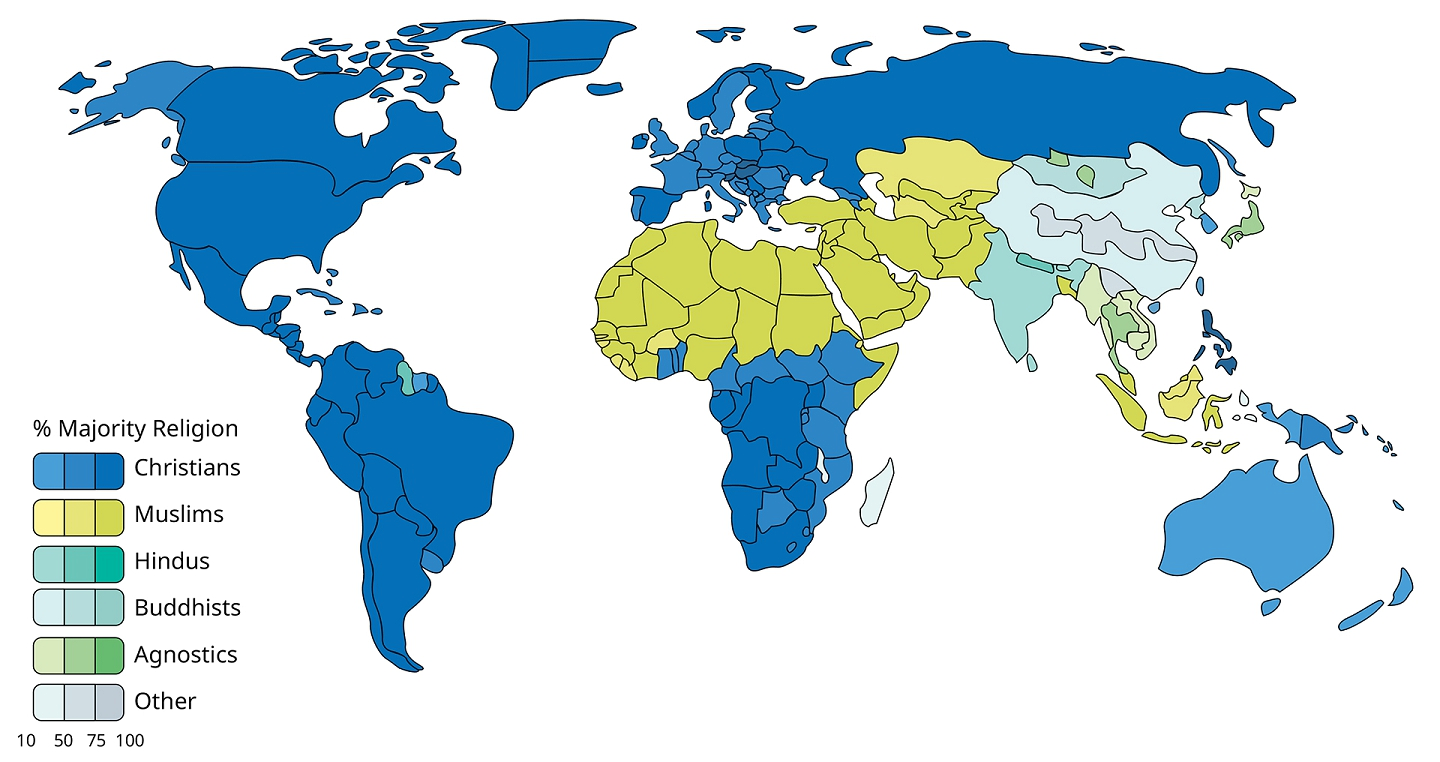
Global Christian Population Overview
The global Christian population is estimated to be around 2.3 billion, making it the largest religion in the world, comprising nearly one-third of the total population. The three main branches of Christianity are Catholicism, Protestantism, and Eastern Orthodoxy.
Distribution of Christians by Region
The distribution of Christians varies significantly across different regions:
|
Region |
Percentage of Christians |
Number of Christians (approx.) |
|
Sub-Saharan Africa |
62% |
697 million |
|
Europe |
67% |
505 million |
|
Latin America |
85% |
480 million |
|
North America |
63% |
238 million |
|
Asia-Pacific |
<10% |
<100 million |
|
Middle East & North Africa |
<1% |
<2 million |
Major Christian Denominations
Christianity is diverse, with several major branches:
|
Denomination |
Estimated Followers (approx.) |
Percentage of Christians |
|
1.3 billion |
57% |
|
|
800 million |
35% |
|
|
300 million |
13% |
|
|
60 million |
3% |
|
|
35 million |
2% |
Protestants worldwide are estimated to number around 800 million, making up about 35% of the global Christian population. The largest concentrations are found in the Americas, Sub-Saharan Africa, and Asia, while their numbers are declining in Europe and North America. The Major Denominations of Protestantism, and their percentage of Protestantism are:
- Pentecostal: 10.8% - 86.4 million
- Anglican: 10.6% - 84.8 million
- Lutheran: 9.7% - 77.6 million
- Baptist: 9% - 72.0 million
- United and Uniting Churches: 7.2% - 57.6 million
- Presbyterian/Reformed: 7% - 56 million
- Methodist: 3.4% - 27.2 million
- Adventist: 2.7% - 21.6 million
Catholic Population by Country:
Protestant Population by Country:
Orthodoxy Population by Country:
Trends and Projections
The number of Christians has grown by 6% from 2010 to 2020. However, the share of Christians in the global population has slightly decreased due to faster growth rates in non-Christian populations. Projections suggest that Christianity will continue to be the largest religion, with estimates indicating it could reach around 3 billion adherents by 2050.
Christianity Cultural Impact
Christianity has significantly influenced Western culture, including art, philosophy, and social values, which I have examined in my article “How Christianity Transformed the World”. The Scientific Revolution and Age of Enlightenment occurred within Christian nations, led by Christian believers. It remains a dominant religion in many regions, although it faces challenges such as declining adherence in the West and persecution in various parts of the world.
Criticism of Christianity
Criticism of Christianity includes challenges to its beliefs, teachings, and historical actions, such as claims of violence, corruption, and bigotry. Critics argue that Christianity has often suppressed dissent and marginalized certain groups, while also questioning its moral and philosophical foundations.
Overview of Criticism of Christianity
Criticism of Christianity has a long history, beginning in the Roman Empire. Critics have challenged both the beliefs and actions associated with the faith. Key areas of criticism include:
- Historical Actions: Critics point to events like the Crusades and modern terrorism as examples of violence linked to Christianity.
- Ethical Concerns: Allegations of corruption, superstition, and bigotry are common. Critics argue that Christianity has often suppressed women's rights and promoted homophobia.
- Theological Issues: Some argue that Christian doctrines are inconsistent, particularly regarding the Old Testament and the afterlife.
Historical Context
Early Criticism
- Early critics included philosophers like Porphyry, who claimed Christianity was based on false prophecies.
- After Christianity became the state religion under Constantine, it shifted from being persecuted to becoming a persecuting force against other religions and heretical sects.
Modern Criticism
- The Enlightenment and revolutions, such as the French Revolution, saw increased criticism of Christianity. Philosophers like Karl Marx and Friedrich Nietzsche argued that Christian doctrines were conservative and anti-democratic.
Criticism from Other Religions
- Other religions, such as Hinduism, have also critiqued Christian doctrines. Figures like Ram Mohan Roy expressed concerns about the faith's teachings.
Criticism Conclusion
Criticism of Christianity encompasses a wide range of issues, from historical actions to theological debates. This ongoing discourse reflects the complex relationship between Christianity and its critics throughout history.
Judaism & Christianity Core Beliefs In Common
The key beliefs of Judaism and Christianity include the worship of one God, the importance of following divine commandments, and the belief in a covenant between God and His people. The phrase “there is but one God” in Judaism and Christianity emphasizes that there is only one true God who is the creator and ruler of all things. Both religions also share foundational stories, such as those involving Abraham, and emphasize moral and ethical living according to their sacred texts.
The Ten Commandments of the Old Testament are religious and ethical directives, structured as a covenant document, that, according to the Hebrew Bible, were given by God to Moses. The text of the Ten Commandments appears in three markedly distinct versions in the Hebrew Bible: at Exodus 20:1–17, Deuteronomy 5:6–21, and the "Ritual Decalogue" of Exodus 34:11–26. A common synthesis of the Ten Commandments is:
- You shall have no other gods before Me.
- You shall not make for yourself a graven image.
- You shall not take the name of the LORD your God in vain.
- Remember the Sabbath day, to keep it holy.
- Honor your father and your mother.
- You shall not murder.
- You shall not commit adultery.
- You shall not steal.
- You shall not bear false witness against your neighbor.
- You shall not covet your neighbor's house; you shall not covet your neighbor's wife, or anything that belongs to your neighbor.
Both Jews and Christians believe in the Ten Commandments, and they must adhere to them in their daily lives to be considered as practicing Jews and Christians. For more on the Ten Commandments, I would direct you to my article The Ten Commandments.
Please note that this article was written with the help of my AI Search Assistance, as I am not sufficiently knowledgeable about this topic to write it myself. Much of the AI Search Assistance results are based on the Wikipedia article on these topics, which I have hyperlinked within this article. However, I have edited and/or expanded the AI Search Assistance results for better readability, clarity, and understandability.