The Personal Website of Mark W. Dawson

Containing His Articles, Observations, Thoughts, Meanderings,
and some would say Wisdom (and some would say not).
Cipolla The Basic Laws of Human
Stupidity
by Carlo M. Cipolla illustrations by James Donnelly
THE FIRST BASIC LAW
The first basic law of human stupidity asserts without ambiguity
that:
1. Always and inevitably everyone underestimates the number of
stupid individuals in circulation.
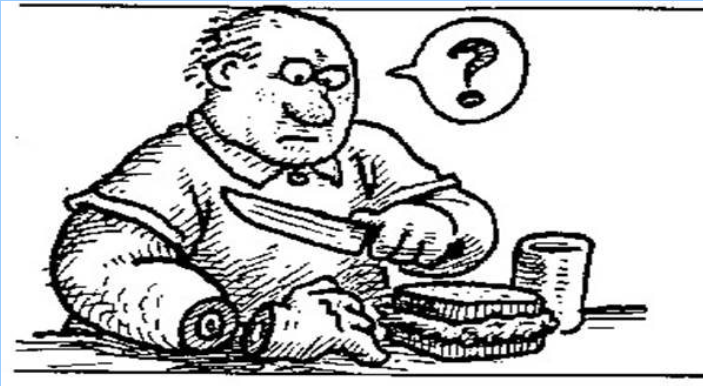
At first, the statement sounds trivial, vague and horribly ungenerous. Closer scrutiny will however reveal its realistic veracity. No matter how high are one's estimates of human stupidity, one is repeatedly and recurrently startled by the fact that:
- People whom one had once judged rational and intelligent turn out to be unashamedly stupid.
- Day after day, with unceasing monotony, one is harassed in one's activities by stupid individuals who appear suddenly and unexpectedly in the most inconvenient places and at the most improbable moments.
THE SECOND BASIC LAW
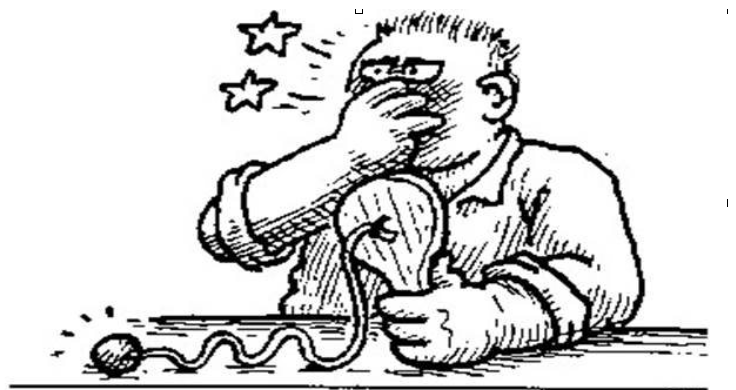
Cultural trends now fashionable in the West favor an egalitarian
approach to life. People like to think of human beings as the output
of a perfectly engineered mass production machine. Geneticists and
sociologists especially go out of their way to prove, with an
impressive apparatus of scientific data and formulations that all
men are naturally equal and if some are more equal than others, this
is attributable to nurture and not to nature. I take an exception to
this general view. It is my firm conviction, supported by years of
observation and experimentation, that men are not equal, that some
are stupid and others are not, and that the difference is determined
by nature and not by cultural forces or factors. One is stupid in
the same way one is redhaired; one belongs to the stupid set as one
belongs to a blood group. A stupid man is born a stupid man by an
act of Providence. Although convinced that fraction of human beings
are stupid and that they are so because of genetic traits, I am not
a reactionary trying to reintroduce surreptitiously class or race
discrimination. I firmly believe that stupidity is an indiscriminate
privilege of all human groups and is uniformly distributed according
to a constant proportion. This fact is scientifically expressed by
the Second Basic Law which states that
2. The probability that a certain person will be stupid is
independent of any other characteristic of that person.
In this regard, Nature seems indeed to have outdone herself. It is
well known that Nature manages, rather mysteriously, to keep
constant the relative frequency of certain natural phenomena. For
instance, whether men proliferate at the Northern Pole or at the
Equator, whether the matching couples are developed or
underdeveloped, whether they are black, red, white or yellow the
female to male ratio among the newly born is a constant, with a very
slight prevalence of males. We do not know how Nature achieves this
remarkable result but we know that in order to achieve it Nature
must operate with large numbers. The most remarkable fact about the
frequency of stupidity is that Nature succeeds in making this
frequency equal to the probability quite independently from the size
of the group.
Thus one finds the same percentage of stupid people whether one is
considering very large groups or one is dealing with very small
ones. No other set of observable phenomena offers such striking
proof of the powers of Nature.
The evidence that education has nothing to do with the probability
was provided by experiments carried on in a large number of
universities all over the world. One may distinguish the composite
population which constitutes a university in five major groups,
namely the blue-collar workers, the white-collar employees, the
students, the administrators and the professors.
Whenever I analyzed the blue-collar workers I found that the
fraction σ of them were stupid. As σ's value was higher than I
expected (First Law), paying my tribute to fashion I thought at
first that segregation, poverty, lack of education were to be
blamed. But moving up the social ladder I found that the same ratio
was prevalent among the white-collar employees and among the
students. More impressive still were the results among the
professors. Whether I considered a large university or a small
college, a famous institution or an obscure one, I found that the
same fraction σ of the professors are stupid. So bewildered was I
by the results, that I made a special point to extend my research to
a specially selected group, to a real elite, the Nobel laureates.
The result confirmed Nature's supreme powers: σ fraction of the
Nobel laureates are stupid.
This idea was hard to accept and digest but too many experimental
results proved its fundamental veracity. The Second Basic Law is an
iron law, and it does not admit exceptions. The Women's Liberation
Movement will support the Second Basic Law as it shows that stupid
individuals are proportionately as numerous among men as among
women. The underdeveloped of the Third World will probably take
solace at the Second Basic Law as they can find in it the proof that
after all the developed are not so developed. Whether the Second
Basic Law is liked or not, however, its implications are
frightening: the Law implies that whether you move in distinguished
circles or you take refuge among the head-hunters of Polynesia,
whether you lock yourself into a monastery or decide to spend the
rest of your life in the company of beautiful and lascivious women,
you always have to face the same percentage of stupid people - which
percentage (in accordance with the First Law) will always surpass
your expectations.
THE THIRD (AND GOLDEN) BASIC LAW
The Third Basic Law assumes, although it does not state it explicitly, that human beings fall into four basic categories: the helpless, the intelligent, the bandit and the stupid. It will be easily recognized by the perspicacious reader that these four categories correspond to the four areas I, H, S, B, of the basic graph (see below).
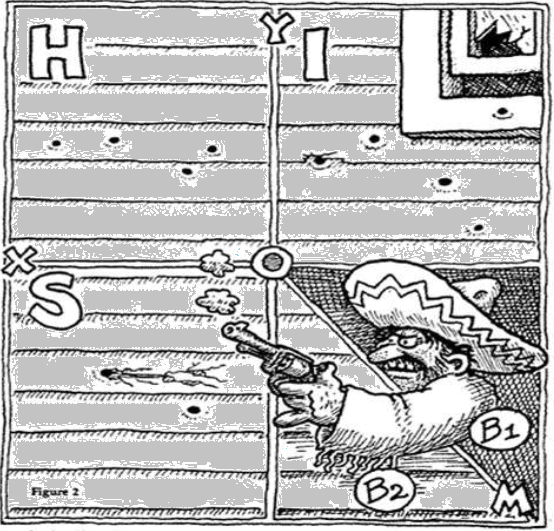
If Tom takes an action and suffers a loss while producing a gain to
Dick, Tom's mark will fall in field H: Tom acted helplessly. If Tom
takes an action by which he makes a gain while yielding a gain also
to Dick, Tom's mark will fall in area I: Tom acted intelligently. If
Tom takes an action by which he makes a gain causing Dick a loss,
Tom's mark will fall in area B: Tom acted as a bandit. Stupidity is
related to area S and to all positions on axis Y below point O. As
the Third Basic Law explicitly clarifies:
3. A stupid person is a person who causes losses to another
person or to a group of persons while himself deriving no gain and
even possibly incurring losses.
When confronted for the first time with the Third Basic Law,
rational people instinctively react with feelings of skepticism and
incredulity. The fact is that reasonable people have difficulty in
conceiving and understanding unreasonable behaviour. But let us
abandon the lofty plane of theory and let us look pragmatically at
our daily life. We all recollect occasions in which a fellow took an
action which resulted in his gain and our loss: we had to deal with
a bandit. We also recollect cases in which a fellow took an action
which resulted in his loss and our gain: we had to deal with a
helpless person. We can recollect cases in which a fellow took an
action by which both parties gained: he was intelligent. Such cases
do indeed occur. But upon thoughtful reflection you must admit that
these are not the events which punctuate most frequently our daily
life. Our daily life is mostly, made of cases in which we lose money
and/or time and/or energy and/or appetite, cheerfulness and good
health because of the improbable action of some preposterous
creature who has nothing to gain and indeed gains nothing from
causing us embarrassment, difficulties or harm. Nobody knows,
understands or can possibly explain why that preposterous creature
does what he does. In fact there is no explanation - or better there
is only one explanation: the person in question is stupid.
FREQUENCY DISTRIBUTION
Most people do not act consistently. Under certain circumstances a
given person acts intelligently and under different circumstances
the same person will act helplessly. The only important exception to
the rule is represented by the stupid people who normally show a
strong proclivity toward perfect consistency in all fields of human
endeavours.
From all that proceeds, it does not follow that we can chart on the
basic graph only stupid individuals. We can calculate for each
person his weighted average position in the plane of figure 1 quite
independently from his degree of inconsistency. A helpless person
may occasionally behave intelligently and on occasion he may perform
a bandit's action. But since the person in question is fundamentally
helpless most of his action will have the characteristics of
helplessness. Thus the overall weighted average position of all the
actions of such a person will place him in the H quadrant of the
basic graph.
The fact that it is possible to place on the graph individuals
instead of their actions allows some digression about the frequency
of the bandit and stupid types.
The perfect bandit is one who, with his actions, causes to other
individuals losses equal to his gains. The crudest type of banditry
is theft. A person who robs you of 100 pounds without causing you an
extra loss or harm is a perfect bandit: you lose 100 pounds, he
gains 100 pounds. In the basic graph the perfect bandits would
appear on a 45-degree diagonal line that divides the area B into two
perfectly symmetrical subareas (line OM of figure 2).
However the "perfect" bandits are relatively few. The line OM
divides the area B into two sub-areas, B1, and B2, and by far the
largest majority of the bandits falls somewhere in one of these two
sub-areas.
The bandits who fall in area B1 are those individuals whose actions
yield to them profits which are larger than the losses they cause to
other people. All bandits who are entitled to a position in area B1
are bandits with overtones of intelligence and as they get closer to
the right side of the X axis they share more and more the
characteristics of the intelligent person.
Unfortunately the individuals entitled to a position in the B1 area
are not very numerous. Most bandits actually fall in area B2. The
individuals who fall in this area are those whose actions yield to
them gains inferior to the losses inflicted to other people. If
someone kills you in order to rob you of fifty pounds or if he
murders you in order to spend a weekend with your wife at Monte
Carlo, we can be sure that he is not a perfect bandit. Even by using
his values to measure his gains (but still using your values to
measure your losses) he falls in the B2 area very close to the
border of sheer stupidity. Generals who cause vast destruction and
innumerable casualties in return for a promotion or a medal fall in
the same area.
The frequency distribution of the stupid people is totally different
from that of the bandit. While bandits are mostly scattered over an
area stupid people are heavily concentrated along one line,
specifically on the Y axis below point O. The reason for this is
that by far the majority of stupid people are basically and
unwaveringly stupid - in other words they perseveringly insist in
causing harm and losses to other people without deriving any gain,
whether positive or negative.
There are however people who by their improbable actions not only
cause damages to other people but in addition hurt themselves. They
are a sort of super-stupid who, in our system of accounting, will
appear somewhere in the area S to the left of the Y axis.
THE POWER OF STUPIDITY
It is not difficult to understand how social, political and
institutional power enhances the damaging potential of a stupid
person. But one still has to explain and understand what essentially
it is that makes a stupid person dangerous to other people - in
other words what constitutes the power of stupidity.
Essentially stupid people are dangerous and damaging because
reasonable people find it difficult to imagine and understand
unreasonable behaviour. An intelligent person may understand the
logic of a bandit. The bandit's actions follow a pattern of
rationality: nasty rationality, if you like, but still rationality.
The bandit wants a plus on his account. Since he is not intelligent
enough to devise ways of obtaining the plus as well as providing you
with a plus, he will produce his plus by causing a minus to appear
on your account. All this is bad, but it is rational and if you are
rational you can predict it. You can foresee a bandit's actions, his
nasty manoeuvres and ugly aspirations and often can build up your
defenses.
With a stupid person all this is absolutely impossible as explained
by the Third Basic Law. A stupid creature will harass you for no
reason, for no advantage, without any plan or scheme and at the most
improbable times and places. You have no rational way of telling if
and when and how and why the stupid creature attacks. When
confronted with a stupid individual you are completely at his mercy.
Because the stupid person's actions do not conform to the rules of
rationality, it follows that:
a) one is generally caught by surprise
by the attack;
b) even when one becomes aware of the attack, one cannot organize a
rational defense, because the attack itself lacks any rational
structure.
The fact that the activity and movements of a stupid creature are absolutely erratic and irrational not only makes defense problematic but it also makes any counter-attack extremely difficult - like trying to shoot at an object which is capable of the most improbable and unimaginable movements. This is what both Dickens and Schiller had in mind when the former stated that "with stupidity and sound digestion man may front much" and the latter wrote that "against stupidity the very Gods fight in vain."
THE FOURTH BASIC LAW
That helpless people, namely those who in our accounting system
fall into the H area, do not normally recognize how dangerous stupid
people are, is not at all surprising. Their failure is just another
expression of their helplessness. The truly amazing fact, however,
is that also intelligent people and bandits often fail to recognize
the power to damage inherent in stupidity. It is extremely difficult
to explain why this should happen and one can only remark that when
confronted with stupid individuals often intelligent men as well as
bandits make the mistake of indulging in feelings of selfcomplacency
and contemptuousness instead of immediately secreting adequate
quantities of adrenaline and building up defenses.
One is tempted to believe that a stupid man will only do harm to
himself but this is confusing stupidity with helplessness. On
occasion one is tempted to associate oneself with a stupid
individual in order to use him for one's own schemes. Such a
manoeuvre cannot but have disastrous effects because a) it is based
on a complete misunderstanding of the essential nature of stupidity
and b) it gives the stupid person added scope for the exercise of
his gifts. One may hope to outmanoeuvre the stupid and, up to a
point, one may actually do so. But because of the erratic behaviour
of the stupid, one cannot foresee all the stupid's actions and
reactions and before long one will be pulverized by the
unpredictable moves of the stupid partner.
This is clearly summarized in the Fourth Basic Law which states
that:
4. Non-stupid people always underestimate the damaging power of
stupid individuals. In particular non-stupid people constantly
forget that at all times and places and under any circumstances to
deal and/or associate with stupid people always turns out to be a
costly mistake.
Through centuries and millennia, in public as in private life,
countless individuals have failed to take account of the Fourth
Basic Law and the failure has caused mankind incalculable losses.
THE FIFTH BASIC LAW
Instead of considering the welfare of the individual let us
consider the welfare of the society, regarded in this context as the
algebraic sum of the individual conditions. A full understanding of
the Fifth Basic Law is essential to the analysis. It may be
parenthetically added here that of the Five Basic Laws, the Fifth is
certainly the best known and its corollary is quoted very
frequently. The Fifth Basic Law states that:
5a. A stupid person is the most dangerous type of person.
The corollary of the Law is that:
5b. A stupid person is more dangerous than a bandit.
The result of the action of a perfect bandit (the person who falls
on line OM of figure 2) is purely and simply a transfer of wealth
and/or welfare. After the action of a perfect bandit, the bandit has
a plus on his account which plus is exactly equivalent to the minus
he has caused to another person. The society as a whole is neither
better nor worse off. If all members of a society were perfect
bandits the society would remain stagnant but there would be no
major disaster. The whole business would amount to massive transfers
of wealth and welfare in favour of those who would take action. If
all members of the society would take action in regular turns, not
only the society as a whole but also individuals would find
themselves in a perfectly steady state of no change.
When stupid people are at work, the story is totally different.
Stupid people cause losses to other people with no counterpart of
gains on their own account. Thus the society as a whole is
impoverished. The system of accounting which finds expression in the
basic graphs shows that while all actions of individuals falling to
the right of the line POM (see fig. 3) add to the welfare of a
society; although in different degrees, the actions of all
individuals falling to the left of the same line POM cause a
deterioration.
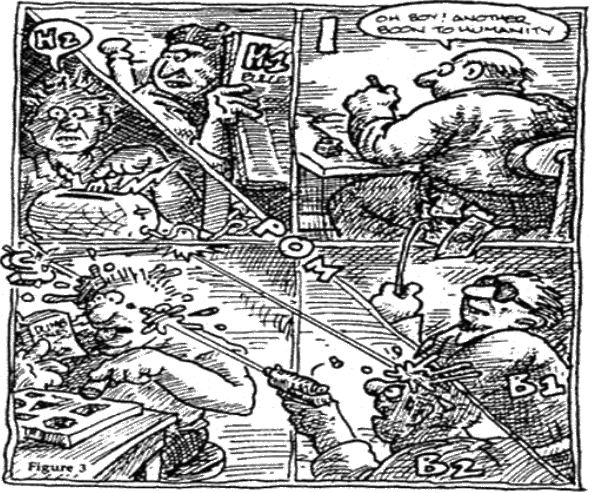
In other words the helpless with overtones of intelligence (area
H1), the bandits with overtones of intelligence (area B1) and above
all the intelligent (area I) all contribute, though in different
degrees, to accrue to the welfare of a society. On the other hand
the bandits with overtones of stupidity (area B2) and the helpless
with overtones of stupidity (area H1) manage to add losses to those
caused by stupid people thus enhancing the nefarious destructive
power of the latter group.
All this suggests some reflection on the performance of societies.
According to the Second Basic Law, the fraction of stupid people is
a constant σ which is not affected by time, space, race, class or
any other socio- cultural or historical variable. It would be a
profound mistake to believe the number of stupid people in a
declining society is greater than in a developing society. Both such
societies are plagued by the same percentage of stupid people. The
difference between the two societies is that in the society which
performs poorly:
a) the stupid members of the society are allowed by the other
members to become more active and take more actions; b) there is a
change in the composition of the nonstupid section with a relative
decline of populations of areas I, H1 and B1 and a proportionate
increase of populations H2 and B2.
This theoretical presumption is abundantly confirmed by an
exhaustive analysis of historical cases. In fact the historical
analysis allows us to reformulate the theoretical conclusions in a
more factual way and with more realistic detail.
Whether one considers classical, or medieval, or modern or
contemporary times one is impressed by the fact that any country
moving uphill has its unavoidable σ fraction of stupid people.
However the country moving uphill also has an unusually high
fraction of intelligent people who manage to keep the σ fraction at
bay and at the same time produce enough gains for themselves and the
other members of the community to make progress a certainty.
In a country which is moving downhill, the fraction of stupid people
is still equal to σ; however in the remaining population one
notices among those in power an alarming proliferation of the
bandits with overtones of stupidity (sub-area B1 of quadrant B in
figure 3) and among those not in power an equally alarming growth in
the number of helpless individuals (area H in basic graph, fig.1).
Such change in the composition of the non-stupid population
inevitably strengthens the destructive power of the σ fraction and
makes decline a certainty. And the country goes to Hell.
Professor Carlo M. Cipolla (15 August 1922 – 5 September 2000) was an Italian economic historian.He was a member of both the American Academy of Arts and Sciences and the American Philosophical Society. In an essay, "The Basic Laws of Human Stupidity" he explores the subject of stupidity. In this essay, he outlined five laws regarding stupidity and the factors to consider when exploring human behavior. For more on his theory I would direct you to my collected Chirps on "Bonhoeffer's Theory of Stupidity".