The Personal Website of Mark W. Dawson

Containing His Articles, Observations, Thoughts, Meanderings,
and some would say Wisdom (and some would say not).
Judaism Overview
Overview of Judaism
Judaism is an Abrahamic, monotheistic religion that began over 4,000 years ago among the Hebrew people in the Middle East. It is defined by the belief in one God and the teachings of the Torah, which contains laws and commandments given to the Israelites. It includes the spiritual, cultural, and legal traditions of the Jewish people, all centered around the belief in one God and the teachings of the Torah. Judaism has a rich history and features various movements such as Orthodox, Conservative, and Reform, each with different interpretations and practices.
Key Beliefs
Core Principles
- Monotheism: Belief in a single, transcendent God.
- Covenant: The special relationship between God and the Jewish people, established through figures like Abraham and Moses.
- Torah: The Torah is the compilation of the first five books of the Hebrew Bible, which includes Genesis, Exodus, Leviticus, Numbers, and Deuteronomy. It serves as a foundational text for Judaism, containing laws, teachings, and narratives central to the Jewish faith.
Major Texts
- Tanakh: The Tanakh, also known as the Hebrew Bible, is the canonical collection of Jewish scriptures, consisting of three main parts: the Torah (Law), Nevi'im (Prophets), and Ketuvim (Writings). It serves as the foundational text for Judaism and includes a variety of literary genres, such as history, law, poetry, and theology.
- Talmud: The Talmud
is a central text in Rabbinic Judaism and comprises two main
components: the Mishnah and the Gemara. It serves as a
foundational source for Jewish law, ethics, philosophy, and
customs.
- Mishnah: The Mishnah, compiled around 200 CE, it is an authoritative collection of oral laws and traditions. It consists of six orders, covering diverse topics such as agricultural laws, festivals, and civil law.
- Gemara: Gemara is a commentary on the Mishnah, further elucidating the text. There are two versions of Gemara—one from Jerusalem (Talmud Yerushalmi) and the more widely studied one from Babylon (Talmud Bavli), completed around 500 CE.
A Covenant with God
A covenant with God is a sacred agreement that establishes a relationship between God and individuals or groups. This concept is fundamental in the Bible and highlights the commitments and promises made by both parties.
Key Features of a Covenant
- Sacred Agreement: A covenant is more than a contract; it is a personal and relational promise.
- Terms Set by God: God defines the conditions of the covenant, outlining what is expected from the individuals involved.
- Blessings for Obedience: In return for following the terms, God promises specific blessings.
Understanding God's Blessings
God's blessings encompass both spiritual and earthly gifts. They serve as reminders of His goodness and faithfulness in our lives.
Types of Blessings
|
Type of Blessing |
Description |
|
Spiritual Gifts |
These include forgiveness, grace, and spiritual growth. They are often seen as the most profound blessings, as they connect us to God. |
|
Earthly Gifts |
These encompass tangible provisions such as food, shelter, and relationships. They reflect God's care for our physical needs. |
Key Aspects of God's Blessings
- Protection: God's blessings often include a sense of safety and security in our lives.
- Guidance: Through His blessings, God provides direction and wisdom for our decisions.
- Provision: He meets our needs, ensuring we have what we require for daily living.
In summary, God's blessings are a combination of spiritual and earthly gifts that reflect His love and care for us, encouraging us to trust in His provision and guidance.
The Covenants in the Hebrew Bible
The Bible describes several significant covenants, each illustrating different aspects of God's relationship with humanity:
|
Covenant Name |
Description |
Key Figures Involved |
|
Noahic Covenant |
God promises never to flood the earth again, symbolized by a rainbow. |
Noah |
|
Abrahamic Covenant |
God promises Abraham numerous descendants and blessings for all nations through his lineage. |
Abraham |
|
Mosaic Covenant |
God gives the Law to the Israelites, establishing guidelines for their conduct. |
Moses and the Israelites |
|
Davidic Covenant |
God promises David that his lineage will endure forever, leading to the Messiah. |
David |
Importance of the Covenants
Covenants are crucial to understanding the biblical narrative. They illustrate God's desire for a relationship with humanity and His commitment to fulfilling His promises. Each covenant builds on the previous ones, offering redemption and a renewed relationship with God.
Jewish Moral Character and Duty
Jewish moral character emphasizes virtues such as justice, compassion, and respect for others, rooted in the teachings of the Torah and rabbinic literature. Duties include following commandments (mitzvot) that guide ethical behavior in personal and communal life, fostering a strong sense of responsibility towards family and society.
Understanding Jewish Moral Character
Core Values
Jewish moral character is deeply rooted in the teachings of the Torah and rabbinic literature. Key values include:
- Justice: Emphasized in the Torah, where God commands justice and righteousness.
- Compassion: The importance of caring for others, especially the vulnerable, is a recurring theme.
- Respect for Life: The sanctity of life is paramount, influencing many ethical decisions.
Jewish values of justice, compassion, and a respect for life emphasize the importance of caring for others, particularly the vulnerable, and encourage individuals to act with integrity and fairness. These principles inspire community responsibilities such as supporting those in need, promoting social justice, and ensuring that everyone is treated with dignity and respect.
Character Development
Jewish ethics focus on the development of virtues through practice and education. This includes:
- Musar Literature: A tradition that teaches moral virtues and vices, guiding individuals in character development.
- Community Responsibility: Emphasizes the duty to support and uplift one another within the community.
Duties in Jewish Ethics
Commandments (Mitzvot)
Jewish ethical duties are often expressed through commandments, which guide behavior in various aspects of life:
- Interpersonal Relationships: Duties include honoring parents, helping the needy, and promoting peace.
- Social Justice: Engaging in acts that support justice and equity, such as advocating for the oppressed.
Ritual and Moral Obligations
Jewish tradition intertwines ritual practices with moral lessons, highlighting that:
- Rituals: Observances like Shabbat and dietary laws are not just religious duties but also serve to cultivate a moral community.
- Moral Action: Ethical behavior is seen as a form of worship, where actions reflect one's relationship with God and humanity.
In summary, Jewish moral character and duty are shaped by a blend of scriptural teachings, community values, and a commitment to justice and compassion.
Attributes of the Jewish God
The attributes of the Jewish God, often referred to as the Thirteen Attributes of Mercy, include qualities such as being compassionate, gracious, slow to anger, and abundant in kindness. These attributes are derived from Exodus 34:6-7 and reflect God's merciful nature towards humanity, and are central to Jewish theology and liturgy.
The Thirteen Attributes
|
Attribute Number |
Hebrew Name |
English Translation |
Description |
|
1 |
יְהוָה |
The Lord! (Adonai) |
God is merciful before a person sins. |
|
2 |
יְהוָה |
The Lord! (Adonai) |
God is merciful after a person has sinned. |
|
3 |
אֵל |
God (El) |
Denotes God's power and kingship over all. |
|
4 |
רַחוּם |
Compassionate (Raḥum) |
God sympathizes with human frailty. |
|
5 |
וְחַנּוּן |
Gracious (VeḤanun) |
God shows mercy even to those who do not deserve it. |
|
6 |
אֶרֶךְ אַפַּיִם |
Slow to anger (Erekh appayim) |
God gives people time to repent. |
|
7 |
וְרַב-חֶסֶד |
Abundant in kindness (VeRav ḥesed) |
God provides more kindness than one deserves. |
|
8 |
וֶאֱמֶת |
Truth (VeEmet) |
God fulfills His promises. |
|
9 |
נֹצֵר חֶסֶד |
Preserver of kindness (Notzer hesed) |
God remembers the deeds of the righteous for generations. |
|
10 |
נֹשֵׂא עָוֹן |
Forgiver of iniquity (Nosei avon) |
God forgives intentional sins if the sinner repents. |
|
11 |
וָפֶשַׁע |
Forgiver of willful sin (Va’fesha) |
God forgives rebellious sins. |
|
12 |
וְחַטָּאָה |
Forgiver of error (Va’hata’ah) |
God forgives unintentional sins. |
|
13 |
וְנַקֵּה |
Who cleanses (VeNakeh) |
God wipes away the sins of those who truly repent. |
Significance in Jewish Practice
These attributes are recited in various prayers, especially during the High Holidays and other significant occasions. They serve as a reminder of God's mercy and the importance of repentance and compassion in human behavior.
Prophets of Judaism
Overview of Prophets in Judaism
Judaism recognizes a total of 55 Prophets, comprising 48 male prophets and 7 female prophetesses. These individuals are considered spokesmen for God, tasked with delivering divine messages and teachings to the people.
List of Prophets
Male Prophets
The following is a list of the male prophets in Judaism:
Female Prophetesses
The seven recognized female prophetesses are:
Role and Significance
Prophets in Judaism serve as intermediaries between God and humanity. They convey messages that often include guidance, warnings, and teachings intended for their communities. The last recognized period of prophecy, known as Nevuah, is believed to have ended with the prophets Haggai, Zechariah, and Malachi in the mid-5th century BCE.
This tradition emphasizes the importance of prophets in shaping Jewish faith and moral standards throughout history.
Scholars of Judaism
Overview of Jewish Scholars
Scholars of Judaism include a diverse group of individuals who study various aspects of Jewish history, texts, and traditions, such as ancient and medieval scholars, Jewish legal scholars, and modern academic researchers. Notable figures include Gershom Scholem, who founded the academic study of Jewish mysticism, and Rabbi Akiba, a key figure in the development of Jewish law and thought.
Scholars of Judaism encompass a wide range of individuals who study various aspects of Jewish history, texts, and traditions. This includes ancient and medieval scholars, legal experts, and modern academic researchers.
Notable Scholars
Ancient and Medieval Scholars
- Rabbi Akiba: A pivotal figure in Jewish law, known for his exegetical methods and contributions to the Mishnah.
- Hillel the Elder: Renowned for his teachings and leadership in Jewish thought, often contrasted with Rabbi Shammai.
- Nachmanides (Ramban): A prominent halakhist and biblical commentator who integrated mystical teachings into his work.
- Rashi: A rabbi and commentator who authored comprehensive commentaries on the Talmud and Hebrew Bible.
Modern Scholars
- Gershom Scholem: The founder of the academic study of Jewish mysticism, he significantly shaped the historiography of Jewish mystical traditions.
- Martin Buber: Known for his existentialist interpretations of Hasidism and contributions to Jewish philosophy.
- Abraham Joshua Heschel: a professor of Jewish mysticism at the Jewish Theological Seminary of America.
- Theodor Herzl: A Hungarian Jewish journalist and lawyer who was the father of modern political Zionism. Herzl formed the Zionist Organization and promoted Jewish immigration to Palestine.
Categories of Jewish Scholars
Jewish scholars can be categorized into various groups based on their focus and expertise:
|
Category |
Description |
|
Ancient Jewish Scholars |
Scholars from the early periods of Jewish history, such as Hillel and Akiba. |
|
Medieval Jewish Scholars |
Scholars from the medieval period, including Ramban and others. |
|
Jewish Legal Scholars |
Experts in Jewish law (Halakha) and its applications. |
|
Jewish Mysticism Scholars |
Researchers focusing on Kabbalah and other mystical traditions. |
|
Jewish Historians |
Scholars who study Jewish history and its social contexts. |
Academic Organizations
The Association for Jewish Studies (AJS) is a key organization that promotes the academic field of Jewish studies globally. Founded in 1968, it has grown to include over 2,000 members and publishes the AJS Review, a scholarly journal. These scholars contribute to a rich tradition of Jewish thought and continue to influence contemporary understanding of Judaism.
Jewish Worship
Jewish worship involves prayer and rituals that are guided by Jewish law, often taking place in a synagogue or at home. Key elements include daily prayers, observance of Shabbat, and participation in community gatherings. Jewish worship is a vital aspect of Jewish life, governed by religious laws and traditions. It encompasses various practices, rituals, and communal gatherings.
Key Elements of Worship
Places of Worship
- Synagogue: The primary place for communal prayer and study.
- Home: Many rituals, especially those related to Shabbat, are observed at home.
Types of Worship
- Daily Services: Conducted in synagogues, often led by a rabbi or cantor.
- Shabbat Services: Special prayers and meals held on the Sabbath, which begins at sunset on Friday and ends at nightfall on Saturday.
Prayer Practices
Obligatory Prayers
- Men: Required to pray three times daily.
- Women: Generally required to pray once or twice a day, with some flexibility in text recitation.
Prayer Texts
- Siddur: The traditional Jewish prayer book containing the prayers and liturgy.
- Shema: A central prayer affirming the belief in one God, recited during services.
Denominational Variations
Orthodox Judaism
- Follows traditional practices strictly, with men and women sitting separately during services.
- Services are conducted primarily in Hebrew.
Reform Judaism
- Adapts practices to modern life, allowing for mixed seating and services in the local language.
- Emphasizes inclusivity and may include musical instruments.
Other Movements
- Conservative Judaism balances tradition with modernity, maintaining many traditional practices while allowing some adaptations.
Jewish worship is a rich tapestry of tradition, community, and spirituality, reflecting the diverse practices within the Jewish faith.
Jewish Hierarchy
Ancient Judaism
The high priests were the chief religious leaders in ancient Israel, overseeing the Temple in Jerusalem, while the Pharisees were a Jewish sect focused on strict observance of religious laws and traditions. The priests were religious officials who assisted the high priests in Temple rituals and other religious duties.
Overview of Religious Roles in Ancient Israel
High Priests
- Position: The high priests were the chief religious leaders in ancient Israel.
- Responsibilities: They oversaw the Temple in Jerusalem and were responsible for major religious rituals and sacrifices.
- Authority: The high priest held significant influence over both religious and political matters.
Priests
- Role: Priests assisted the high priests in Temple rituals and other religious duties.
- Function: They performed sacrifices, maintained the sanctity of the Temple, and taught the law to the people.
Pharisees
- Sect: The Pharisees were a prominent Jewish sect known for their strict observance of religious laws and traditions.
- Focus: They emphasized the interpretation of the Torah and sought to apply its teachings to everyday life.
- Influence: The Pharisees played a crucial role in preserving Jewish traditions, especially after the destruction of the Temple in A.D. 70.
Comparison of Roles
|
Attribute |
High Priests |
Priests |
Pharisees |
|
Authority |
Chief religious leaders |
Assistants to high priests |
Influential religious sect |
|
Responsibilities |
Oversee Temple rituals |
Perform sacrifices |
Interpret and teach the law |
|
Focus |
Major religious ceremonies |
Daily religious duties |
Strict law observance |
|
Historical Context |
Central to Temple worship |
Integral to religious life |
Key in post-Temple Jewish life |
The high priests and priests were primarily focused on Temple worship, while the Pharisees were more concerned with the application of Jewish law in daily life.
Modern Judaism
In modern Judaism (the period after the Jewish Diaspora following the Roman destruction of the Second Temple), a new hierarchy of religious leaders arose, primarily rabbis, who serve as teachers and decision-makers on Jewish law. Additionally, there are roles such as the chazzan (cantor) and kohanim (priests), and denominations such as Orthodox, Conservative, and Reform have their own structures and interpretations of leadership.
Jewish hierarchy can be understood through various lenses, including religious leadership, angelic hierarchy, and community organization. Each aspect plays a significant role in the structure of Jewish life.
Religious Leadership
Key Roles
|
Title |
Description |
|
Rabbi |
A teacher and authority on Jewish law, responsible for guiding the community. |
|
Chazzan |
A cantor who leads prayers and musical aspects of services. |
|
Kohein |
A descendant of Aaron, traditionally responsible for certain temple rites. |
|
Levi |
A descendant of the Levites, assisting in temple duties. |
|
Rebbe |
A leader in Hasidic communities, often seen as a spiritual guide. |
Angelic Hierarchy
In Jewish tradition, angels are seen as messengers of God. They are categorized into different ranks, with notable angels including:
Community Organization
Jewish communities often have a decentralized structure, with local synagogues and organizations serving specific needs. Leadership can vary widely, reflecting the diverse practices and beliefs within Judaism.
In Conclusion
Since the destruction of the Second Temple in Jerusalem in 70 CE, following a failed rebellion against the Roman Empire and the subsequent Jewish diaspora, there has been no single governing body overseeing the entire Jewish diaspora. Instead, different branches of Judaism, along with Jewish religious or secular communities and political movements around the world, have created their own governing bodies, often divided by country or region. Criticism of Judaism includes various perspectives, often stemming from interfaith debates, historical disputes, and differing interpretations within Judaism itself. Key criticisms have emerged from Christianity, Islam, and among different Jewish denominations, focusing on beliefs, practices, and theological differences. Thus, the Jewish religious hierarchy is not rigid, allowing flexibility and adaptation to modern contexts while maintaining core traditions.
Jewish Practices
Observances and Holidays
Judaism features a rich tapestry of religious observances and holidays, which are integral to Jewish life and culture. These observances are based on the Hebrew calendar, a lunisolar system that differs from the Gregorian calendar.
Major Jewish Holidays
|
Holiday |
Description |
Timing |
|
Jewish New Year, marking the beginning of the Ten Days of Repentance. |
Evening of September 11-13, 2026 |
|
|
Day of Atonement, the holiest day, focused on fasting and prayer. |
Evening of September 20-21, 2026 |
|
|
Harvest festival commemorating the Israelites' journey in the desert. |
Evening of September 25 - October 2, 2026 |
|
| Purim | Commemorates the saving of the Jewish people by Queen Esther from annihilation at the hands of an official of the Achaemenid Empire named Haman | March 2-3, 2026 |
|
Celebrates the Exodus from Egypt, featuring the Seder meal. |
Evening of April 1-9, 2026 |
|
| T'isha B'Av | An annual fast day in Rabbinic Judaism, commemorating a number of disasters in Jewish history, primarily the destruction of both Solomon's Temple by the Neo-Babylonian Empire and the Second Temple by the Roman Empire in Jerusalem. | Sunset, 22 July – Nightfall, 23 July |
|
Commemorates the giving of the Torah at Mount Sinai. |
Evening of May 26-27, 2026 |
|
|
Festival of Lights, celebrating the rededication of the Second Temple. |
Evening of December 6-14, 2026 |
Weekly Observance
- Shabbat: The weekly Sabbath, observed from Friday evening to Saturday evening, is a day of rest and spiritual reflection. It includes family meals, prayers, and abstaining from work.
Other Observances
- Yom HaShoah: Holocaust Remembrance Day, observed with memorial services and moments of silence.
- Yom Ha'atzmaut: Israel Independence Day, celebrated with various festivities.
Lifecycle Events:
Important milestones include brit milah (circumcision), bar/bat mitzvah (coming of age), marriage, and mourning rituals.
Brit Milah
Brit milah, also known as bris, is a significant Jewish ceremony that involves the circumcision of a newborn male. This ritual is performed on the eighth day after birth and symbolizes the covenant between God and the Jewish people, as commanded to Abraham in the Book of Genesis. Brit milah is considered one of the most important commandments in Judaism. It represents a child's formal entry into the Jewish community. The Talmud regards this rite as equal to all other mitzvot (commandments). Failure to undergo brit milah, barring extraordinary circumstances, is believed to result in Kareth (a form of punishment for sin) or spiritual consequences.
Ceremony Details
Participants
- Mohel: A trained individual who performs the circumcision.
- Sandek: The person who holds the baby during the procedure, often a grandparent.
- Parents: Typically, both parents are involved in the ceremony.
Ritual Components
- Blessings: The mohel recites blessings before the circumcision.
- Naming: The infant is given a Hebrew name during the ceremony.
- Celebration: The event is usually followed by a festive meal known as a seudat mitzvah.
Variations and Considerations
While brit milah is a traditional practice, some Jewish families may choose alternative methods for circumcision, such as hospital procedures. Additionally, there are ceremonies for girls, like simchat bat, which celebrate their birth without a physical procedure.
Bar and Bat Mitzvah
A bar mitzvah and bat mitzvah are Jewish coming-of-age ceremonies, for boys at age 13 and girls at age 12. These ceremonies mark the child's acceptance of responsibility for following Jewish commandments and participating in community life. They mark the transition into religious adulthood, where individuals become responsible for observing Jewish commandments (mitzvot).
Age and Significance
|
Ceremony |
Age |
Meaning |
|
Bar Mitzvah |
13 |
"Son of the commandment" |
|
Bat Mitzvah |
12 |
"Daughter of the commandment" |
In Orthodox communities, boys become bar mitzvah at age 13, while girls become bat mitzvah at age 12. In many Reform and Conservative communities, both boys and girls may celebrate at age 13.
Ceremony Components
The bar and bat mitzvah ceremonies typically include:
- Aliyah: The child is called to the bimah (platform) to read from the Torah.
- Blessings: A parent often recites a blessing thanking God for the child's maturity.
- Celebration: A festive meal or party follows the religious service.
Evolution of the Ceremony
Originally, the bar mitzvah was a simple blessing. The bat mitzvah became more common in the 20th century, particularly in liberal Jewish communities. Today, many girls participate similarly to boys, including reading from the Torah. In recent years, some communities have introduced gender-neutral terms like "b’nai mitzvah" to accommodate diverse identities.
Jewish Marriage
Jewish marriage is a significant and sacred institution that follows specific laws and traditions. It is primarily viewed as a contractual agreement between a Jewish man and a Jewish woman, emphasizing love, companionship, and commitment. Jewish marriage is a ceremony that follows specific laws and traditions, typically involving a ketubah (marriage contract), a chuppah (wedding canopy), and the exchange of rings. The process includes two main stages: kiddushin (betrothal) and nissuin (marriage), symbolizing the couple's commitment to each other and to God.
Key Components of a Jewish Wedding
Stages of Marriage
- Kiddushin (Betrothal): This is the first stage where the couple becomes legally bound. The groom gives the bride a ring, stating, "Haray at mekudeshet li," meaning she is sanctified to him according to Jewish law.
- Nissuin (Marriage): This stage is marked by the couple standing under a chuppah (wedding canopy), symbolizing their new home together.
Important Rituals
- Ketubah: A marriage contract that outlines the husband's obligations to the wife, signed by two witnesses.
- Chuppah: The canopy under which the couple stands during the ceremony, representing their new home.
- Breaking of the Glass: A ritual symbolizing the fragility of relationships and the commitment to support each other through life's challenges.
Cultural Significance
Jewish marriage is not just a personal commitment but also a covenant involving God and the community. It reflects a deep connection to Jewish history and tradition, often compared to the covenant made between God and the Jewish people at Mount Sinai. Marriage in Judaism is seen as a transformative act, creating a bond that is both sacred and enduring.
Jewish Mourning Rituals
Jewish mourning rituals are designed to help individuals cope with loss while honoring the deceased. These practices are divided into several stages, each with specific customs and significance. These stages begin with Aninut, the period before the burial, followed by Shiva, a seven-day mourning period when mourners receive visitors and are supported by the community. After Shiva, mourning continues with Sheloshim, lasting 30 days, and may include reciting the Mourner's Kaddish for up to a year for close relatives.
Stages of Mourning
Aninut
- Timing: Begins upon learning of the death and lasts until burial.
- Focus: The mourner is exempt from most religious obligations to arrange the funeral.
Shiva
- Duration: Seven days following the burial.
- Customs:
- Mourners stay at home, receive visitors, and are cared for by the community.
- It is customary to cover mirrors and sit on low stools.
- Friends and family bring food and support the mourners.
Sheloshim
- Duration: 30 days after the burial, including the Shiva period.
- Activities: Mourners return to work but avoid celebrations and entertainment.
Yahrzeit
- Meaning: The anniversary of the death.
- Observance: Mourners light a candle and recite the Mourner's Kaddish in memory of the deceased.
Key Rituals
Mourner's Kaddish
- A prayer recited daily for eleven months after the death of a parent, spouse, child, or sibling.
Tahara
- The ritual purification of the body performed by the Chevra Kadisha (burial society) before burial.
Unveiling
- A ceremony held to reveal the gravestone, typically occurring after the Sheloshim period.
These rituals provide a framework for mourning, allowing individuals to express grief and gradually reintegrate into daily life.
Jewish Afterlife
Sheol in Jewish thought refers to the underworld or realm of the dead, described in the Hebrew Bible as a place of stillness and darkness where both the righteous and unrighteous go after death. It is often seen as a waiting place for souls, lacking clear concepts of reward or punishment, and has evolved in interpretation over time. It is not a place of punishment like hell but rather a realm where all the dead reside, regardless of their moral choices in life. This concept can be interpreted as either a literal place or a metaphor for death itself.
Biblical References
Sheol is mentioned 66 times in the Hebrew Bible. Key references include:
- Genesis 37:35: Jacob expresses his sorrow, saying he will go down to Sheol mourning for his son Joseph.
- Numbers 16:30-33: The ground opens to swallow Korah and his followers, sending them alive into Sheol.
- Psalms 6:5: It is described as a place where the dead cannot remember God.
Evolution of the Concept
During the Second Temple period (circa 500 BCE – 70 CE), Jewish thought about Sheol evolved significantly. The Second Temple Period also wrought several radical theological changes within the Israelite population and marked the transition from Israelite religion to modern Judaism. The idea of Sheol underwent extensive modification and became widely diversified, with a newfound plethora of interpretations. With the codification of Rabbinical Judaism and the Talmud, Jewish theology concerning the afterlife had largely abandoned the concept of a single destination for all humankind after death. It adopted the more recognizable model, which espoused a place of reward for the righteous and punishment for the wicked called Gehinnom. Subsequently, Sheol and the related terms Abaddon, Bor, Shakhat, and others were reduced to synonyms for this realm of punishment. The ambiguity surrounding Sheol allows for various interpretations, making it a significant topic in Jewish theology.
Additional Practices
Ritual Bath (Mikveh)
- Purpose: Restores ritual purity.
- Usage: Commonly used by women before weddings and after childbirth, and by men before major holidays.
Charity (Tzedakah)
- Definition: The practice of giving to those in need.
- Methods: Donations can be made through various means, including collection boxes in homes.
Dietary Laws
Judaism has specific dietary laws known as kashrut, which dictate what foods are permissible and how they should be prepared.
Overview of Kashrut
Kashrut refers to the set of Jewish dietary laws that dictate what foods are permissible (kosher) and how they must be prepared. The term "kosher" means "fit" or "proper" in Hebrew. These laws are derived from the Torah, particularly the books of Leviticus and Deuteronomy, and are elaborated upon in rabbinic literature.
Basic Principles of Kashrut
Permissible Foods
- Mammals: Must chew their cud and have cloven hooves (e.g., cows, sheep).
- Birds: Certain species are allowed, while others, like eagles and vultures, are forbidden.
- Fish: Must have fins and scales (e.g., salmon, tuna). Shellfish and other aquatic animals without these features are not kosher.
Preparation Rules
- Slaughtering: Animals must be slaughtered according to specific methods (shechita) by a trained individual (shochet) to ensure humane treatment and blood drainage.
- Blood: Consumption of blood is strictly prohibited; meat must be salted and soaked to remove any remaining blood.
Separation of Foods
- Meat and Dairy: The Torah prohibits cooking or consuming meat and dairy together. This leads to the practice of maintaining separate utensils and dishes for each.
Purpose and Significance of Kashrut
Kashrut serves as a spiritual discipline, transforming the act of eating into a religious ritual. It encourages mindfulness about food choices and fosters a sense of identity and community among Jewish people. While some view these laws as outdated, many still find meaning in them as a way to connect with their heritage and spirituality.
Significance of Jewish Practices
These Jewish Practices. reflect the historical, cultural, and religious dimensions of Judaism, fostering community and continuity among Jewish people worldwide. Many scholars have commented that these Jewish Practices have been a major factor in the continuity of the Jewish people over several millennia.
The Jewish Messiah
The Jewish Messiah, or Mashiach, is expected to be a male descendant of King David, a human leader who will rebuild the Temple in Jerusalem, and bring peace to the world. He must also be a perfect teacher of God's law and a great political leader who inspires and unites humanity.
Requirements for the Jewish Messiah
The Jewish Messiah, known as Mashiach, is expected to fulfill specific criteria based on traditional beliefs and scriptural references. Below are the key requirements:
Key Attributes
|
Attribute |
Description |
|
Descendant of King David |
The Messiah must be a male descendant from the lineage of King David. |
|
Human Leader |
He will be a human being, not a divine figure, who will lead the Jewish people. |
|
Rebuild the Temple |
The Messiah is expected to rebuild the Temple in Jerusalem, restoring it as a place of worship. |
|
Bring World Peace |
He will usher in an era of peace, where nations will no longer engage in war. |
|
Perfect Teacher of God's Law |
The Messiah will be well-versed in Jewish law and will teach it perfectly. |
|
Political Leader |
He must be an inspirational leader, capable of uniting humanity and making just decisions. |
Additional Expectations
- Gather the Jewish People: The Messiah will gather the Jewish exiles and return them to the Land of Israel.
- Establish God's Kingdom: He will establish God's kingdom on Earth, where all people will acknowledge and serve one God.
- Fulfill Prophecies: The Messiah must fulfill various prophecies outlined in the Hebrew Bible, including those related to the Messianic Age.
These criteria are essential for someone to be recognized as the Messiah in Jewish tradition. If an individual fails to meet any of these conditions, they cannot be considered the Messiah.
Overview of Jewish History
Ancient Origins
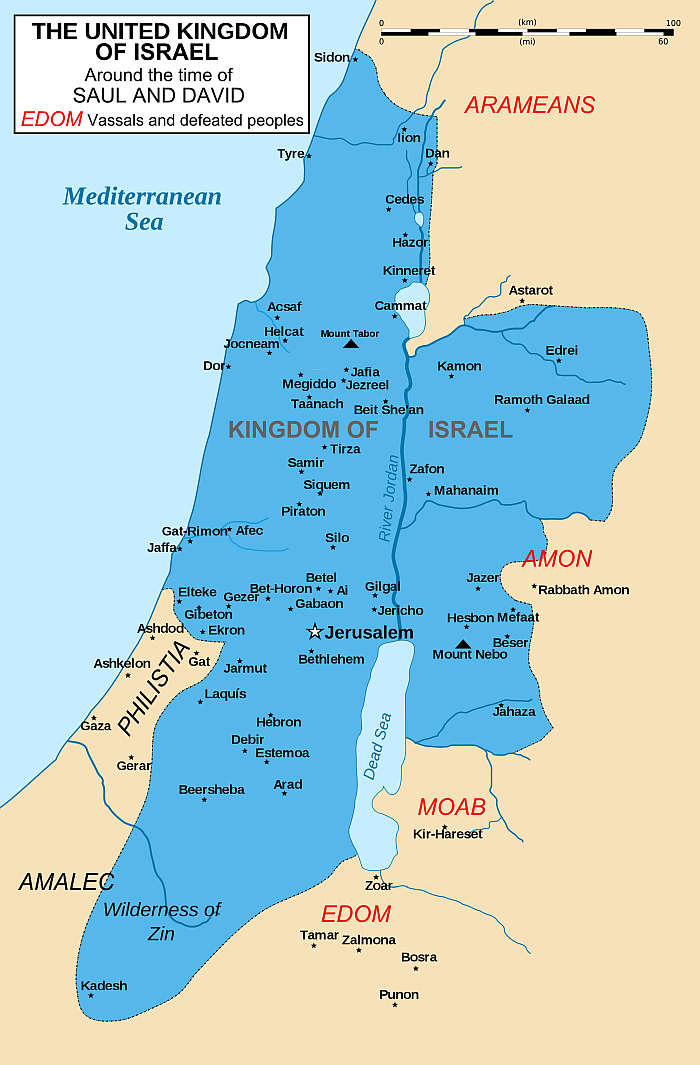
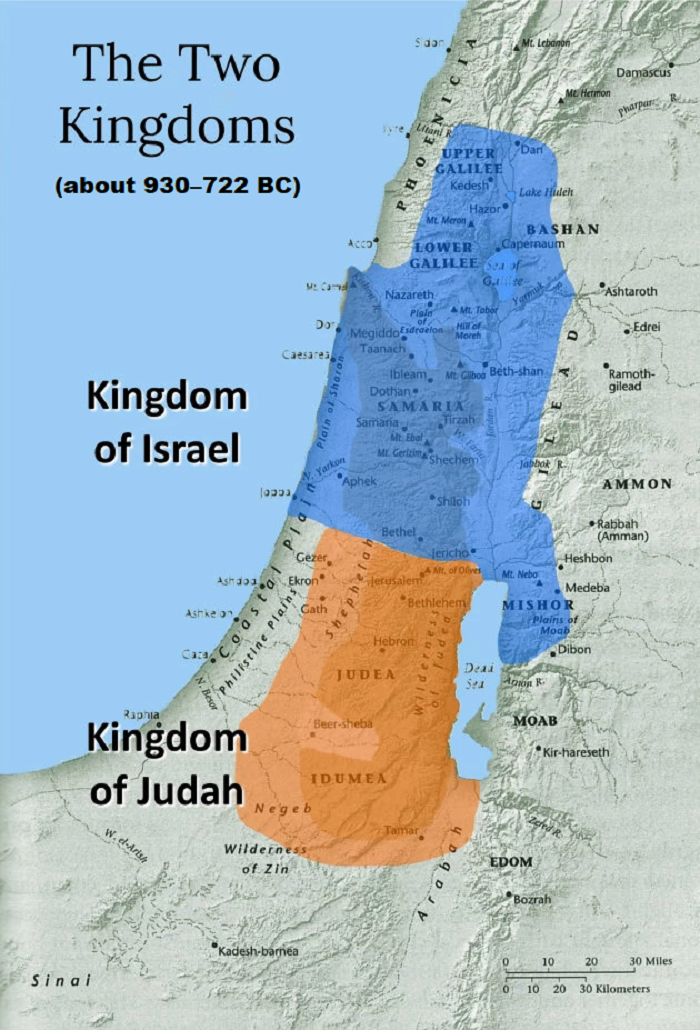
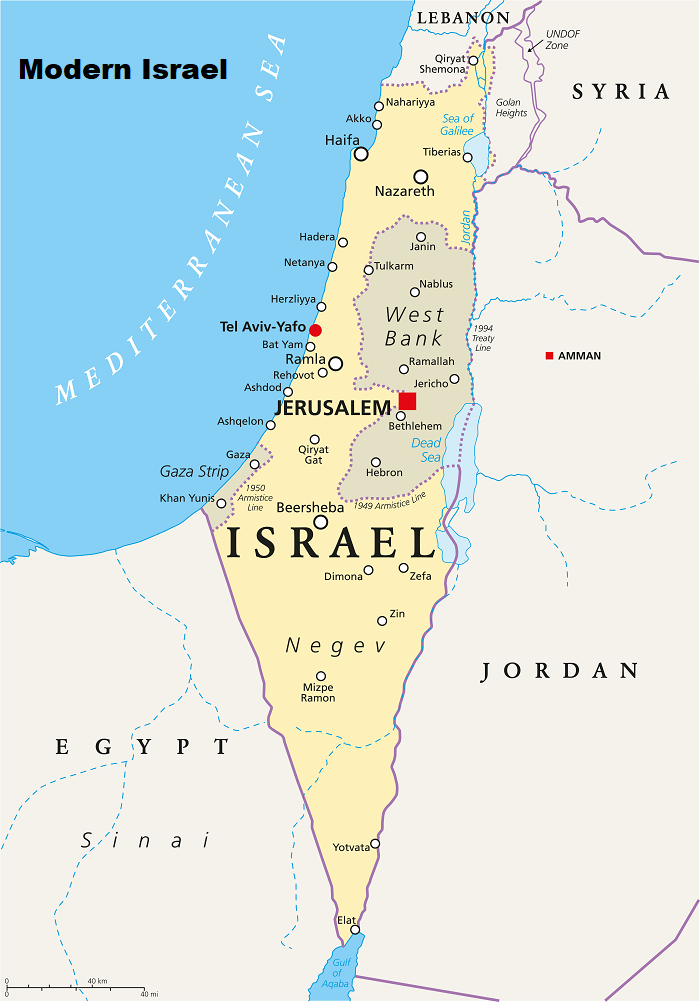
The Jewish people trace their origins to the ancient Israelites and Hebrews, who lived in the kingdoms of Israel and Judah in the Levant around 1200 BCE. These ancient Israelites included the Twelve Tribes of Israel (1200-1050 BC), according to the Talmud and the book of Joshua, followed by the United Kingdom, which eventually split into two kingdoms: the Northern Kingdom of Israel and the Southern Kingdom of Judah, each with its own line of kings, as illustrated below, along with a comparison to modern Israel.
The Twelve Tribes of Israel
Overview of the Tribes of Israel
The Twelve Tribes of Israel are the descendants of Jacob, who is also known as Israel. Each tribe is named after one of Jacob's sons, and they played a crucial role in the history and culture of ancient Israel as described in the Hebrew Bible.
Characteristics of the Twelve Tribes of Israel
The Twelve Tribes of Israel, descended from the sons of Jacob, each had unique characteristics and symbols associated with them. Below is a summary of what each tribe was known for:
|
Tribe |
Characteristics |
Symbolic Representation |
|
Reuben |
Instability |
Unstable as water |
|
Simeon |
Violence |
Sword or violence |
|
Levi |
Priestly duties |
Priestly garments |
|
Judah |
Leadership and kingship |
Lion or scepter |
|
Dan |
Judgment |
Scales of justice |
|
Naphtali |
Swiftness |
Gazelle |
|
Gad |
Military prowess |
Tents (symbolizing itinerancy) |
|
Asher |
Prosperity |
Olive tree or abundance |
|
Issachar |
Wisdom |
Sun, moon, and stars |
|
Zebulun |
Maritime trade |
Ship |
|
Joseph |
Dreams and prosperity |
Palm tree and sheaves of wheat |
|
Benjamin |
Strength and loyalty |
Wolf |
Hebrew Names, Symbols, and Banners of the 12 Tribes:
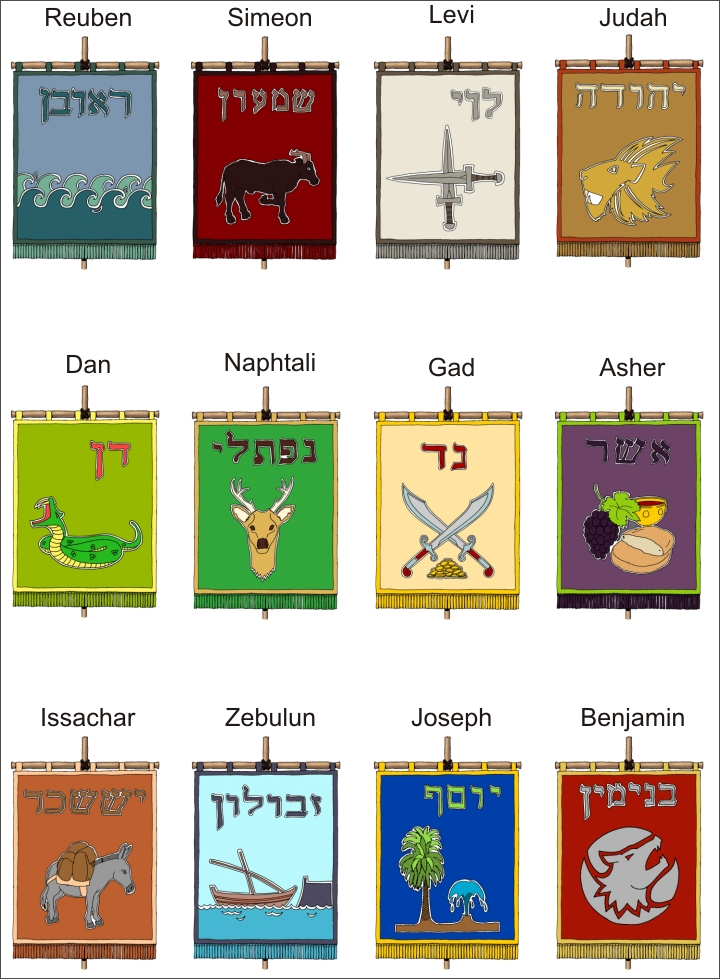
Summary of Notable Tribes
- Reuben: Known for his instability, often depicted as being as "uncontrolled as water."
- Simeon: Recognized for his violent nature, particularly in the biblical narrative.
- Levi: The tribe responsible for priestly duties, serving in the Temple.
- Judah: Associated with leadership, this tribe produced King David and is often seen as the most significant.
- Dan: Known for judgment, symbolized by scales.
- Naphtali: Represented swiftness, often depicted as a gazelle.
- Gad: Noted for military strength and prowess.
- Asher: Associated with prosperity and abundance.
- Issachar: Known for wisdom and understanding of the times.
- Zebulun: Linked to maritime trade and seafaring.
- Joseph: Known for his dreams and prosperity, split into two tribes: Ephraim and Manasseh.
- Benjamin: Recognized for strength and loyalty, often symbolized by a wolf.
Each tribe played a distinct role in the history and culture of ancient Israel, contributing to the identity of the Israelite nation.
Historical Significance
- Formation: The tribes were formed from Jacob's twelve sons, who were born to his wives Leah and Rachel, and their maidservants.
- Territorial Allotment: After the Israelites' exodus from Egypt, the land of Canaan was divided among the tribes, with each tribe receiving a specific territory, except for the Tribe of Levi, which was given cities instead of land.
- Cultural Impact: The tribes contributed to the development of Israelite identity and culture, influencing religious practices and societal structures.
Modern Perspectives
Modern scholarship often questions the historical existence of the Twelve Tribes, suggesting that the concept may symbolize a national founding myth rather than a strictly historical reality. However, the tribes remain a significant part of Jewish heritage and biblical history.
Geographical Regions of Ancient and Modern Israel
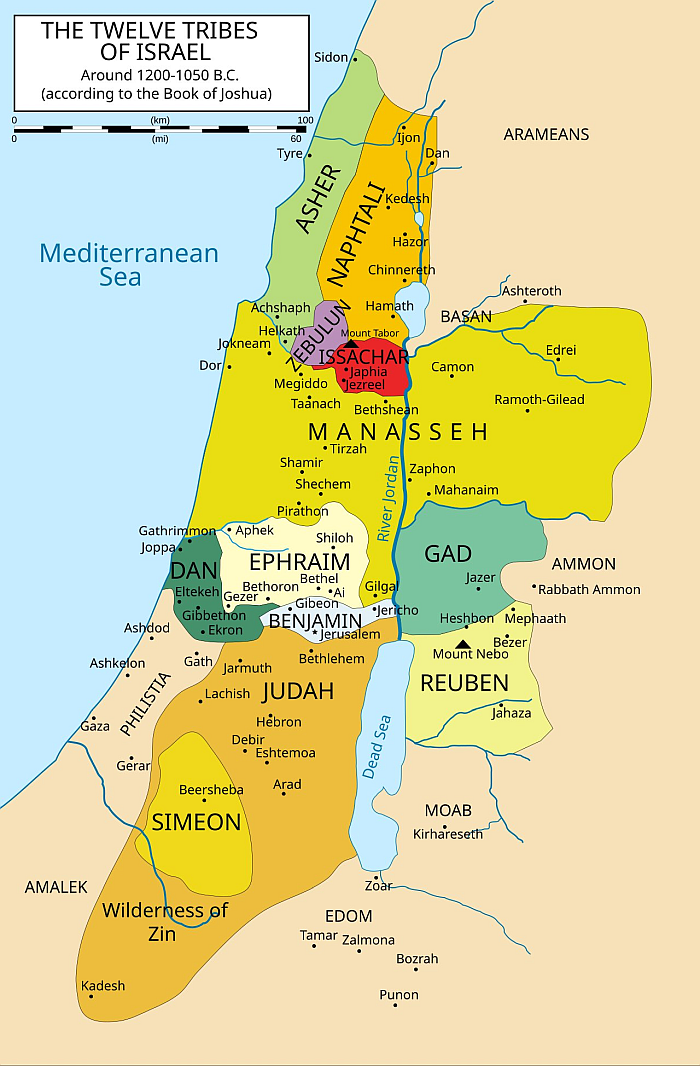
- Levi’s tribe was called to be the Lord’s priesthood ministers to all tribes and received no inheritance of land in Canaan.
- The tribe of Joseph divided their inheritance of land in Canaan between his sons, Ephraim and Manasseh, thereby forming two distinct tribes with two different lands.
- Ruben lost his inheritance due to immorality, and he does not appear on the map.
The Founding of Israel
The name "Israel" is traditionally linked to the patriarch Jacob, who was renamed after wrestling with an angel. The earliest mention of the Israelites is found on the Merneptah Stele, dating back to around 1200 BCE.
The founding of the Jewish religion dates back to Abraham, who began the covenantal relationship between the Jewish people and God; in Christianity, he is the spiritual progenitor of all believers, whether Jewish or non-Jewish; and in Islam, he is a link in the chain of Islamic prophets that begins with Adam and culminates in Muhammad.
The founding of historic Israel goes back to The Exodus, the story of their freedom from Ancient Egyptian slavery led by Moses as told in the Torah. This exodus was precipitated by ten miracles of God, as I have examined in my article on The True Miracles of Exodus.
The more modern Jewish religion was a result of the First Jewish–Roman War (66–73/74 CE), also called the Great Jewish Revolt, the First Jewish Revolt, the War of Destruction, or the Jewish War. It was the first of three major Jewish uprisings against the Roman Empire. Fought in the province of Judaea, it led to the destruction of Jerusalem and the Jewish Temple, widespread displacement, land seizures, and the end of the Jewish polity. As a result of the destruction of the Jewish Temple and the diaspora of the Jews from Israel, the Jewish religion reformulated itself to exist under these circumstances.
Key Historical Periods
Jewish history is often divided into several significant periods:
|
Ancient Israel and Judah |
c. 1200–586 BCE |
Formation of the kingdoms, early Jewish identity |
|
Babylonian Exile |
586–538 BCE |
Destruction of the First Temple, exile to Babylon |
|
Second Temple Period |
516 BCE–70 CE |
Construction of the Second Temple, rise of sects |
|
Jewish Diaspora |
70 CE0–500 CE |
The dispersion of the Jewish people from Israel after the Roman destruction of the Second Temple |
|
Medieval Period |
500–1500 CE |
Thriving communities all across ancient Babylonia, followed by Jewish communities in Europe |
|
Early modern period |
1500 CE– 1800 CE |
Integration of Jews into the mainstream of European society, and Westernization cultural developments |
|
Modern Era |
1800 CE–present |
Modern Zionism, Political Emancipation, Persecution and the Holocaust, expulsion from Muslim-majority countries throughout Africa and Asia in the 20th century, establishment of Israel |
The Babylonian Exile
Overview of Jews in Babylon
The Babylonian captivity was a significant event in Jewish History. The Jews in Babylon were primarily those who were exiled during the Babylonian conquest, which began in the 6th century BCE after the conquest of the Kingdom of Judah. This community thrived in Babylon, maintaining their religious and cultural identity, and became a significant center for Jewish scholarship and life, especially after the destruction of the Second Temple in 70 CE.
Historical Context
The exile of Jews occurred in multiple waves:
- 597 BCE: Approximately 7,000 individuals were exiled after the siege of Jerusalem.
- 587 BCE: Further expulsions followed the destruction of Jerusalem and Solomon's Temple.
Life in Babylon
The Jewish exiles in Babylon managed to maintain their cultural and religious identity despite the challenges they faced. They established a vibrant community characterized by:
- Religious Practices: The exiles adapted their worship, moving
from temple-based rituals to practices in private homes,
including:
- Observance of the Sabbath
- Circumcision
- Reading of the Psalms and Law
- Cultural Identity: The community thrived, leading to the
development of significant Jewish scholarship. This period saw the
rise of:
- Scribes and Sages: Leaders who emerged as the community's intellectual and spiritual guides.
Return to Israel
In 538 BCE, a Decree of Cyrus allowed the Jews to return to Jerusalem, which many did, but many Jews remained in Babylon.
Significance of Babylonian Jewry
The Jewish community in Babylon became a crucial center for Jewish life and scholarship, especially after the destruction of the Second Temple in 70 CE. This community laid the groundwork for future Jewish traditions and scholarship, influencing the development of the Babylonian Talmud and other key texts.
The Jewish community in Babylon not only survived but flourished, becoming a lasting symbol of resilience and cultural continuity.
Cultural and Religious Development
Judaism evolved through various influences, including interactions with surrounding cultures and empires. The Jewish diaspora began with the Roman destruction of the Second Temple, leading to communities forming across Europe, North Africa, and the Middle East. Over centuries, Jewish identity has been shaped by religious practices, cultural traditions, and historical experiences, including periods of persecution and resilience. Jewish history continues to influence modern discussions on identity, culture, and religion. Today, Jews worldwide maintain diverse cultural identities and practices.
Historic Religious figures
Historic Jewish religious figures include Abraham, Isaac, and Jacob, known as the Three Patriarchs, as well as Moses, Aaron, and Miriam, who played significant roles in the Hebrew Bible. Other notable figures include prophets like Isaiah, Elijah, and Jonah, who are central to Jewish religious tradition.
Key Historic Jewish Figures
The Three Patriarchs
The term patriarchs refers specifically to the biblical figures Abraham, Isaac, and Jacob (also known as Israel), who are regarded as the ancestors of the Israelites.
- Abraham: Abraham, originally named Abram, is a key biblical figure known as the first patriarch of the Hebrew people and a central figure in Judaism, Christianity, and Islam. He is celebrated for his unwavering faith in God, his covenant with God, and his role as the father of many nations, including the Israelites through his son Isaac and the Ishmaelites through his son Ishmael. God tested Abraham's faith by commanding him to sacrifice his son Isaac, but an angel stayed Abraham's hand before he could do so.
- Isaac: Isaac is recognized as the son of Abraham and Sarah and holds significant importance in Judaism, Christianity, and Islam. Isaac's life and actions are foundational to the narratives of the Abrahamic faiths, illustrating themes of faith, promise, and divine intervention. He continued the covenant with God and remains a central figure in Jewish tradition. His legacy continues to influence religious thought and practice today.
- Jacob: Jacob, also known as Israel, is the forefather of the Israelites. He is known for his complex family dynamics and significant events, including wrestling with an angel and receiving the name Israel. He is the son of Isaac and Rebecca, and his twelve sons became the founders of the Twelve Tribes of Israel.
The Three Founding Leaders
The Hebrew Bible is rich with influential leaders who shaped the history and faith of the Jewish people. The first three of these leaders forged the Jewish people into a nation based on their Covenant with God.
- Moses: Moses is a pivotal figure in the Bible, recognized primarily as the prophet who led the Israelites out of slavery in Egypt. His life and actions are central to the Exodus narrative, where he plays a crucial role in his people's liberation. He led the Israelites out of Egypt, received the Ten Commandments, and led his people during their forty years of exile in the desert.
- Aaron: In the Bible, Aaron was Moses' older brother and served as a prophet and the first high priest of the Israelites. He played a crucial role in the Exodus, serving as Moses' spokesman and leading the people in worship and sacrifices to God. Aaron's legacy is marked by both his leadership and his failures. Despite his shortcomings, including the incident with the Golden Calf, he is remembered as a foundational figure in the Israelite priesthood.
- Miriam: Miriam is a significant figure in the Bible, known as the older sister of Moses and Aaron. She is recognized as a prophetess and played a crucial role in the Exodus, leading the Israelite women in song and dance after their escape from Egypt. Miriam's story reflects themes of leadership, faith, and the complexities of family relationships in the biblical narrative.
Prominent Prophets
The Bible features a number of major prophets, known for their significant writings and messages from God. These prophets played crucial roles in conveying God's messages and guiding the people of Israel throughout biblical history. These prophets are:
- Isaiah: Isaiah was an influential 8th-century BC prophet, known for his significant contributions to the Book of Isaiah, a central text in both the Hebrew Bible and the Christian Old Testament. His prophecies encompass themes of judgment, hope, and the anticipation of a messiah, shaping the theological landscape for both Judaism and Christianity.
- Elijah: Elijah was a prophet in the Old Testament, known for his miracles and for defending the worship of Yahweh against the Canaanite god Baal. His story is primarily found in the Books of Kings, where he performs significant acts, including bringing fire from heaven, raising a widow's son from the dead, and his ascension to heaven in a whirlwind.
- Samuel: Samuel is a pivotal figure in the Bible, recognized as Israel's last judge and first prophet. His life marked the transition from the era of judges to the establishment of Israel's monarchy. He anointed both Saul and David as kings of Israel and is known for his deep devotion to God and his leadership during turbulent times.
- Jeremiah: Jeremiah was a major prophet in the Hebrew Bible, known for his pivotal role during a tumultuous period in the Kingdom of Judah. He is often called "the weeping prophet" for his profound sorrow over the impending destruction of Jerusalem and the fate of his people.
- Ezekiel: Ezekiel was a biblical prophet and priest who lived during the Babylonian exile and is known for his vivid visions and prophecies recorded in the Book of Ezekiel. His messages included warnings of judgment against Israel and promises of future restoration for the Jewish people.
- Daniel: Daniel is a biblical figure renowned for his wisdom and ability to interpret dreams, serving in the courts of Babylon and Persia during the Jewish exile. His story is primarily found in the Book of Daniel, which recounts his faithfulness to God and prophetic visions of future kingdoms and the coming of a messianic figure.
Prominent Kings
These kings significantly shaped the spiritual and political landscape of ancient Israel, influencing both their time and future generations.
- Saul: Saul was Israel's first king, anointed by the prophet Samuel. His reign is significant because it marked the Israelites' transition from a tribal society to a centralized monarchy. Saul is portrayed as a complex figure who struggled with his mental health and ultimately fell from favor with God.
- David: David became Israel's second king, known for his military victories, musical talent, psalms, and his role in establishing Jerusalem as Israel's religious center. He is also famous for defeating the giant Goliath with a sling and a stone.
- Solomon: Solomon is the son of King David and Bathsheba and the third king of Israel. He is famous for his wisdom, wealth, and the construction of the First Temple in Jerusalem. His reign is often seen as a golden age for Israel.
Other Notable Figures
There are many notable figures in the Hebrew Bible, among the more significant are:
- Deborah: A prophetess and the only female judge in Israel, also known for her leadership in battle. She played a crucial role in leading Israel to victory over the Canaanite army and is celebrated for her wisdom and leadership, as well as for her collaboration with the warrior Jael.
- Esther: Esther becomes the queen of Persia and plays a crucial role in saving the Jewish people from extermination. Her story highlights her bravery and the theme of divine providence as she risks her life to reveal her Jewish identity and thwart the villain Haman's plans.
- Hagar: Hagar is known as the Egyptian servant of Sarah, who became the mother of Abraham's first son, Ishmael. She is remembered for her faith and for the name she gave to God, "El Roi," meaning "the God who sees me."
- Hannah: Mother of Samuel, who prayed fervently for a child and dedicated him to God. She is celebrated for her heartfelt prayers and dedication to God, especially for her vow to dedicate her son to the Lord's service.
- Job: Known for his extreme suffering and unwavering faith in God despite losing his wealth, health, and family, Job's story explores themes of suffering, faith, and divine justice.
- Jonah: Famous for his mission to the city of Nineveh and the story of being swallowed by a great fish. His story is about forgiveness, mercy, and the nature of God's compassion towards all people, including those considered enemies.
- Joseph Rose to power in Egypt after his brothers sold him into slavery; he was known for his ability to interpret dreams and for saving his family from famine.
- Joshua: Joshua is known for leading the Israelites into the Promised Land after Moses' death. He is recognized for his role in the conquest of Canaan and is often associated with faithfulness and leadership.
- Lot: The nephew of Abraham. He is known for his association with the cities of Sodom and Gomorrah, from which he fled before their destruction, and for the complex moral choices he faced throughout his life.
- Noah: Recognized for building the Ark to save his family and pairs of every animal species from a great flood sent by God to cleanse the earth of wickedness.
- Rebekah: Wife of Isaac and mother of twins Esau and Jacob. She is recognized for her kindness, as she offered water to Abraham's servant and his camels, and for her decisive actions that shaped the lineage of the Israelites.
- Ruth: Ruth, a Moabite woman known for her loyalty to Naomi, became the great-grandmother of King David. Ruth's story highlights themes of loyalty, love, and divine providence.
- Sarah: Sarah, originally named Sarai, is a significant biblical figure known as the wife of Abraham and the mother of Isaac. She is recognized for her faithfulness and is a matriarch in Judaism, Christianity, and Islam. Sarah's life and experiences continue to inspire many, underscoring her importance in biblical history.
Key Historic Jewish Kings
Overview of Historic Jewish Kings
The historic Jewish kings primarily refer to the rulers of ancient Israel and Judah, including notable figures like Saul, David, and Solomon. The United Kingdom eventually split into two: the Northern Kingdom of Israel and the Southern Kingdom of Judah, each with its own line of kings.
Key Kings of Israel and Judah
|
King |
Kingdom |
Notable Achievements |
|
United Kingdom |
First king of Israel, unified the tribes |
|
|
United Kingdom |
Established Jerusalem as the capital, known for his military successes and psalms |
|
|
United Kingdom |
Built the First Temple, renowned for wisdom |
These kings significantly shaped the spiritual and political landscape of ancient Israel, influencing both their time and future generations.
Division of the Kingdom
The kingdom of Israel eventually split into two distinct kingdoms:
Kingdoms and Their Kings
|
Kingdom |
Notable Kings |
|
Northern Kingdom (Israel) |
Jeroboam I, Ahab, Hoshea |
|
Southern Kingdom (Judah) |
Rehoboam, Hezekiah, Zedekiah |
- The Northern Kingdom consisted of ten tribes and was known for its multiple ruling dynasties.
- The Southern Kingdom was primarily ruled by the descendants of King David, maintaining a single dynasty.
Historical Context
The establishment of a monarchy in Israel was a significant shift from the previous tribal confederation. The desire for a king led to the eventual division of the kingdom and conflicts between the two regions. Each kingdom faced challenges, including invasions and exiles, which shaped their histories and legacies.
Zionism
Overview of Zionism
“Judaism's central desire has been
to be returned to its homeland.
For 3200 years, the Passover seder ended with the statement: "Next
year in Jerusalem".
This yearning is called "Zionism".
- Theodor Herzl
Zionism is a political movement that emerged in the late 19th century, advocating for the Jewish people's right to self-determination in their ancestral homeland of Israel. It led to the establishment of the State of Israel in 1948 and continues to influence Jewish identity and support for Israel today. The movement emerged as a response to widespread antisemitism in Europe and sought to establish a national home for Jews.
Historical Context
Key Developments
- Late 19th Century: Zionism began as a response to the challenges faced by Jews in Europe, particularly antisemitism.
- Theodor Herzl: Often regarded as the father of modern political Zionism, Herzl organized the first Zionist Congress in 1897, which laid the groundwork for the movement.
- Establishment of Israel: The culmination of Zionist efforts was the establishment of the State of Israel in 1948, following significant political developments, including the Balfour Declaration and the United Nations partition plan.
Types of Zionism
Zionism encompasses various ideologies, including:
- Political Zionism: Focuses on establishing a Jewish state.
- Cultural Zionism: Emphasizes the revival of Jewish culture and identity in Israel.
- Labor Zionism: Combines socialist principles with the Zionist agenda, promoting Jewish labor and settlement.
- Religious Zionism: Integrates religious beliefs with the Zionist movement, viewing the establishment of Israel as part of a divine plan.
Contemporary Relevance
Zionism continues to shape Jewish identity and the political landscape in Israel and the broader Middle East. It remains a topic of debate, particularly regarding its implications for Palestinian statehood and rights. While many Jews view Zionism as essential for their safety and identity, others critique it as a colonial movement that has led to the displacement of Palestinians.
Understanding Zionism requires recognizing its historical roots, diverse interpretations, and ongoing impact on global politics.
Jewish Demographics
The Jewish population is estimated to be around 14 million globally, with significant communities in Israel and the United States. As of 2025, the world's core Jewish population is estimated at 15.8 million, with the largest communities in Israel (approximately 7.42 million) and the United States (around 7.46 million). Other countries with significant Jewish populations include France, Canada, and the United Kingdom.
- Israel: 7.3 million
- United States: 6.3 to 7.5 million
- France: 440,000
- Canada: 400,000
- United Kingdom: 312,000
- Argentina: 171,000
- Russia: 132,000
- Germany: 125,000
Diversity within Judaism
Judaism consists of several denominations, which are diverse groups that have developed over time, including Orthodox, Conservative, Reform, and Reconstructionist Judaism. Each denomination varies in its interpretation of Jewish law and practice, with Orthodox Judaism being the most traditional and Reform Judaism being more modern and adaptable.
- Ultra-Orthodox Judaism: Very devout, often living separately from secular society.
- Orthodox Judaism: Strict adherence to traditional Jewish law and practices.
- Jewish Conservatism: Balances tradition with modernity, allowing for some changes in Jewish law.
- Conservative Judaism: A major Jewish religious movement that seeks to preserve Jewish tradition while allowing for modernization and adaptation of practices.
- Reform Judaism: Emphasizes individual interpretation of Jewish texts and practices; less focus on strict law.
- Reconstructionist Judaism: Views Judaism as a cultural force, allowing for debate and modification of beliefs and practices.
Judaism is not only a religion but also a cultural and ethnic identity, with a rich history that influences its practices and beliefs today.
Ultra-Orthodox Judaism
Ultra-Orthodox Judaism, also known as Haredi Judaism, is a branch of Orthodox Judaism characterized by strict adherence to Jewish law and traditions, often separating themselves from secular society. They are primarily found in Israel, North America, and Western Europe, and their communities are known for their high birth rates and rapid population growth.
Overview of Ultra-Orthodox Judaism
Ultra-Orthodox Judaism, also known as Haredi Judaism, is a branch of Orthodox Judaism. It is characterized by strict adherence to Jewish law (halakha) and traditional practices. Haredim often separate themselves from secular society and other Jewish groups that do not follow these strict interpretations.
Key Characteristics
Beliefs and Practices
- Haredim view themselves as the most authentic custodians of Jewish tradition.
- They reject modern interpretations of Judaism, considering them deviations from God's laws.
- Daily life is governed by strict religious observance, including dietary laws and gender segregation.
Community Structure
- Haredi communities are often divided into Hasidic and Mitnagdic groups.
- Hasidic Jews emphasize joy in worship and strong devotion to their rabbis.
- Mitnagdim focus more on the study of sacred texts and may be critical of excessive rabbinic devotion.
Global Distribution of Ultra-Orthodox Judaism
- Approximately 2.1 million Haredim exist worldwide, making up about 14% of the global Jewish population.
- The largest populations are in Israel, where they represent about 17% of Israeli Jews, and in North America, particularly in New York City.
- Haredi communities have high birth rates, with an average of 7.2 children per woman.
- The population is projected to grow significantly, potentially comprising a third of Israel's population by 2065.
- Haredim often maintain a distance from secular society, although some groups, like Chabad-Lubavitch, engage in outreach efforts.
- Political participation varies, with some Haredi parties seeking to align state policies with Jewish law while avoiding official government roles.
Orthodox Judaism
Overview of Orthodox Judaism
Orthodox Judaism is a branch of Judaism that strictly adheres to Jewish law (halakha) and traditional beliefs and practices as outlined in the Torah. It encompasses various groups, such as Haredi (ultra-Orthodox) and Modern Orthodox, each with its own approach to engaging with contemporary society.
Key Beliefs
- Divine Revelation: Orthodox Jews believe that the Torah was revealed by God at Mount Sinai and is immutable.
- Halakha: Observance of Jewish law governs all aspects of life, including dietary laws (kashrut), prayer, and family life.
- Community Structure: There is no centralized authority; instead, various independent communities exist, often with differing practices and interpretations.
Demographics
Orthodox Jews represent about 10% of the American Jewish population, with approximately 500,000 adherents. In Israel, around 21% of Jews identify as Orthodox. The community is characterized by higher birth rates and a younger demographic compared to other Jewish groups.
Population Breakdown
- Israel: 1 million (strictly observant) – 2.2 million (identifying)
- United States: ~500,000
- United Kingdom: ~150,000
- Belgium: ~13,000
Subgroups
Orthodox Judaism includes several distinct groups:
- Haredi (Ultra-Orthodox): More conservative and often insular, focusing on strict adherence to tradition.
- Modern Orthodox: Engages with modern society while maintaining traditional practices, often emphasizing education and community involvement.
Orthodox Judaism is marked by its commitment to tradition and law, while also exhibiting diversity within its practices and beliefs.
Jewish Conservatism
Overview of Jewish Conservatism
Jewish conservatism is a political and social ideology rooted in Jewish values and concerns. It emphasizes traditional family structures, a strong national defense, and economic liberalism. This movement is primarily observed in the United States and has evolved significantly over the years. It is distinct from Conservative Judaism, which is a religious movement focused on balancing Jewish law with modernity.
Key Characteristics
Core Principles
- Traditional Family Values: Jewish conservatism advocates for the importance of family as a foundational unit of society.
- Hawkish Foreign Policy: There is a strong emphasis on national security and support for Israel, reflecting a commitment to Jewish safety and sovereignty.
- Economic Liberalism: This includes support for free-market principles and limited government intervention in the economy.
Influential Figures
Prominent figures in Jewish conservatism include:
- Rabbi Jonathan Sacks: A respected voice in Jewish thought and ethics.
- Isaiah Berlin: A philosopher known for his contributions to liberal thought.
- Benjamin Disraeli: A historical figure who played a significant role in British politics and Jewish representation.
Publications and Organizations
Several publications and organizations promote Jewish conservative thought:
- Mosaic: A magazine that discusses Jewish ideas and their relevance to contemporary issues.
- Tablet Magazine: Focuses on Jewish culture and politics.
- Jewish Policy Center: Engages in research and advocacy for Jewish conservative policies.
Contemporary Context
The rise of Jewish conservatism is marked by a shift from predominantly liberal Jewish political engagement to a more conservative approach. This change is influenced by recent political developments and the increasing visibility of Jewish conservative leaders and organizations.
Conservative Judaism
Overview of Jewish Conservatism
Conservative Judaism, also known as Masorti Judaism, is a major Jewish religious movement that seeks to preserve Jewish tradition while allowing for modernization and adaptation of practices. It emphasizes the importance of Jewish law (Halakha) as both binding and subject to historical development, balancing tradition with contemporary realities. It also emphasizes the importance of maintaining Jewish culture, identity, and religious practices while engaging with contemporary issues.
Key Characteristics
- Cultural and Religious Values: Jewish conservatism promotes traditional Jewish values, including the importance of family, community, and religious observance.
- Political Engagement: It often aligns with right-leaning political movements, advocating for policies that support Jewish nationalism and the security of Israel.
- Diverse Perspectives: The movement encompasses various groups, including religious Zionists and those who prioritize cultural aspects of Judaism.
Distinction from Conservative Judaism
Jewish conservatism should not be confused with Conservative Judaism, which is a religious movement that seeks to balance tradition with modernity in Jewish law and practice.
Conservative Judaism vs. Jewish Conservatism
|
Aspect |
Conservative Judaism |
Jewish Conservatism |
|
Focus |
Religious practices and laws |
Political and social values |
|
Approach to Tradition |
Balances tradition with modern interpretation |
Emphasizes adherence to traditional values |
|
Community Engagement |
Involves congregational life and rituals |
Engages in political activism and advocacy |
|
Key Institutions |
United Synagogue of Conservative Judaism |
Various political organizations and parties |
Jewish conservatism plays a significant role in shaping the political landscape for many Jews, particularly in the United States and Israel. It reflects a commitment to preserving Jewish identity while addressing modern challenges.
Reform Judaism
Overview of Reform Judaism
Reform Judaism, also called Liberal or Progressive Judaism, is a major Jewish denomination that emphasizes the evolving nature of Judaism, focusing on ethical principles over ceremonial practices and viewing Jewish law as non-binding. They also believe in ongoing revelation that aligns with human reason. It originated in 19th-century Germany and seeks to adapt Jewish practices to modern life while remaining committed to core beliefs like God, Torah, and Israel.
Historical Background
- Origins: Reform Judaism originated in mid-19th-century Germany, led by Rabbi Abraham Geiger and others who sought to modernize Jewish practices.
- Key Developments: The first permanent Reform temple was established in Hamburg in 1818. The movement gained traction in the United States with Isaac Mayer Wise, who founded the Union of American Hebrew Congregations in 1873.
Beliefs and Practices
- Core Beliefs: Reform Judaism affirms the existence of God, the significance of the Torah, and the connection to Israel while allowing for diverse interpretations.
- Adaptation: The movement encourages adapting Jewish practices to fit modern life, viewing the Torah as a living document.
- Inclusivity: Reform Judaism is known for its commitment to inclusivity, welcoming interfaith families, LGBTQ+ individuals, and Jews of color.
Organizational Structure
- Union for Reform Judaism (URJ): This is the main organization for Reform congregations in North America, providing resources and support for communities.
- Global Reach: The World Union for Progressive Judaism connects various Reform communities worldwide, representing millions of Jews across different countries.
Reform Judaism continues to evolve, reflecting the diverse needs and values of contemporary Jewish life while maintaining a commitment to social justice and ethical living.
Reconstructionist Judaism
Overview of Reconstructionist Judaism
Reconstructionist Judaism is a modern Jewish movement founded by Rabbi Mordecai Kaplan in the early 20th century. It views Judaism as an evolving civilization rather than just a religion. This perspective emphasizes the importance of community, culture, and tradition in shaping Jewish identity.
Key Principles
Evolving Civilization
- Judaism is seen as a living tradition that adapts to contemporary life.
- The movement encourages innovation and experimentation in religious practices.
Inclusivity
- Reconstructionist Judaism is known for its inclusive approach, welcoming interfaith families and LGBTQ+ individuals.
- It was the first Jewish movement to accept patrilineal descent and ordain openly gay and lesbian rabbis.
Organizational Structure
Institutions
- The Reconstructionist Rabbinical College (RRC) trains rabbis and leaders within the movement.
- The Reconstructionist Rabbinical Association supports professional development for rabbis.
Community Engagement
- Over 100 synagogues and havurot (small groups) are affiliated with the movement, primarily in the United States and Canada.
- The movement promotes social justice and community involvement, encouraging members to engage with broader societal issues.
Practices and Services
Reconstructionist services often blend traditional and contemporary elements, featuring Hebrew prayers, English readings, and discussions rather than sermons. This participatory approach allows members to express their beliefs and experiences openly.
Reconstructionist Judaism continues to evolve, addressing the needs of modern Jews while remaining rooted in tradition.
Criticism of Judaism
Overview of Criticism of Judaism
Criticism of Judaism has evolved over centuries and can be categorized into several main areas, including religious, philosophical, and inter-branch critiques. This criticism can stem from various sources, including interfaith debates, philosophical disagreements, and critiques from different branches of Judaism itself. Historically, it has included religious criticisms from Christianity and Islam, as well as modern critiques related to Jewish identity and practices.
Religious Criticism
- Christian Criticism: Early criticisms stemmed from Christian teachings, particularly from figures like Paul, who argued that Judaism was based on law rather than faith. This perspective often portrayed Judaism as flawed for its rejection of Jesus as the Messiah.
- Islamic Criticism: Islamic critiques have also emerged, often focusing on theological differences and interpretations of Jewish texts.
Philosophical Criticism
- Theological Views: Philosophers like Baruch Spinoza and Mordecai Kaplan criticized the concept of a personal God in Judaism, advocating for a more abstract understanding of divinity.
Jewish Messiah Criticism
The criteria for the Jewish Messiah have been criticized for being too vague and open to interpretation, with some scholars arguing that the concept of a messiah was not as central to Jewish thought as often assumed. This criticism stems from:
- Vagueness: The criteria can be interpreted in various ways, leading to differing opinions on who qualifies as the Messiah.
- Historical Context: The concept of a Messiah may not have been a prominent feature in early Jewish texts, suggesting that expectations were not uniform.
- Diverse Messianic Figures: Throughout history, various individuals have claimed messianic status, complicating the understanding of what constitutes the Messiah.
I would also note that for the Jewish Messiah to achieve his goals would require a significant change in human nature, particularly in humans' peaceful intentions and acceptance of political leadership worldwide. A change that seems highly unlikely given human nature.
Inter-Branch Criticism
Overview of Inter-Branch Critiques
Inter-branch critiques of Judaism involve criticisms between different Jewish movements, such as Orthodox, Conservative, and Reform Judaism. Each branch has its own interpretation of Jewish law, tradition, and modernity, leading to various criticisms. They arise primarily from the differing beliefs and practices among the major Jewish movements. For example, Orthodox Judaism often criticizes Conservative Judaism for not adhering strictly to Halakha. At the same time, Reform Judaism critiques both Orthodox and Conservative practices for being out of touch with modern values and issues.
Key Critiques Among Branches
Orthodox Judaism Critiques
- Conservative Judaism:
- Criticized for not adhering strictly to Halakha (Jewish law).
- Seen as compromising traditional values in favor of modern interpretations.
Conservative Judaism Critiques
- Orthodox Judaism:
- Accused of being overly rigid and not adapting to contemporary societal changes.
- Reform Judaism:
- Criticized for being too liberal and for practices that some believe undermine Jewish tradition.
- Issues include intermarriage, patrilineal descent, and the ordination of LGBTQ+ individuals.
Reform Judaism Critiques
- Orthodox Judaism:
- Viewed as out of touch with modern values and societal needs.
- Accused of fostering isolation from broader communities.
- Conservative Judaism:
- Criticized for not fully embracing progressive changes that align with contemporary ethical standards.
Reconstructionist Judaism Critiques
- All Other Major Branches Critiques:
- Lack of Halakhah Emphasis: Weakens community cohesion and commitment to shared practices.
- Identity Struggles: Difficulty maintaining a distinct identity amid growing Orthodoxy.
- Theological Diversity: Diverse beliefs may obscure core principles and engagement with tradition.
- Community Engagement: Concerns about sustaining meaningful participation without obligation.
These critiques reflect the ongoing dialogue and tension within Judaism as each branch seeks to define its identity and relevance in a changing world.
Historical Context of Criticism
Criticism of Judaism has historical roots in anti-Judaism, which predates the term antisemitism. This early form of criticism was primarily religious, focusing on the differences between Judaism and emerging Christian beliefs. Over time, antisemitism evolved to include racial and cultural prejudices against Jews.
Modern Implications of Criticism
Today, criticism of Judaism can sometimes intersect with antisemitism, particularly when it involves stereotypes or delegitimization of Jewish identity. Understanding the distinction between legitimate critique and antisemitic rhetoric is crucial in contemporary discussions.
Judaism & Christianity Core Beliefs In Common
The key beliefs of Judaism and Christianity include the worship of one God, the importance of following divine commandments, and the belief in a covenant between God and His people. The phrase “there is but one God” in Judaism and Christianity emphasizes that there is only one true God who is the creator and ruler of all things. Both religions also share foundational stories, such as those involving Abraham, and emphasize moral and ethical living according to their sacred texts.
The Ten Commandments of the Old Testament are religious and ethical directives, structured as a covenant document, that, according to the Hebrew Bible, were given by God to Moses. The text of the Ten Commandments appears in three markedly distinct versions in the Hebrew Bible: at Exodus 20:1–17, Deuteronomy 5:6–21, and the "Ritual Decalogue" of Exodus 34:11–26. A common synthesis of the Ten Commandments is:
- You shall have no other gods before Me.
- You shall not make for yourself a graven image.
- You shall not take the name of the LORD your God in vain.
- Remember the Sabbath day, to keep it holy.
- Honor your father and your mother.
- You shall not murder.
- You shall not commit adultery.
- You shall not steal.
- You shall not bear false witness against your neighbor.
- You shall not covet your neighbor's house; you shall not covet your neighbor's wife, or anything that belongs to your neighbor.
Both Jews and Christians believe in the Ten Commandments, and they must adhere to them in their daily lives to be considered as practicing Jews and Christians. For more on the Ten Commandments, I would direct you to my article The Ten Commandments.
Please note that this article was written with the help of my AI Search Assistance, as I am not sufficiently knowledgeable about this topic to write it myself. Much of the AI Search Assistance results are based on the Wikipedia article on these topics, which I have hyperlinked within this article. However, I have edited and/or expanded the AI Search Assistance results for better readability, clarity, and understandability.